
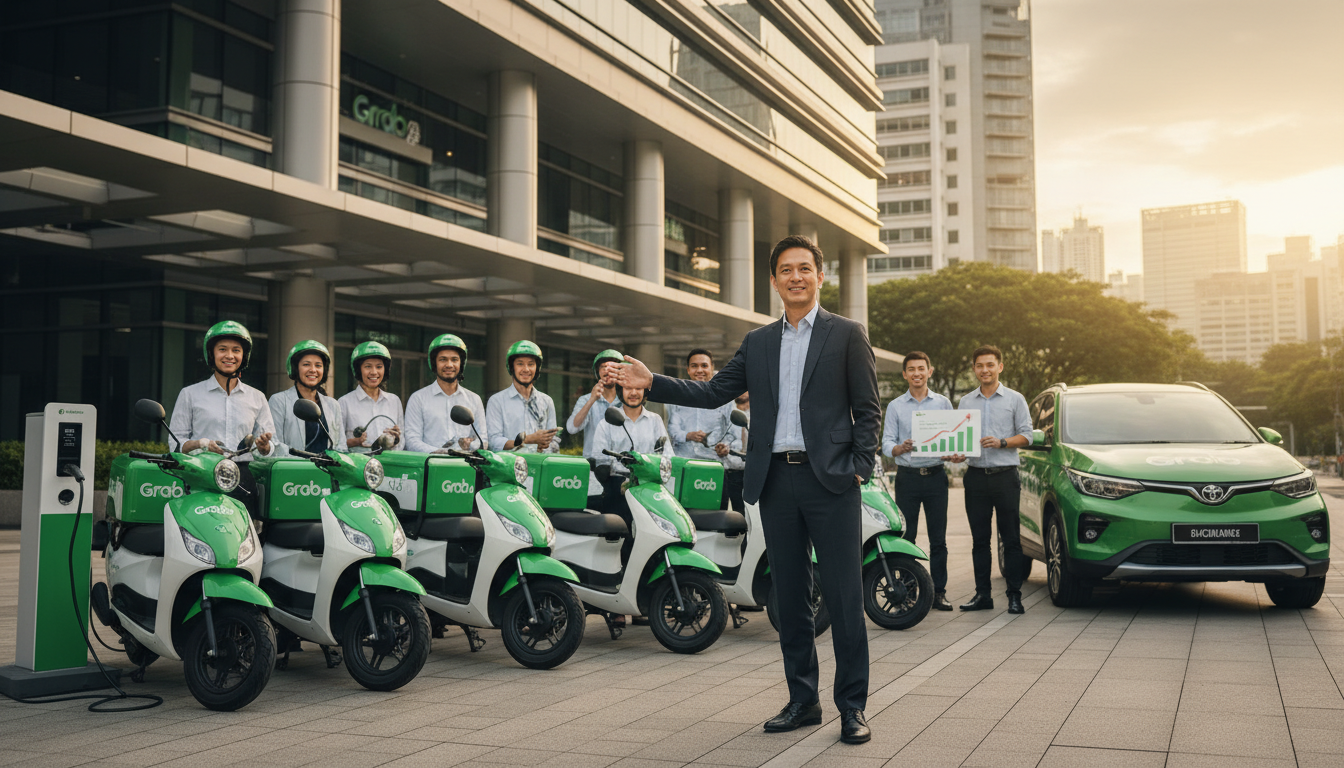
Grab Accelerates Electric-Vehicle Rollout as Fuel Costs Surge
Grab will accelerate its introduction of electric vehicles to shield driver-partners from rising fuel costs after the Middle East crisis, reporting 24% revenue growth in Q1. The company said the move aims to reduce platform cost pressures while sustaining momentum across ride-hailing and food delivery services.
Grab Accelerates EV Rollout
Grab announced an expedited plan to introduce more electric vehicles across its regional fleet as a direct response to higher fuel prices. The company framed the shift as a strategic hedge to limit operating-cost volatility for driver-partners and to strengthen its long-term service margins. Management emphasized that faster EV adoption will be phased in alongside existing combustion-engine vehicles to maintain service continuity.
First-Quarter Financial Results Show Resilience
The group reported a 24% year-on-year rise in revenue for the January–March quarter, driven by robust demand in its core ride-hailing and food delivery segments. That performance underlined sustained revenue growth even as external cost pressures mounted. Grab said core services continued to post healthy earnings, which the company plans to deploy in part to support the EV transition.
Driver Support and Fleet Transition Measures
To move toward electrification, Grab outlined plans to offer incentives and operational support to driver-partners who switch to electric vehicles. The policy package will include targeted subsidies, preferential access to certain service tiers, and partnerships with vehicle suppliers to ease upfront costs. Company officials signaled they will monitor uptake closely and adjust measures to avoid disrupting supply of drivers for peak-hour demand.
Fuel-Price Surge Cited as Immediate Catalyst
Grab attributed its push for electric vehicles to rising fuel prices that it linked to the Middle East crisis, saying higher petrol costs are increasing cost pressures across the platform. That external shock has amplified operating expenses for drivers who bear the bulk of fuel bills, prompting the company to speed plans that reduce fuel dependency. Executives framed electrification as both a risk-management step and a long-term climate-aligned strategy.
Infrastructure and Operational Challenges in Southeast Asia
Expanding an electric-vehicle fleet across Southeast Asia presents practical hurdles, including charging infrastructure, grid capacity and localized regulatory frameworks. Grab acknowledged that scaling charging networks and establishing reliable maintenance channels will require coordinated investment with public authorities and private partners. The company also noted regional differences in vehicle availability and incentives, meaning rollout timelines will vary by city and country.
Investor and Market Implications
Analysts say accelerated electrification could insulate Grab from fuel-price volatility while reshaping cost structures over time, but the transition carries near-term implementation costs. The firm’s 24% quarterly revenue growth offers some financial buffer to fund subsidies and pilot projects without immediate margin strain. Market observers will be watching how quickly driver adoption and infrastructure build-out translate into lower per-ride variable costs.
Grab’s strategy places the company among regional platforms prioritizing operational resilience and sustainability as input-price shocks intensify. Management has signaled that progress on electric-vehicle adoption will be reported alongside future financial updates, offering stakeholders clearer visibility into both cost trends and environmental commitments.

