
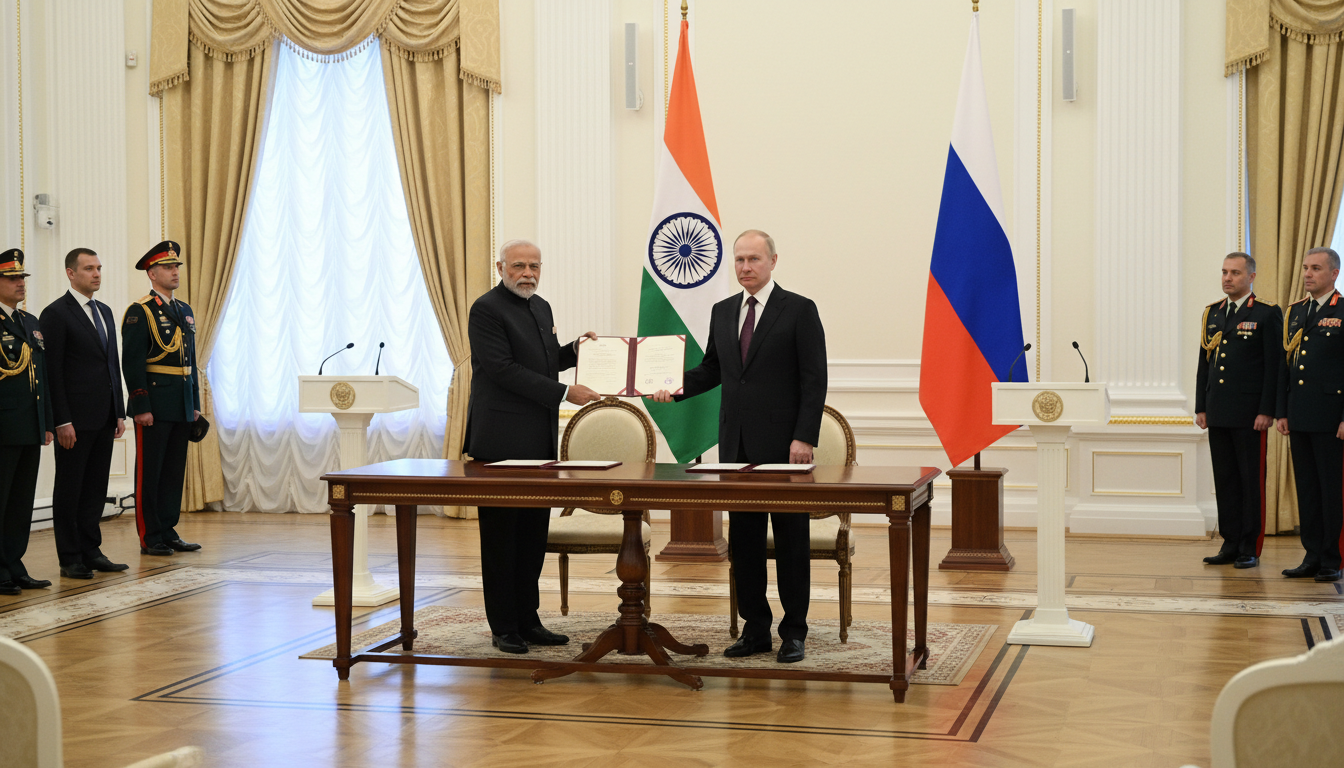
India-Russia defense pact allows mutual base access and placement of up to 3,000 troops, deepening strategic ties
India-Russia defense pact allows sharing of bases, ports and airfields and stationing of up to 3,000 troops each, signaling deeper military cooperation and regional implications.
India and Russia announced a new India-Russia defense pact that permits the two countries to share military bases, ports and airfields and to station up to 3,000 troops on each other’s territory. The agreement, described by officials and analysts as a significant upgrade in bilateral military cooperation, is framed as a move to deepen operational trust between the two partners. Analysts say the pact comes amid Moscow’s growing closeness to Beijing, a factor that makes the arrangement politically and strategically notable across the region.
Pact terms and scope
The pact grants reciprocal access to land, sea and air facilities, and establishes a legal framework for the temporary deployment of personnel and materiel. Under the agreement, each side may station up to 3,000 troops in the other country, enabling sustained rotations, logistics support and coordinated use of infrastructure. Officials framed the arrangement as focused on interoperability, logistics and crisis response rather than permanent basing, while leaving room for a phased implementation and detailed protocols to be worked out.
Operational reach for navies and air forces
Defense planners say the pact will expand the operational reach of both navies and air forces by easing refuelling, maintenance and re-supply during extended deployments. Shared access to ports and airfields could shorten transit times for maritime patrols and enhance the ability to sustain joint or complementary operations in areas such as the Indian Ocean and the northern Indian Ocean littoral. Military analysts note that improved logistics and basing arrangements materially change how forces can be deployed and supported across larger distances.
Logistics, training and intelligence cooperation
Beyond physical access, the agreement is expected to deepen logistics coordination, combined training and information sharing between armed forces. Experts anticipate a rise in joint exercises, maintenance cooperation and procedural harmonization aimed at improving interoperability. While the pact stops short of a formal alliance, defense specialists say closer operational routines and shared facilities make cooperation more resilient and predictable.
Regional diplomatic reverberations
Diplomats in the Indo-Pacific and beyond are expected to recalibrate their strategic assessments in response to the new pact. Some Western governments may view the move with concern, interpreting deeper India-Russia military ties as a shift in regional alignments. Regional capitals, including those in Southeast Asia and the Gulf, will watch for practical changes in force posture and maritime activity that could affect trade routes and security arrangements.
Moscow’s ties with Beijing and the trust question
Analysts observe that the pact deepens India-Russia trust despite Moscow’s increasingly close relationship with China in recent years. New Delhi has sought to balance its strategic autonomy while maintaining long-standing defense cooperation with Russia, and the agreement reflects an attempt to institutionalize that relationship. Strategists note the complexity this adds to New Delhi’s diplomatic calculus, as India simultaneously manages security concerns related to China while preserving a key defence partnership with Russia.
Washington and New Delhi’s strategic balancing
The pact is likely to prompt careful diplomacy between New Delhi and Washington, as the United States assesses how India’s expanded military links with Russia affect broader security cooperation. U.S. officials have in the past voiced unease over major defence ties with Moscow, but they also acknowledge India’s independent strategic choices. Observers expect nuanced exchanges aimed at reducing friction while preserving avenues for India-U.S. collaboration on technology, intelligence and maritime security.
Domestic political reactions in India
In New Delhi, the agreement has prompted debate among political parties and defence commentators about strategic priorities and legal safeguards. Supporters argue the pact secures critical logistics and cements a defence relationship that has supplied platforms and expertise for decades. Critics question transparency around the terms and express concerns about the implications for India’s diplomatic posture and commitments to other partners.
The India-Russia defense pact marks a clear step toward deeper operational coordination and logistical integration between two long-time defence partners. While the agreement does not constitute a formal military alliance, its provisions for base sharing and the temporary stationing of forces signal a notable shift in how both countries plan to support extended deployments and joint activity. The deal will require detailed implementing arrangements and will be closely watched by regional and global capitals as it is phased into practice, with implications for maritime security, diplomatic alignments and the strategic balance in Asia.

