
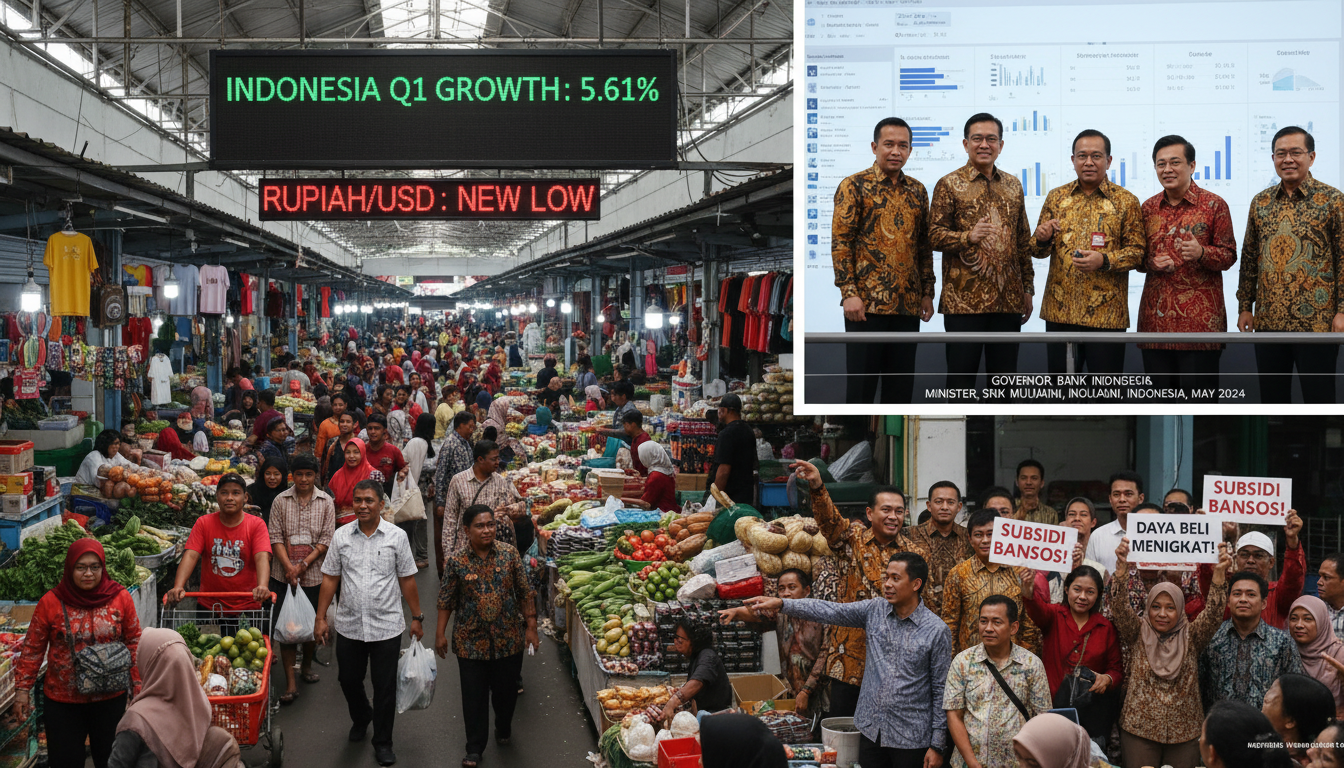
Indonesia economic growth rises 5.61% in Q1 2026 as subsidies and Eid spending lift demand
Government subsidies helped tame inflation and supported household spending during Ramadan and Eid, while the rupiah’s slide to a fresh low raises downside risks to growth and price stability.
Indonesia reported 5.61% year-on-year economic growth for the January–March quarter of 2026, as government subsidies and a surge in holiday spending supported demand during Ramadan and the Eid al-Fitr period. The strong quarterly print for Indonesia economic growth was driven largely by household consumption, which was buoyed by high travel and retail activity around the late-March holiday. Officials signaled relief at the near-term momentum but warned that a weakening rupiah and external headwinds could complicate policy decisions in the months ahead.
Q1 GDP Rises 5.61% Year-on-Year
The economy expanded 5.61% compared with the same quarter a year earlier, according to the latest official data released in Jakarta. The growth rate exceeded many analysts’ expectations and represents one of the stronger starts to the year in recent quarters.
Domestic demand, particularly consumer spending during the fasting month and the Eid holidays, was the principal contributor to the rebound. Government measures aimed at cushioning households also played a visible role in supporting outlays.
Subsidies and Eid Travel Boost Consumption
Authorities deployed targeted subsidies and relief measures ahead of Ramadan, which helped limit price increases for staple goods and energy. Those measures, combined with customary holiday transfers and bonuses, encouraged higher household expenditure across services and retail sectors.
Millions of Indonesians traveled to their hometowns for Eid al-Fitr in late March, driving stronger demand in transport, food services and traditional retail. The seasonal surge in spending provided an important lift to consumption, underpinning the quarter’s headline growth figure.
Rupiah’s Slide Threatens Stability
At the same time, the rupiah weakened to a new low in recent trading, raising concerns among economists about spillovers to inflation and investor confidence. A weaker currency increases the cost of imported goods and could push up headline inflation if the move persists.
Currency volatility also complicates the policy trade-off for monetary authorities, which must balance support for growth with the need to anchor inflation expectations. Capital outflows and higher import bills are potential near-term risks if external conditions remain strained.
Inflation Dynamics and Household Purchasing Power
Government subsidies helped moderate price pressures in the quarter, keeping headline inflation outcomes calmer than they might otherwise have been. That relief supported real incomes and helped maintain spending momentum among lower- and middle-income households.
However, the combination of a softer rupiah and global commodity price swings could reintroduce inflationary impulses later in the year. Analysts caution that once temporary measures wane, consumer prices could face renewed upward pressure, eroding purchasing power if wages and employment do not keep pace.
Policy Choices for Bank Indonesia and the Government
Policymakers face a delicate balancing act: sustaining growth through fiscal support while guarding against imported inflation and financial market strains. The government’s discretionary subsidies have provided short-term stability, but they also carry a fiscal cost that may constrain future budget flexibility.
Monetary authorities will be closely watching inflation trends and currency moves when calibrating interest-rate decisions. Any tightening to defend the rupiah and rein in inflation risks could, however, weigh on domestic demand and borrowing costs, complicating the outlook for investment and consumption.
External Headwinds and Trade Outlook
Global demand and commodity price developments remain key external variables for Indonesia’s near-term performance. A slowdown among major trading partners or further swings in commodity prices could damp export receipts and tighten the current-account balance.
At the same time, a continued slide in the rupiah would raise import costs and heighten the risk of imported inflation. Diversifying export markets and supporting higher-value domestic output are among measures suggested by analysts to strengthen resilience against external shocks.
Economic momentum in the first quarter was clear, but sustaining it will depend on how policymakers manage the interplay between fiscal relief, currency stability and inflation control. The coming months will test whether the temporary boost from Ramadan and Eid spending can be translated into durable gains for investment, employment and household incomes.

