
Indonesia to Activate Bond Stabilization Fund Next Week to Support the Rupiah
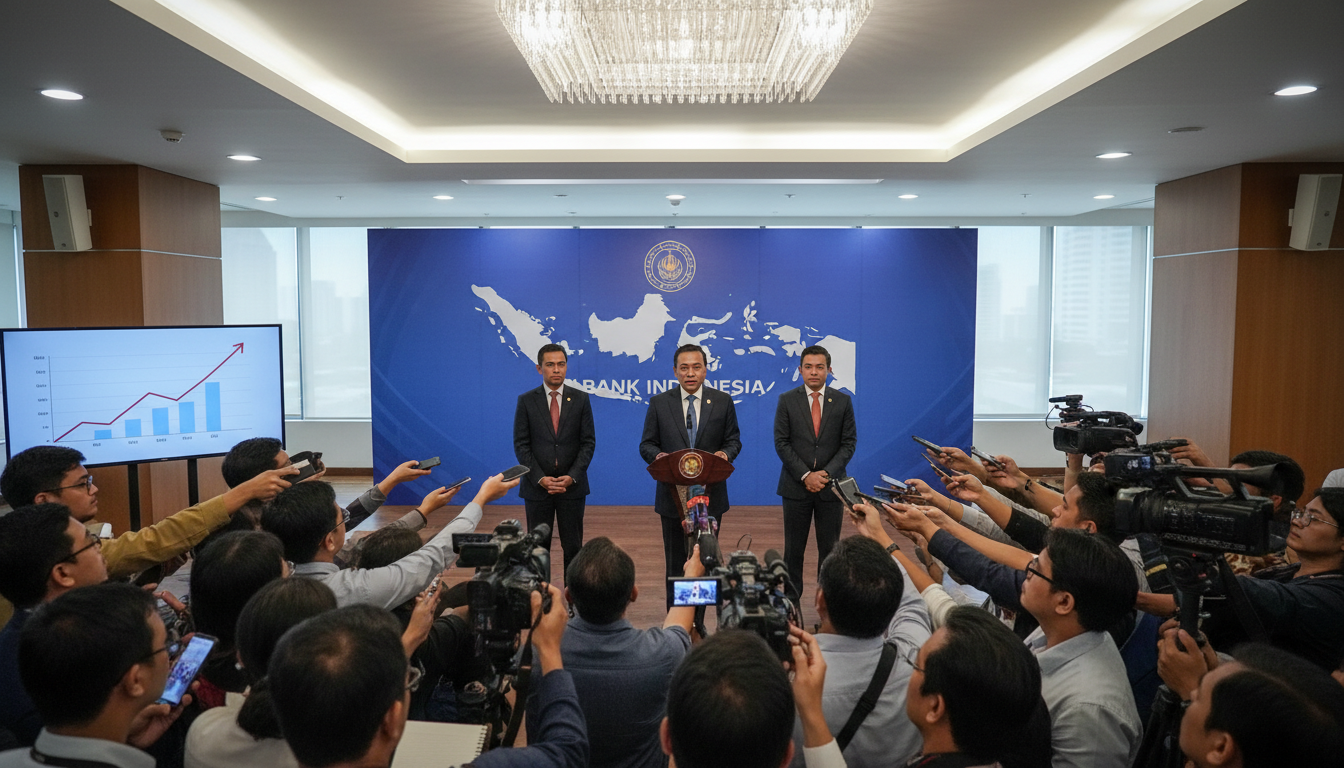
Indonesia will activate a Bond Stabilization Fund next week to shore up the rupiah and counter capital outflows, Finance Minister Purbaya Yudhi Sadewa said at a Financial System Stability Committee briefing. The announcement signals a coordinated fiscal effort to calm bond markets while authorities monitor investor reactions. Markets, however, remain uncertain whether the new framework will be sufficient to halt recent portfolio flows out of the country.
Government to Activate Bond Stabilization Fund Next Week
The finance ministry confirmed the Bond Stabilization Fund will be put into operation next week, with its primary objective described as support for the rupiah and stabilization of the domestic government bond market. Officials framed the measure as a targeted tool to buy back government bonds or provide liquidity where market functioning deteriorates.
The activation follows signs of increased volatility in local currency and sovereign yields that policymakers say risk exacerbating capital outflows. Authorities emphasized the fund is part of a broader toolkit and will be deployed in a calibrated manner to avoid market disruption.
Finance Minister’s Statement at KSSK Briefing
Finance Minister Purbaya Yudhi Sadewa made the announcement at a quarterly meeting of the Financial System Stability Committee, underscoring inter-agency coordination. The KSSK, which brings together fiscal and financial regulators, is positioned to assess systemic risks and advise on the fund’s use.
In his remarks, the minister framed the move as preventive and conditional, rather than a permanent shift in market policy. He signaled that activation aims to buttress confidence while other macroeconomic levers remain in place to preserve market stability.
Market Skepticism and Capital Outflow Concerns
Despite the announcement, market participants expressed doubts about how effectively the Bond Stabilization Fund will curb capital outflows from Indonesia. Investors are closely watching global interest rate trends, regional liquidity conditions, and domestic yield differentials that influence portfolio decisions.
Analysts caution that a stabilization fund may provide temporary relief but is unlikely to erase underlying drivers of outflows without complementary policy signals. Questions persist about the fund’s size, operational rules, and threshold for intervention, all of which will shape market perception and effectiveness.
Mechanics of the Bond Stabilization Fund
Officials describe the fund as a liquidity and market-support vehicle that can buy government securities or backstop trading when normal market functioning fails. Such instruments are typically designed to intervene selectively to smooth excessive yield moves and restore orderly pricing.
The precise operational details—such as eligible instruments, counterparty arrangements, and sunset provisions—will be critical to market confidence. Clear rules and transparent communication are likely to be emphasized by policymakers to avoid creating uncertainty about the fund’s mandate or duration.
Policy Coordination and Next Steps
The activation underscores coordination between fiscal authorities and financial regulators tasked with preserving systemic stability. The KSSK’s quarterly review provides a forum to evaluate risks and sequence policy responses, including any use of the stabilization fund.
Going forward, authorities will likely monitor capital flows, bond liquidity metrics, and exchange-rate pressures to determine the timing and scale of interventions. They have signaled that the fund is part of a broader policy mix, and will not substitute for macroeconomic adjustments or central bank measures when needed.
The announcement comes amid broader regional and global market stress that has led several emerging markets to consider temporary market-support mechanisms. Indonesia’s move is intended to reassure investors and reduce the likelihood of disorderly selloffs that could amplify financial instability.
Market reaction in the coming days will be an important test of the fund’s credibility and of policymakers’ ability to coordinate across institutions. Observers will be watching for further details on operational guidelines and any signs that additional measures will be mobilized to address persistent outflow pressures.

