
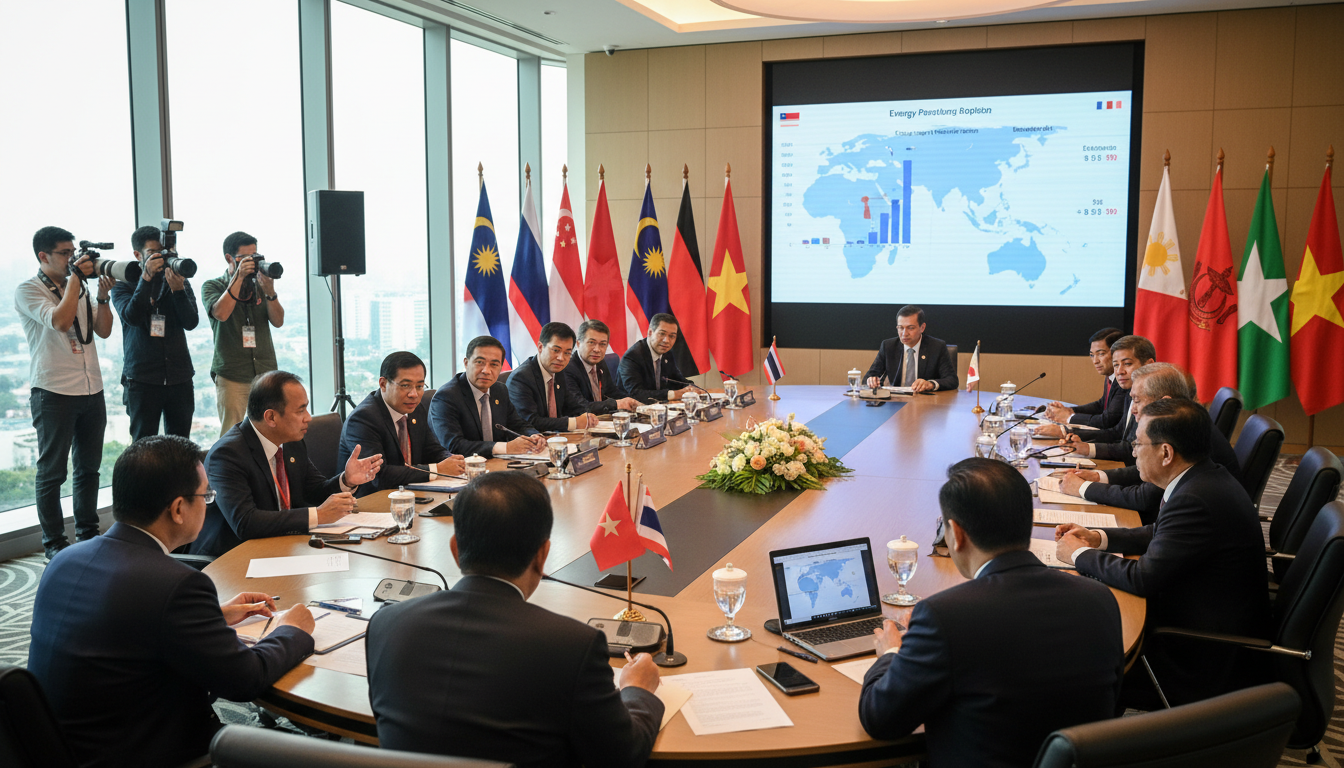
ASEAN Response to Iran War: Ministers Pledge Energy, Food and Humanitarian Measures in Cebu
ASEAN foreign and economic ministers pledged a coordinated ASEAN response to Iran war at a meeting in Cebu on May 7, 2026, focusing on energy security, food supply resilience and humanitarian coordination.
The ministers met ahead of the ASEAN leaders’ summit scheduled for May 8, 2026, and framed their recommendations to limit spillovers into the region’s markets and supply chains.
Ministers outline coordinated priorities
Ministers issued a joint commitment to “strengthening energy security, safeguarding food security, and coordinating humanitarian responses” during talks in Cebu, the Philippines.
The declaration was presented after bilateral and multilateral consultations among the ten ASEAN member states and was positioned as pragmatic crisis-management rather than a military or sanctions response.
Energy security measures proposed
Delegations discussed steps to mitigate disruptions to fuel supplies and energy markets that could arise from broader Middle East instability.
Proposals included boosting regional fuel stockpiles, diversifying import sources, expanding LNG contracts, and enhancing monitoring of maritime routes affecting trade flows.
Plans to safeguard food supplies
Ministers flagged risks to agricultural inputs and shipping routes that could affect rice, vegetable oil and fertilizer availability across Southeast Asia.
They urged strengthened early-warning systems, shared data on critical stocks, and contingency arrangements to prevent export bans from triggering price spikes and shortages.
Humanitarian coordination and partnerships
ASEAN ministers agreed to coordinate humanitarian planning to prepare for refugee flows, displaced populations and urgent relief needs stemming from the conflict’s humanitarian fallout.
They emphasised working with United Nations agencies and international partners to pre-position assistance and to ensure safe, neutral channels for aid delivery.
Economic and diplomatic implications for the region
Officials warned that extended instability could heighten inflationary pressures, disrupt trade corridors and dent growth prospects for export-oriented economies in ASEAN.
The ministers urged restraint and a return to diplomacy, while preparing economic policy tools to stabilise markets if the conflict expanded or supply shocks intensified.
Recommendations for leaders at the summit
Ministers said they would brief heads of state and government at the ASEAN leaders’ summit in Cebu on May 8, 2026, and recommended that summit participants endorse a coordinated regional response package.
The proposed package would ask leaders to mandate senior officials to implement energy, food and humanitarian measures and to convene a technical monitoring group to track developments.
The ministers framed their actions as precautionary and reversible, aimed at buffering ASEAN countries from secondary impacts of the Iran war while keeping channels open for regional diplomacy and engagement.

