
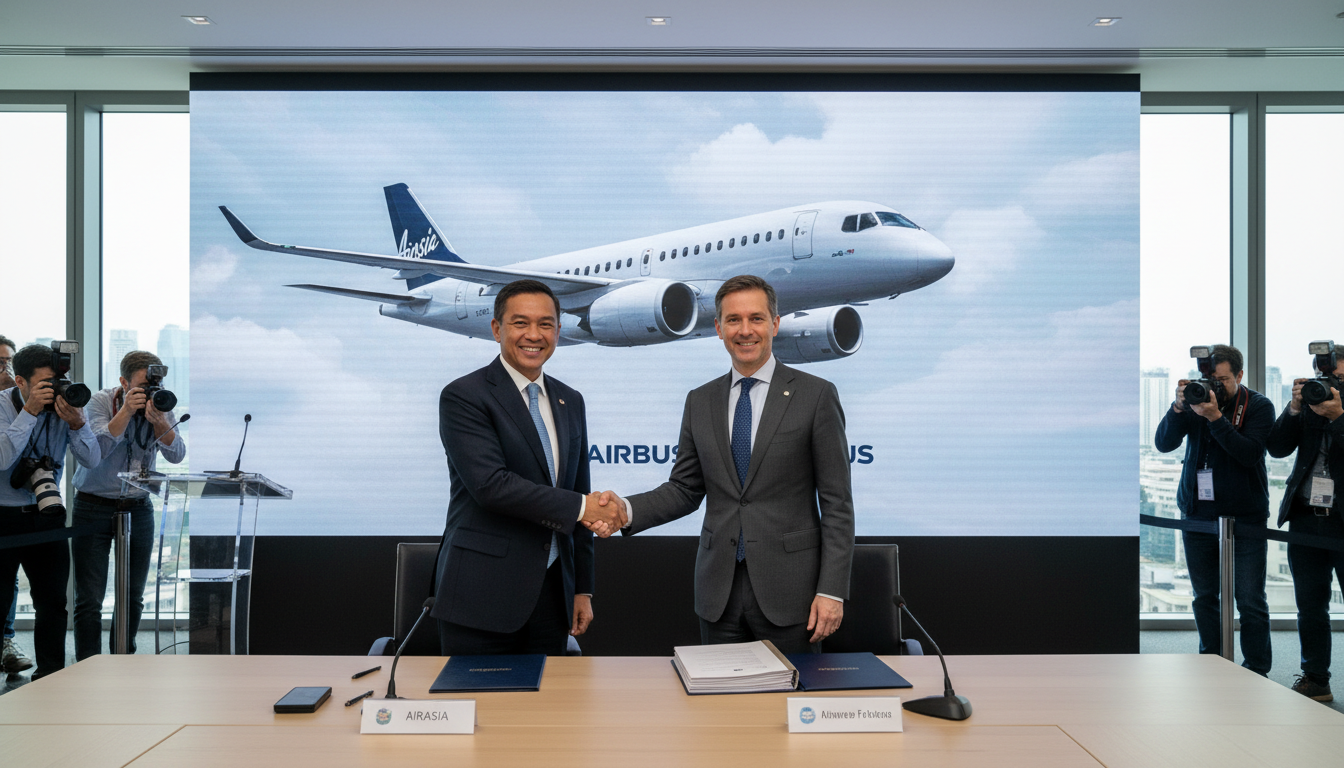
AirAsia signs $19 billion Airbus A220 order for 150 jets in fleet overhaul
AirAsia signs a $19 billion order for 150 Airbus A220 jets to modernize its fleet, reduce fuel costs and underpin a planned expansion of regional routes.
AirAsia confirmed on Thursday that it has placed an order for 150 Airbus A220 aircraft, a deal valued at about $19 billion that the carrier says will form the backbone of a major fleet overhaul. The AirAsia A220 order is framed as a strategic response to rising fuel costs and as a foundation for expanding the airline’s regional network, the company said in its announcement.
Deal details and announcement
AirAsia said the agreement covers 150 Airbus A220 aircraft with a list-price value of roughly $19 billion, though it did not disclose specific pricing terms or discount levels. The carrier described the order as part of a broader effort to renew its narrow-body fleet and improve unit economics as jet fuel prices remain elevated.
Company officials said the new aircraft will be phased into operations to replace older models and to enable growth on regional routes across Southeast Asia. AirAsia did not immediately provide a detailed delivery timetable or the breakdown of A220 variants the airline will receive.
Fuel efficiency and operational rationale
The A220 is marketed for its lower fuel burn and reduced operating costs on short- and medium-haul sectors, benefits AirAsia highlighted as central to the purchase. Executives cited fuel efficiency and per-seat cost improvements as key drivers of the decision amid a challenging cost environment for low-cost carriers.
Industry analysts note that modern, smaller narrowbodies can deliver significant per-flight savings and greater flexibility on thinner routes, enabling carriers to match capacity to demand more precisely. AirAsia said the aircraft will support more frequent services and allow for better economics on both existing and new routes.
Network expansion ambitions
AirAsia framed the order as a tool to expand its network across intra-Asia markets, aiming to tap growing demand for regional travel and point-to-point connectivity. The carrier signaled intentions to open slots on thinner city pairs and to increase frequencies on high-demand routes where efficient narrowbodies can raise yields.
AirAsia’s management has previously emphasized regional growth as a priority, and the A220 order underlines a strategic shift toward fleet types that support flexibility. Observers expect the airline to use the new jets to pursue routes underserved by larger narrowbodies while maintaining its low-cost model.
Financial implications and pricing context
While the headline value of the deal stands at about $19 billion, aviation-sector practice means actual transaction pricing will likely reflect substantial manufacturer discounts and financing arrangements. Airlines commonly secure relief via discounted list prices, sale-and-leaseback financing, or blended payment schedules to preserve cash and balance-sheet flexibility.
AirAsia did not disclose how it will finance the acquisition, whether through direct purchase, leasing partners, or a mix of instruments. Market watchers said the size of the order will necessitate careful capital management, particularly as carriers balance fleet modernization with operational recovery and debt obligations.
Manufacturer response and delivery expectations
Airbus welcomed the agreement but offered only standard commentary acknowledging the firm order and noting the A220’s suitability for regional operations. The manufacturer typically works with customers on a phased delivery schedule that can span several years depending on production capacity and existing backlog.
AirAsia’s announcement did not specify immediate delivery dates, which suggests aircraft will be scheduled under Airbus’s existing production plan and likely delivered in tranches. The carrier will need to align crew training, maintenance capabilities and airport handling arrangements before new aircraft enter service.
Market reaction and competitive landscape
The order will reshape the competitive dynamics among Southeast Asian low-cost carriers by giving AirAsia a modern, fuel-efficient platform that can contest both budget and hybrid carriers on regional routes. Rivals are likely to monitor the impact on yields and frequency on key city pairs as the new jets enter service.
Analysts expect competitors to respond with their own capacity and network adjustments, while lessors and financiers may see increased demand to facilitate the transaction through leasing and asset-management structures. The buy-side momentum for efficient regional jets may accelerate fleet renewal conversations across the market.
AirAsia’s decision to commit to 150 A220s represents a bold bet on fleet standardization and regional growth as a path to improved profitability. The carrier said the move is intended to lower operating costs, increase flexibility on thinner routes and position the airline to capture rising intra-Asia travel demand as markets continue to recover.

