
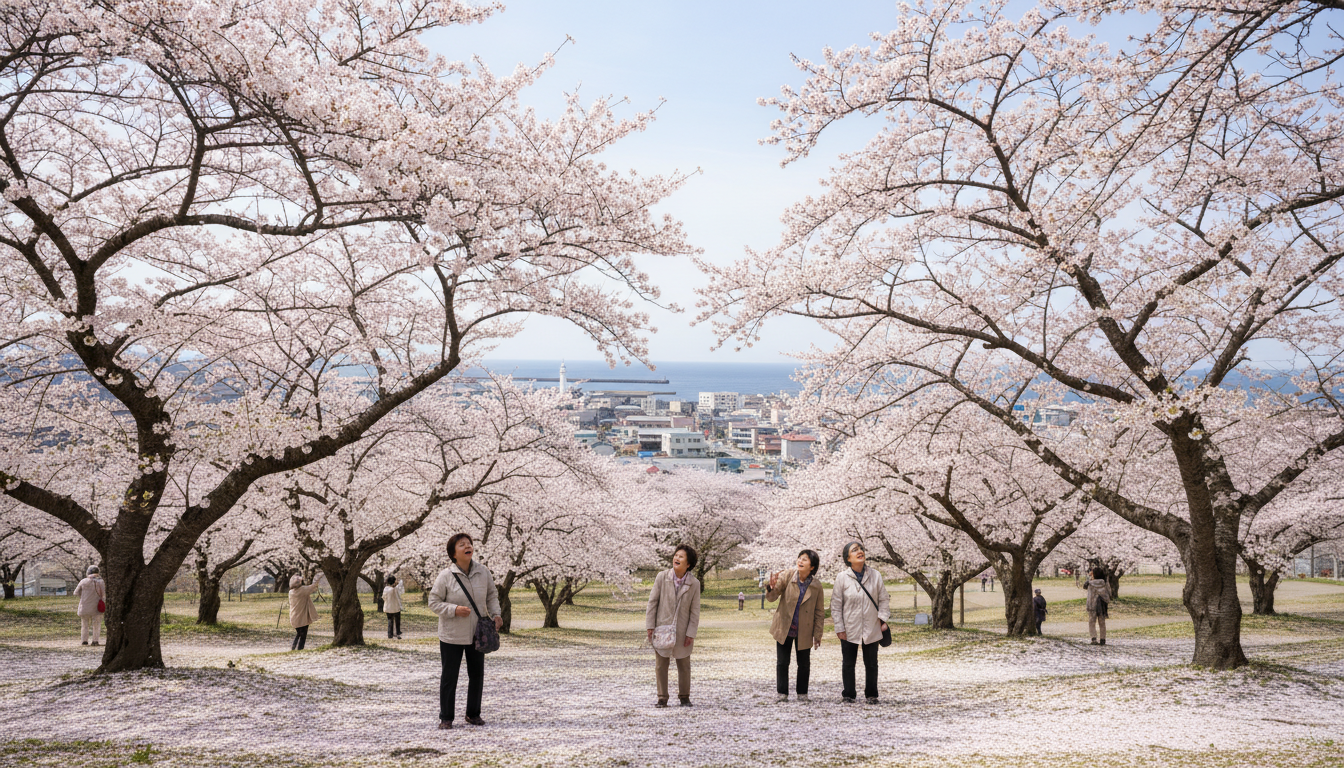
Chishima cherry blossoms bloom early in Nemuro, Hokkaido; declaration marks easternmost end of cherry-front
Chishima cherry blossoms were confirmed in Nemuro on May 7, 2026, marking an early bloom and the easternmost point of Japan’s cherry blossom front.
Bloom Confirmed in Nemuro on May 7, 2026
The Nemuro city government and the Nemuro Tourism Association announced on May 7, 2026 that Chishima cherry blossoms had reached bloom on a local reference tree. Officials reported observing five or more flowers on the tree, meeting the criteria for an official "declaration of bloom."
The announcement was made after field confirmation by municipal staff and tourism officials, and the declaration signals a traditional milestone for local residents and visitors. The timing drew immediate attention because it was earlier than recent years and earlier than the historical norm.
Reference Tree Traced to Northern Territories
Local authorities said the reference tree in Nemuro is believed to have originated from the Northern Territories. The provenance of the tree has cultural and botanical significance given historical ties and the species’ distribution in northeastern regions.
The origin was noted by municipal staff during their inspection and added context to the bloom announcement. The association stressed the tree’s role as an official observation point for tracking local phenology.
Second Earliest Bloom Since 1960
Meteorological records indicate that the Nemuro bloom this year occurred six days earlier than in 2025 and roughly 10 days earlier than the long-term average. Authorities described this year’s timing as the second earliest recorded since systematic observations began in 1960.
The comparison to historical records underscores a notable shift in seasonal timing for the region. Researchers and local authorities will use this year’s data as part of ongoing monitoring of cherry blossom phenology across Hokkaido.
Easternmost Point Marks End of Cherry-Front Movement
The Japan Weather Association reported that the Chishima cherry blossoms in Nemuro represent the easternmost blooms on Japan’s main island, effectively marking the end of the annual cherry blossom front. The announcement completes the seasonal sweep of flowering that progresses from south to north each spring.
This seasonal progression, closely watched by the public and tourism sectors, culminates when blooms are observed in the country’s farthest reach. The official end of the front has implications for travel planning and regional festivals that rely on forecasted bloom dates.
Progression Across Hokkaido in April
According to the Japan Meteorological Agency, the cherry blossom season in Hokkaido began in the south on April 13, 2026, when blooms were detected in the town of Matsumae. Blooming then moved northward through the prefecture, with Sapporo recording opening flowers on April 18 and Asahikawa on April 21.
The three-week progression across Hokkaido followed a pattern seen in recent years but at generally earlier dates this season. Local tourism offices in affected cities reported increased inquiries as visitors sought to align travel with the flowering period.
Warmer Spring Temperatures Cited by Agencies
Both the Japan Weather Association and the Japan Meteorological Agency attributed the early blooms in part to higher-than-normal average temperatures during March and April. The agencies noted that warmer spring conditions accelerated the phenological cycle for cherry trees across the prefecture.
Climate analysts say seasonal temperature variations are a primary driver of flowering dates for temperate tree species, and this year’s readings were consistently above historical averages for the region. Officials emphasized that while a single season does not establish a trend, continued monitoring is important for understanding long-term shifts.
Nemuro’s early Chishima blossoms have drawn local interest and prompted seasonal activity planning, with municipal and tourism bodies coordinating to provide information to residents and visitors.
Warmer-than-average early spring conditions helped move the cherry blossom front northward earlier than usual this year, and the confirmed bloom in Nemuro on May 7, 2026, closes the seasonal sweep across mainland Japan.

