
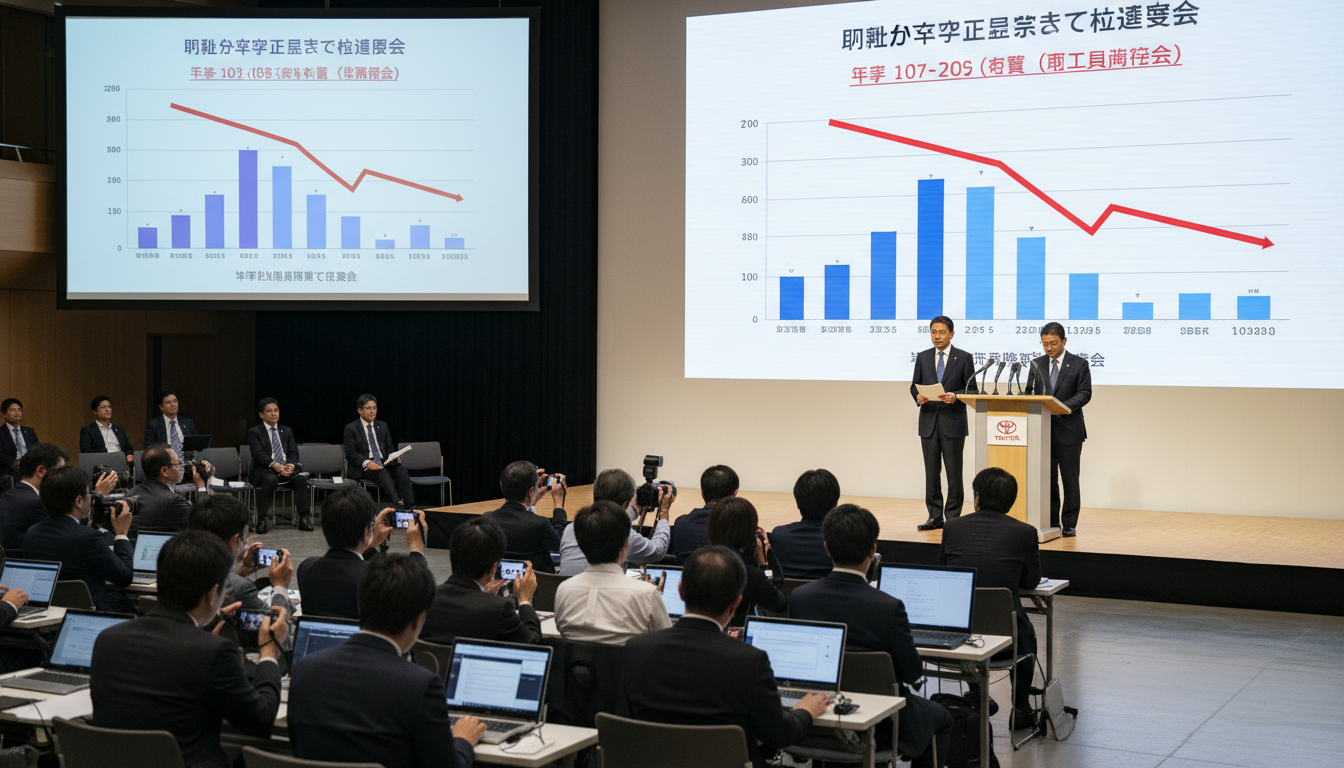
Toyota profit forecast cut as soaring material costs and Middle East tensions squeeze margins
Toyota profit forecast cut: net profit to fall 22% to ¥3 trillion for year ending March 2027 as rising material costs and Middle East tensions squeeze margins.
Toyota said it expects its net profit for the year ending March 2027 to fall 22% to ¥3 trillion, signaling a significant downward revision to its outlook driven by rising input costs and geopolitical strain. The Toyota profit forecast comes despite the automaker reporting record-high global sales for the fiscal year ended March 2026. Management cited soaring material costs, including those linked to a deteriorating security situation in the Middle East, as primary pressures on margins and earnings.
Toyota cuts net profit outlook for fiscal 2027
Toyota announced a fiscal 2027 net profit forecast that is markedly lower than the prior year, with management forecasting a 22% decline to ¥3 trillion. The company tied the revision to a sharp rise in material and commodity prices, which it said will more than offset gains from strong vehicle sales. This forecast marks a notable shift for the world’s largest automaker and signals tighter profitability even as volumes remain robust.
Material costs and Middle East tensions cited as drivers
Toyota attributed much of the profit hit to higher raw material costs, including steel, semiconductors and energy-related inputs that have been affected by geopolitical instability. Officials pointed to the deteriorating situation in the Middle East as a factor that has pushed up logistics and commodity prices, complicating supply-chain pass-throughs. The combination of sustained commodity inflation and constrained supplier capacity has narrowed margins, the company said.
Record sales in fiscal 2026 contrast with weaker profit outlook
The company recorded record-high global sales for the fiscal year that ended in March 2026, underscoring continued demand across major markets even as unit profitability weakened. Sales strength was particularly notable in key regions, but higher input costs and unfavorable currency movements eroded the earnings benefit of that volume. Toyota’s ability to grow top-line revenue has therefore not translated proportionally into net income for the coming fiscal year.
North America strategy amid tariff and trade pressures
Toyota reiterated its intention to maintain strong sales in North America despite tariffs on imported cars and shifting U.S. trade policy that have increased costs for some models. The automaker emphasized its commitment to a local production footprint and a model mix designed to limit exposure to import penalties while meeting consumer demand. Executives said they will continue balancing pricing, production localization and product planning to sustain market share in the region.
Cost controls, pricing and production adjustments under review
Faced with margin pressure, Toyota said it will pursue a combination of cost-reduction measures, targeted price adjustments and production flexibility to mitigate the impact on profit. The company plans to double down on procurement negotiations, improve component yields and accelerate efficiency programs across its manufacturing network. Toyota also flagged ongoing work to manage inventory and align output with demand shifts to reduce wasteful spending.
Investor reaction and broader industry implications
Market observers said Toyota’s profit revision could pressure peers to reassess their own forecasts if commodity and geopolitical trends persist, with ripple effects across suppliers and parts manufacturers. Investors are likely to scrutinize Toyota’s margin recovery plan as the industry navigates higher input costs and a complex trade environment. Analysts will watch upcoming quarterly updates closely for signs that pricing measures or operational changes are beginning to offset the cost headwinds.
Toyota’s revised profit outlook underscores the tension between resilient consumer demand and rising operational costs that many automakers now face. The company’s near-term performance will hinge on how quickly it can contain expenses and whether external factors such as commodity markets and geopolitical developments ease in the months ahead.

