
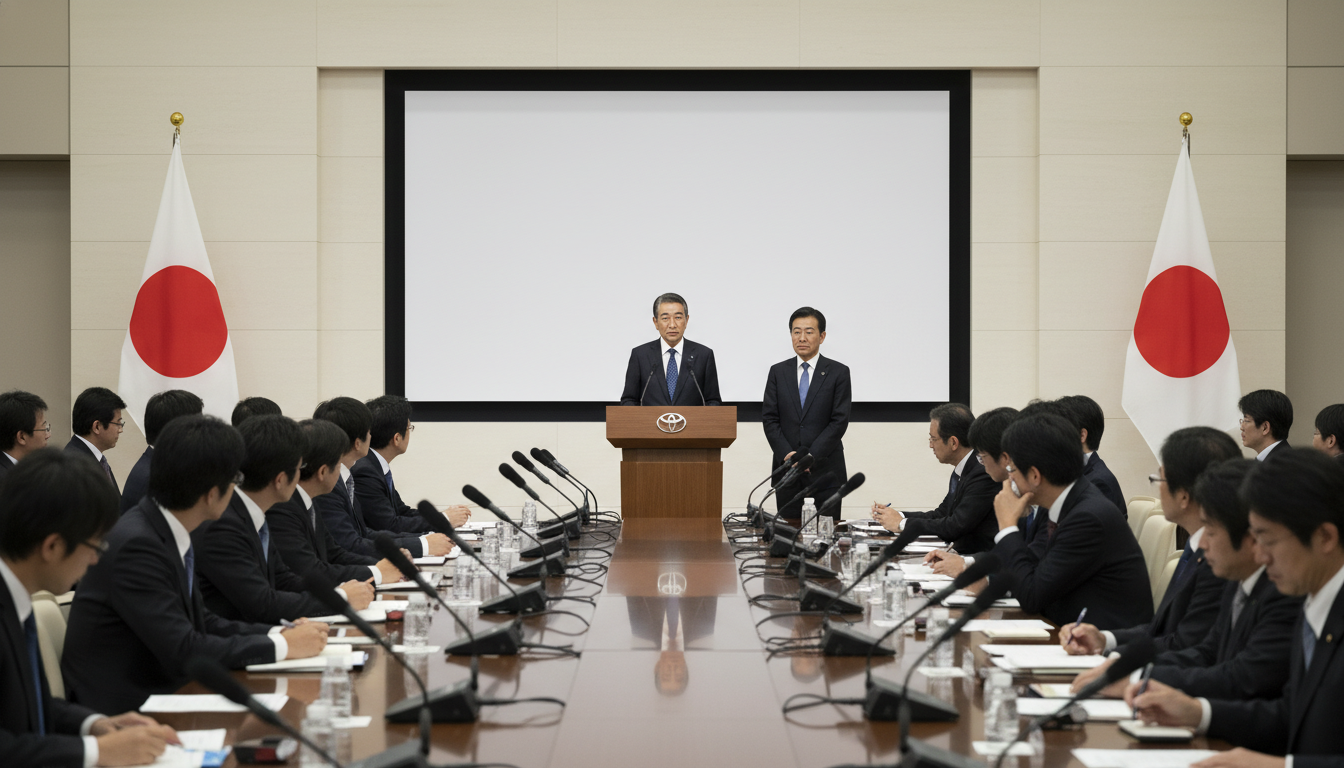
Toyota FY2025 results: Record ¥50.68 trillion revenue as operating profit falls 21.5%
Toyota FY2025 results show record ¥50.6849 trillion revenue while operating profit fell 21.5%; company forecasts further profit decline to ¥3 trillion for FY2026 amid tariff and geopolitical headwinds.
Toyota FY2025 results showed the group surpassed ¥50 trillion in annual operating revenue for the first time, reporting ¥50.6849 trillion in sales while operating profit declined 21.5% to ¥3.7662 trillion. The company attributed the drop largely to U.S. tariff measures under the Trump administration, which it said reduced operating profit by ¥1.38 trillion. Toyota also issued a cautious outlook for the coming year, forecasting a 20.3% fall in operating profit to ¥3.0 trillion and citing Middle East tensions as a fresh drag on earnings.
Record revenue milestone for the Toyota group
The Toyota group recorded operating revenue of ¥50.6849 trillion for fiscal 2025, marking the first time annual revenue exceeded the ¥50 trillion threshold for the company. Management highlighted the milestone as evidence of continued global demand for Toyota vehicles and related services despite profit pressures. The revenue gain was 5.5% higher than the previous fiscal year and reflected strength across multiple markets.
Sharp fall in operating profit and main causes
Operating profit for the year fell 21.5% to ¥3.7662 trillion, a decline Toyota linked to several specific factors. The company said U.S. tariff actions imposed by the Trump administration cut operating profit by about ¥1.38 trillion, eroding margins on North American operations and supply chains. Currency movements and cost pressures related to raw materials and logistics were also mentioned as contributing pressures on profitability.
Forecast for FY2026 and stated downside risks
For fiscal 2026, Toyota projected operating profit of ¥3.0 trillion, a decline of 20.3% from the previous year, underscoring management’s expectation that headwinds will persist. The company specifically estimated that a deterioration in Middle East conditions would shave roughly ¥670 billion from operating profit, adding to the tariff-related impact already felt. Toyota framed the forecast as a conservative estimate intended to account for geopolitical uncertainty and potential cost fluctuations.
Tariffs and the U.S. market impact
Toyota attributed a material portion of the profit decline to tariffs enacted under the U.S. administration, which it said lowered operating profit by ¥1.38 trillion in the fiscal year. The company indicated that tariffs have had a direct effect on vehicle pricing, sourcing decisions and the cost structure of operations in North America. Toyota’s comments signal attention to trade policy as a critical factor for future planning and a source of earnings volatility.
Geopolitical tensions and supply-chain exposure
The company warned that escalating tensions in the Middle East would further reduce profits, estimating an impact of approximately ¥670 billion for the coming fiscal year. Toyota’s global supply chain and energy-linked costs make the automaker sensitive to geopolitical shocks, particularly those that affect shipping routes, commodity prices and insurance premiums. Management said the company is monitoring developments closely and preparing contingency measures to limit disruptions.
Management response and strategic measures
Toyota said it will pursue measures to mitigate margin pressure, including cost control, pricing adjustments and supply-chain optimisation, while continuing investment in electrification and mobility services. The company emphasized maintaining long-term competitiveness even as near-term profit forecasts have been reduced. Toyota also stressed that its robust revenue base and diversified global footprint provide resilience amid cyclical and structural challenges.
Investor confidence and market implications
The results present a mixed picture for investors: record sales growth paired with significant profit erosion and a conservative outlook for the year ahead. Analysts and stakeholders will likely focus on how Toyota balances short-term margin recovery with long-term investments in EVs, software and new mobility services. The company’s explicit breakdown of tariff and geopolitical impacts provides clearer visibility into the drivers behind the earnings retreat.
Toyota’s announcement underlines the complex interplay between global demand, trade policy and geopolitical risk as automakers navigate a transition in technology and market structure. Toyota FY2025 results therefore reflect both the company’s scale in achieving historic revenue and the immediate vulnerabilities that can compress profits, shaping strategy and investor expectations going forward.

