
Huawei EV Push Dominates Auto China 2026, Recasting China’s Car Industry
Huawei EV role at Auto China 2026 expands rapidly as the tech group supplies software, chips and retail channels to automakers, reshaping China’s EV market.
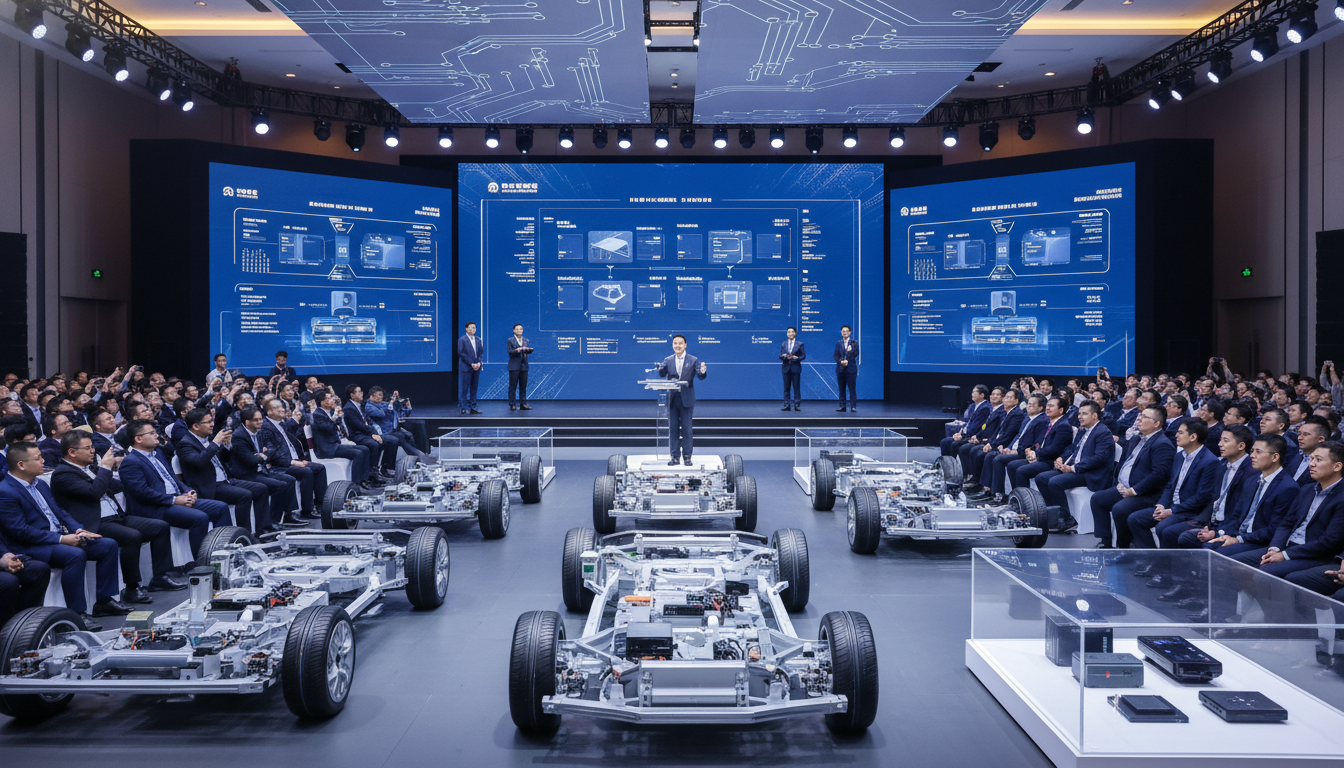
Huawei EV appeared repeatedly at Auto China 2026 in Beijing, signaling a shift in how vehicles are developed and sold in China. The company has refrained from mass-producing branded cars, yet its technologies and retail presence are increasingly central to electric vehicle strategies. Industry executives and buyers alike told reporters that Huawei’s software, sensors and showroom displays are changing the balance of power in the market.
Huawei prominence at Auto China 2026
Exhibitors and attendees at the Beijing show noted Huawei-branded systems displayed across numerous partner booths. Automakers presented cars said to be "powered by" Huawei software or integrated with the firm’s driver assistance and infotainment suites.
Observers described the visibility as unusual for a firm traditionally known for telecoms and smartphones, underscoring how Huawei EV technology has moved from component supplier to a visible consumer-facing proposition. The company’s logo in retail contexts and showrooms reinforced its new commercial ambitions.
Partnership model with automakers
Huawei’s strategy centers on providing platforms and modules rather than building vehicles end-to-end under its own marque. Instead of full manufacturing, the company develops operating systems, computing units and electrical architectures that automakers can adopt.
Under this model, carmakers retain vehicle assembly and branding while relying on Huawei for core software integration and connectivity. That approach has allowed multiple manufacturers to accelerate EV development without replicating costly R&D for autonomous driving and cloud services.
Retail integration and consumer reach
In several cities, Huawei stores now display vehicles alongside smartphones and laptops, blurring lines between tech retail and car showrooms. Sales staff trained in both consumer electronics and vehicle features aim to explain integrated services and subscription models to shoppers.
Bringing cars into existing retail networks reduces friction for consumers and shortens the sales funnel for partner automakers. The tactic also lets Huawei collect customer data on device preferences and vehicle usage, a commercial advantage in a data-driven mobility market.
Technical offerings and software stack
Huawei supplies a layered software stack that includes vehicle operating systems, advanced driver-assistance algorithms and cloud connectivity tools. The company pairs these systems with custom computing hardware and sensor integration to deliver end-to-end solutions for partners.
Automakers using Huawei EV systems emphasize faster feature rollouts and improved in-car user experience. The vendor’s focus on software updates and modular hardware also promises to extend product life cycles and enable over-the-air improvements after purchase.
Impact on suppliers and competition
Huawei’s rise is reshaping supplier relationships across the EV ecosystem, prompting component firms to reassess their roles. Traditional Tier 1 suppliers may face pressure as automakers elect to standardize on integrated platforms that bundle multiple functions from a single provider.
At the same time, established automakers and newer EV startups are leveraging Huawei’s modules to compete more rapidly, intensifying competition on features and pricing. The result is a faster pace of innovation, but also potential consolidation among smaller suppliers unable to match integrated service offerings.
Regulatory and geopolitical considerations
Huawei’s expanding footprint in automotive technology intersects with regulatory scrutiny and geopolitical dynamics. Authorities in China and abroad are increasingly attentive to data governance, vehicle safety standards and cross-border supply chains linked to critical technologies.
For automakers working with Huawei EV systems, compliance with evolving regulations on software safety and data protection will be a core management task. Companies must also navigate export controls and certification regimes if they aim to sell Huawei-integrated vehicles beyond the domestic market.
Looking ahead, Huawei EV’s prominence at Auto China 2026 illustrates a broader trend: technology firms are moving from supplying parts to defining product experiences and sales channels. Automakers that embrace these integrated platforms may accelerate feature development and tap new retail pathways, while those that resist could find themselves competing on increasingly narrow margins.
Huawei’s role will hinge on its ability to maintain technical leadership, manage partnerships, and address regulatory concerns. As consumers become more accustomed to software-led vehicle features, the lines between carmakers and tech companies will continue to blur, reshaping how electric vehicles are built, sold and updated.

