
SoftBank launches battery business to power AI data centers, targets $640m in annual sales
SoftBank battery business launched in Japan to supply AI data centers and expand overseas, with ties to two South Korean startups and a target of over $640 million in annual sales.
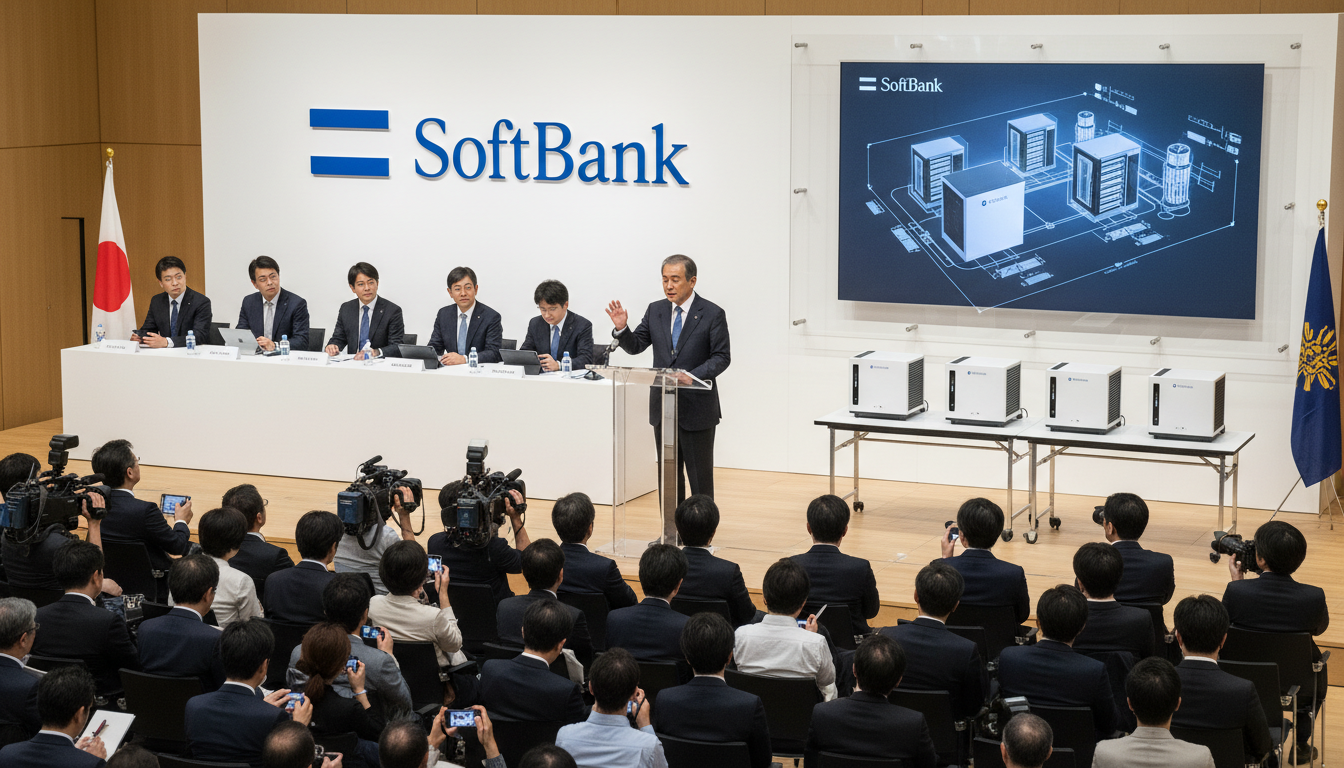
SoftBank Corp. announced on May 11, 2026 that it has launched a new battery business in Japan to meet rising electricity demand from artificial intelligence data centers. The move positions the telecom operator to develop and manufacture battery cells and battery energy storage systems for its own facilities. Company executives say the initiative will initially support internal data center needs with a view to commercial expansion abroad.
SoftBank establishes a dedicated battery unit in Japan
SoftBank has created a dedicated business unit focused on battery cell production and energy storage systems tailored to high-density computing environments. The unit will coordinate design, manufacturing and integration of storage systems that can directly support data center power resilience. The company framed the effort as an internal capability that can be scaled to serve external customers in later phases.
SoftBank’s decision reflects a broader industry trend of telecom and cloud providers bringing critical infrastructure in-house to control costs and supply chains. By vertically integrating battery production, the firm aims to shorten lead times and secure components for rapidly expanding AI compute demands. Officials described the initiative as both a strategic and operational response to surging energy needs.
Partnerships formed with two South Korean startups
SoftBank said it has tied up with two South Korean startups to accelerate technology development and initial production runs. The collaborations will cover cell development, system integration and supply-chain coordination, according to company statements. SoftBank intends to leverage the startups’ specialized engineering while contributing capital and Japanese manufacturing know-how.
The partnerships are framed as complementary relationships rather than outright acquisitions, enabling SoftBank to access niche battery technologies quickly. Industry observers note that South Korea remains a hub for advanced battery engineering, and collaboration with Korean firms may shorten SoftBank’s development timeline. SoftBank plans to scale joint activities if early trials meet performance and cost benchmarks.
AI data centers cited as primary near-term customers
SoftBank emphasized that its AI data centers — already consuming growing volumes of electricity for model training and inference — will be the first and principal users of the new battery systems. The storage units are intended to improve power reliability, enable peak shaving and reduce reliance on grid infrastructure during high-demand periods. Executives said the integration will also support energy management strategies across sites.
Data center operators globally are seeking energy solutions that combine reliability with cost efficiency as compute demand surges. For SoftBank, internal use provides a controlled environment to validate system performance before offering products commercially. The company said early deployments will focus on areas where its data center density and compute loads are highest.
Plans to develop both cells and energy storage systems
The new business will cover both battery cell development and assembly of battery energy storage systems, enabling end-to-end production oversight. SoftBank described ambitions to move from prototype stages to mass production within a defined timetable tied to data center buildouts. The company emphasized safety, thermal management and lifecycle performance as key engineering priorities.
Manufacturing will combine in-house capabilities with partner contributions, aiming to meet rigorous standards required for continuous operation in data center environments. SoftBank also highlighted plans for testing and certification to satisfy regulatory and customer requirements. The approach is designed to allow iterative improvements based on real-world operational feedback.
Financial targets and commercial expectations exceed $640 million
SoftBank has set a target of achieving more than $640 million in annual sales from the battery business once it reaches commercial scale. The figure reflects revenue from internal deployments and future external sales of cells and energy storage systems. Executives told investors that the target is contingent on successful ramp-up of production and market acceptance beyond initial internal use.
Analysts say the target is ambitious but plausible if SoftBank captures a portion of the fast-growing market for data center storage and backup solutions. Profitability timelines will depend on manufacturing costs, supply-chain stability and competitive pricing. SoftBank has not disclosed capital expenditure figures tied specifically to the new unit but indicated that investment will be phased to align with demand.
Overseas expansion planned after domestic validation
SoftBank intends to use domestic deployments as a proof of concept before taking the business overseas, where it will pursue both existing data center customers and new commercial contracts. The company flagged plans to evaluate international manufacturing or assembly partnerships once system performance is validated in Japan. Market entry strategies will take into account local incentives, supply-chain logistics and regional energy markets.
Executives said that international expansion would be considered after meeting domestic performance milestones rather than as an immediate parallel push. This staged approach is designed to limit upfront risk while preserving options for rapid scaling if customer demand materializes. SoftBank’s global reach through its telecom and investment arms could facilitate market access when the time comes.
SoftBank’s battery business marks a clear strategic pivot toward supplying hardware tailored for the energy-intensive needs of modern AI infrastructure. By focusing first on its own data centers and working with specialized partners, the company aims to validate its technology, meet reliability requirements and build a commercial offering capable of generating significant revenue in coming years.

