
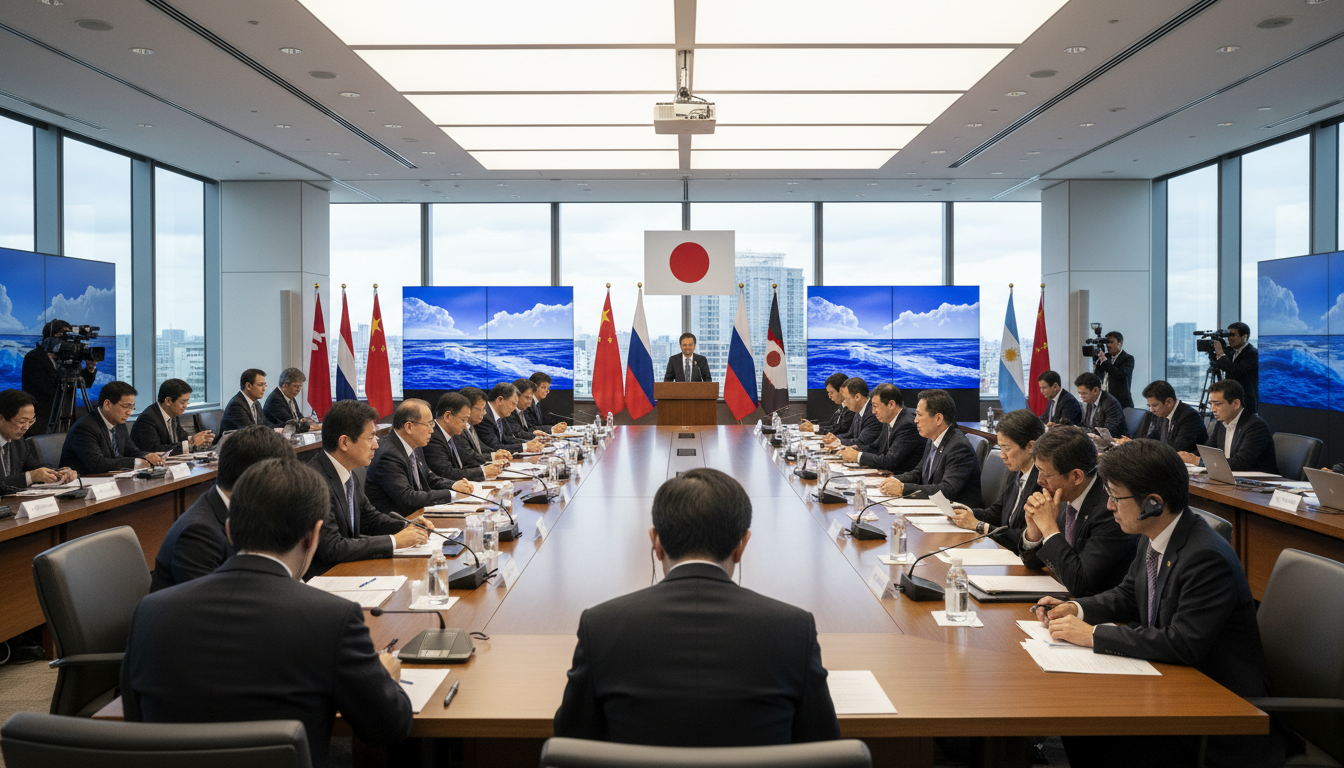
Antarctic Treaty Consultative Meeting Opens in Hiroshima to Address Tourism Surge, Climate Threats
Hiroshima hosts the Antarctic Treaty Consultative Meeting May 11-21, 2026, where delegates will focus on rising tourism, emperor penguin protection and the ecological impacts of sea-ice retreat.
The Antarctic Treaty Consultative Meeting opened in Hiroshima on May 11, bringing together government officials, researchers and international organizations to debate measures for the continent’s protection. The meeting, which governs the peaceful use of Antarctica, is the first held in Japan since Kyoto in 1994 and marks Japan’s third time hosting the forum. Delegates will discuss a range of issues from tourism management to the effects of climate-driven sea-ice retreat on Antarctic ecosystems.
Meeting Leadership and Participation
Japan’s delegation will chair the session, with Hideki Uyama serving as chair of the Antarctic Treaty Consultative Meeting. Senior Japanese officials attending include State Minister for Foreign Affairs Ayano Kunimitsu and State Minister of the Environment Kiyoto Tsuji. Nearly 50 governments are expected to send officials, and total participation is projected at about 400 people, including representatives from treaty parties, scientific researchers and international bodies.
Legal Framework and Decisionmaking
The Antarctic Treaty, in force since 1961, freezes territorial claims, prohibits military activity and promotes international scientific cooperation across the continent. There are currently 58 parties to the treaty, among them the United States, Russia and China, each participating under the treaty’s consultative provisions. Decisions at the consultative meeting are generally made by unanimous consent, underscoring the need for consensus-building among diverse national interests.
Tourism Surge and Calls for Regulation
One of the central agenda items is the recent surge in Antarctic tourism and its consequences for fragile environments and logistics. Delegates will consider proposals for limiting visitor numbers, tightening guidelines for tour operators and enhancing coordination among treaty parties to manage landing sites. Organizers have indicated that improving transparency around national activities in Antarctica is a priority for reducing environmental risks linked to visitor access.
Climate Change, Sea Ice Retreat and Ecosystem Risks
Climate change and the retreat of sea ice are high on the agenda as immediate and long-term threats to Antarctic ecosystems. Scientists at the meeting will present data on shifting ice patterns, changing habitats and the downstream effects on species that depend on stable sea-ice conditions. Discussions will seek to translate scientific findings into policy measures that can be applied cooperatively across treaty parties.
Emperor Penguin Conservation on the Table
Conservation measures for the emperor penguin are attracting significant attention after the species was added to the International Union for Conservation of Nature (IUCN) Red List as threatened in April. Delegates will weigh options ranging from habitat protection to research initiatives intended to monitor population trends and breeding-site stability. The Japanese delegation has signaled intent to lead talks aimed at actionable conservation steps that align scientific monitoring with treaty mechanisms.
Japan’s Diplomatic and Scientific Objectives
Japan is using its role as host to underline the importance of international cooperation in Antarctic governance and research. Officials have said they will promote transparency in national activities and encourage joint scientific programs that address global challenges such as climate change and sea-level rise. The meeting offers Japan an opportunity to shape multilateral approaches to tourism management and species protection while strengthening ties with other Antarctic operators.
Public Engagement and Local Lectures in Hiroshima
Ahead of the opening session, Hiroshima hosted public lectures to familiarize residents with Antarctic conditions and research activities. Former expedition members and researchers spoke about life at Japanese stations, logistical challenges and the realities of working in extreme conditions. One speaker, Kazutaka Yoshida, recounted building residential facilities at Showa Station in the late 1990s and described nearly being lost in a sudden blizzard after separating from a snow vehicle.
Delegates said the public outreach events were intended to build broader awareness of why Antarctic governance matters to global communities, including the links between polar change and everyday life.
The consultative meeting will continue through May 21, during which negotiators are expected to seek consensus on tourism guidelines, conservation measures and transparency mechanisms, while also setting priorities for future scientific cooperation in Antarctica.

