
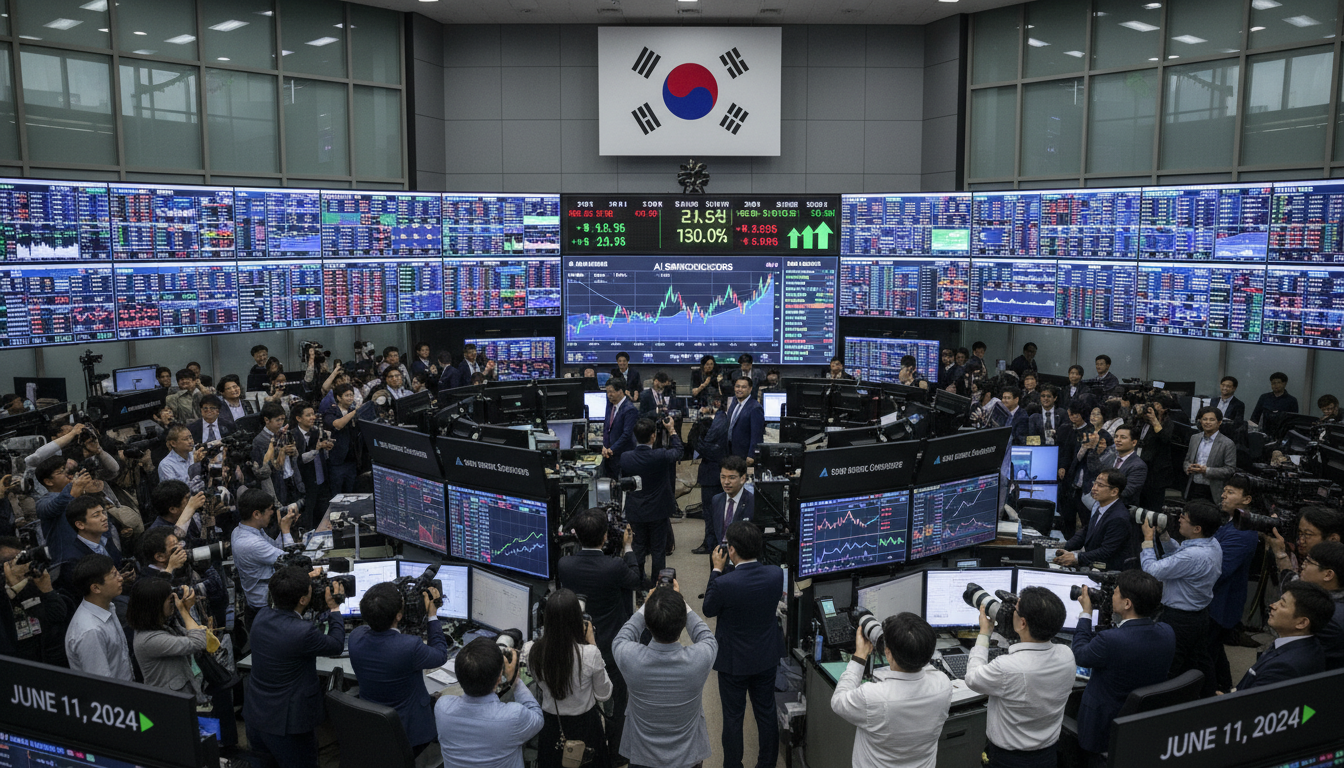
AI-linked semiconductor stocks propel Seoul Composite to record high
AI-linked semiconductor stocks pushed South Korea’s Seoul Composite to a record high on May 11, 2026, as SK Hynix and Samsung Electronics led a broad rally driven by surging demand for artificial intelligence chips and increased foreign inflows.
Seoul Composite Index sets new milestone
South Korea’s benchmark index reached an all-time peak on Monday, reflecting concentrated gains in the technology sector. The rally was anchored by the market’s two largest components, SK Hynix and Samsung Electronics, which together accounted for a disproportionate share of the day’s advance. Investors cited the ongoing global build-out of AI data centers and upgraded profitability forecasts for chipmakers as key catalysts behind the move.
Foreign buying played a notable role in lifting the index, with overseas funds returning to Korean equities after a period of cautious positioning. Market participants said external demand has amplified domestic enthusiasm for companies tied to the AI hardware supply chain, intensifying price momentum across semiconductor names.
SK Hynix and Samsung at the center of the rally
SK Hynix and Samsung Electronics posted some of the strongest gains among large-cap names, fueling index-level performance. Both firms have been singled out by analysts for benefiting from rising orders for high-bandwidth memory and advanced logic packaging used in AI acceleration. Their market weight means even modest percentage moves in these stocks have outsized effects on the benchmark.
Company-specific announcements and order-book signals over recent months have reinforced investor confidence that revenue from AI-related products will continue to expand. Traders noted tighter supply dynamics in key memory segments and improved pricing as contributing to upward revisions in profit estimates for the sector.
AI-linked semiconductor stocks surge year to date
AI-linked semiconductor stocks have surged more than 85% year to date, reflecting a broader global rotation into technology assets perceived as AI beneficiaries. This sharp advance has been concentrated in firms that supply memory chips, specialized processors, and packaging services for data-center customers. Market analysts say the speed and scale of the rally underscore how expectations for AI-driven chip demand are reshaping equity flows.
The concentration of gains also raises questions about market breadth, with smaller sectors lagging while a handful of large-cap technology names dominate performance. Portfolio managers warned that such concentration can increase volatility if investor sentiment shifts or if supply-chain forecasts disappoint.
Investor flows and global demand dynamics
Institutional investors pointed to both fundamental and technical drivers behind the inflows into Korean semiconductor equities. On the fundamental side, multiyear capacity investments by cloud-service providers and AI hardware firms have buoyed demand projections. Technically, benchmark reweightings and positive momentum signals triggered algorithmic allocations into leading chipmakers.
Externally, demand from global customers, particularly in the United States and China, has been cited as a material support for export-oriented Korean chip firms. Analysts said that while near-term order visibility remains uneven, the multi-year nature of AI infrastructure projects gives suppliers a clearer revenue runway than in previous cyclical episodes.
Valuation and risk considerations for investors
Rapid price appreciation has pushed valuation metrics higher for several leading semiconductor names, prompting debate among analysts about how to price long-term growth versus near-term execution risk. Some strategists cautioned that elevated multiples leave little room for surprise, and that earnings misses or slower-than-expected capacity additions could trigger sharp corrections.
Market-watchers also highlighted the potential for profit-taking once short-term catalysts dissipate. Geopolitical developments, changes in export controls, or disruptions in the global supply chain were listed as risks that could alter investor calculations and reduce appetite for high-beta semiconductor exposure.
Regulatory and policy context in Seoul
South Korean policymakers have underscored the strategic importance of the semiconductor industry and signaled support for investment in advanced manufacturing and research. While officials have sought to balance industrial policy with market stability, analysts said clear government backing for chip-sector expansion has contributed to investor confidence.
Monetary and fiscal conditions both at home and abroad remain relevant to market direction, with central bank moves and global liquidity trends influencing risk tolerance for equities. Observers said that any shifts in policy tone from major central banks could affect capital flows into emerging and export-driven markets, including Korea.
Market participants said the record-setting move in Seoul on May 11, 2026, reflects a combination of sector-specific optimism and broader repositioning by global investors. The rally underscores how expectations about AI-driven demand are now a central factor in equity valuation and portfolio strategy across regional markets.

