
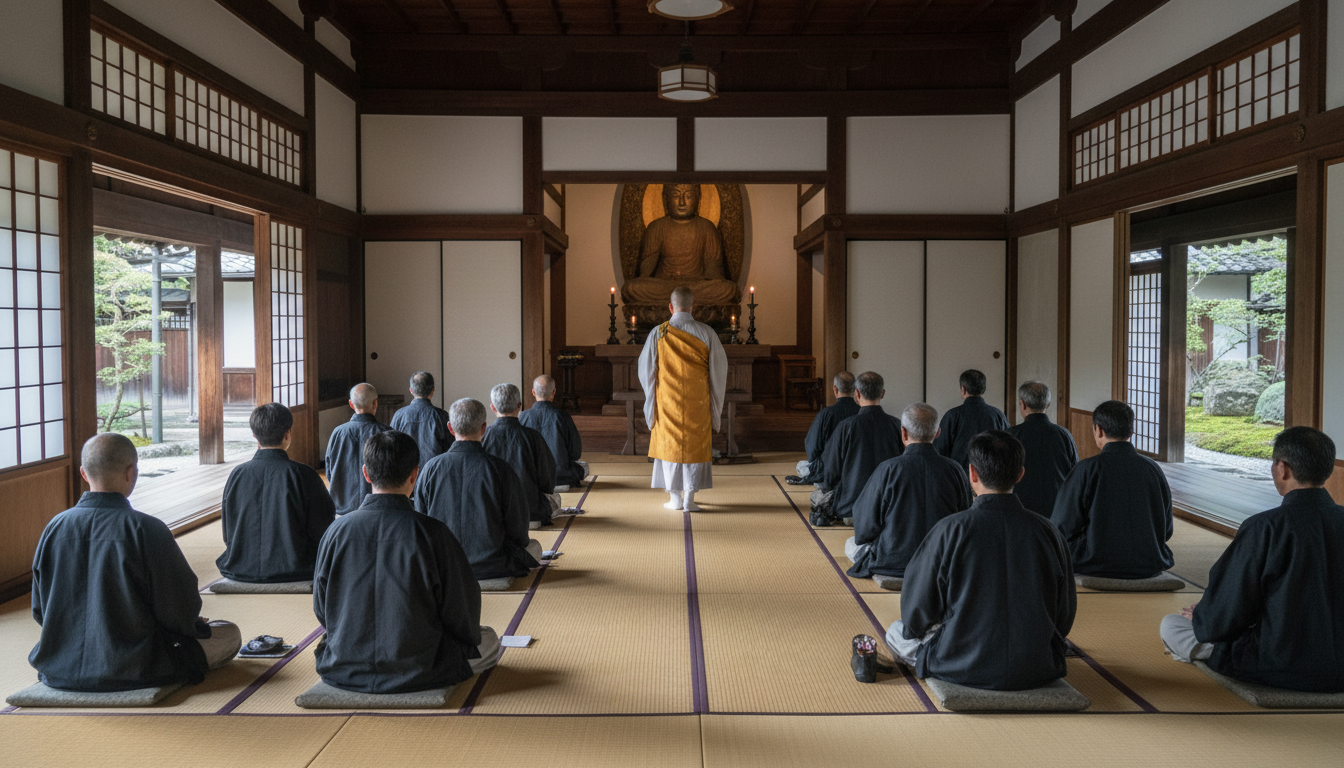
Zazen Meditation Draws Middle-Aged Tokyo Residents to Ryuunji Temple as a Weekly Reset
Zazen meditation at Ryuunji temple in Setagaya draws middle-aged Tokyo residents and online participants seeking stress relief, focus and weekly renewal.
In late January, Ryuunji temple in Setagaya Ward began its Sunday zazen meditation sessions that have steadily attracted middle-aged and older Tokyo residents looking for relief from anxiety and daily pressures. The practice of seated meditation, or zazen meditation, is being used by participants to steady breathing, sharpen concentration and create a weekly space to reset. Sessions combine traditional posture instruction with short sermons and are offered in person and by livestream to reach a broader community.
Morning ritual at Ryuunji temple
The sessions start at 7 a.m. on Sundays in the temple’s dim main hall, where about 50 people gather to sit together in silence. Chief priest Shinsuke Hosokawa, 46, gives brief guidance on posture, breathing and mental focus before the bell signals the beginning of meditation. The atmosphere is quiet and deliberate, with participants arranging cushions and settling into cross‑legged positions or simpler seats if full lotus is uncomfortable.
How a session unfolds
Each zazen meditation meeting at Ryuunji is structured around three 20‑minute periods of seated practice, separated by short breaks and brief sermons from the priest. Instruction emphasizes hand placement, an upright spine, slightly lowered chin and slow, mindful breathing that can include silent breath counting. The design is simple: clear instructions, sustained stillness and intermittent teaching to help practitioners apply lessons to daily life.
Why middle-aged Tokyo residents are attending
Many attendees say the sessions help them manage work stress, family responsibilities and worries about the future. One regular, a 56‑year‑old company employee, described weekly zazen as a way to “reset” after the strains of a busy workweek and prepare for the next. A 53‑year‑old participant said the practice has offered practical coping tools — like re-centering breath and posture — when tensions rise at work or home, and that Hosokawa’s brief talks often supply useful perspectives for daily challenges.
Streaming reaches remote participants
Ryuunji streams its Sunday sessions on video conferencing platforms to accommodate people who cannot attend in person, and dozens join remotely each week. Hosokawa notes that online attendees come from varied backgrounds and ages, and that the virtual option has expanded access for those who live farther away or prefer to practice at home. He also frames zazen as a paradoxical exercise: by sitting to “gain nothing” in the conventional sense, participants often report deeper clarity and a strengthened sense of purpose.
Zen teachers stress concentration and daily practice
Beyond seated meditation, Tokyo Zen Center representatives and local priests stress the importance of “samu,” the mindful performance of everyday tasks, as a complement to zazen. Taijun Namiki, 43, chief priest at Kinryuji temple and a Tokyo Zen Center representative, advises treating routine chores — cleaning, cooking, even tooth‑brushing — as opportunities to train attention. Concentrating fully on ordinary actions, he says, can expand one’s mental horizons, boost efficiency and make once tedious tasks feel more satisfying.
Practical information for prospective participants
Zazen sessions at Ryuunji are offered free of charge to encourage broader participation, though the temple limits the main hall to 50 in‑person attendees and requests reservations for weekend services. The Tokyo Zen Center also lists additional paid zazen programs at temples and community venues across Tokyo for those seeking more frequent or intensive practice. Newcomers are told that no specialized equipment or prior experience is necessary, and that simplified sitting arrangements and guided instruction are available.
For many attendees, the appeal of zazen meditation lies less in tradition than in its clear, accessible method for handling modern pressures. Whether people come to sit in the temple hall or join from home, participants report improved focus, steadier nerves and a renewed ability to face work and family life with greater calm.

