
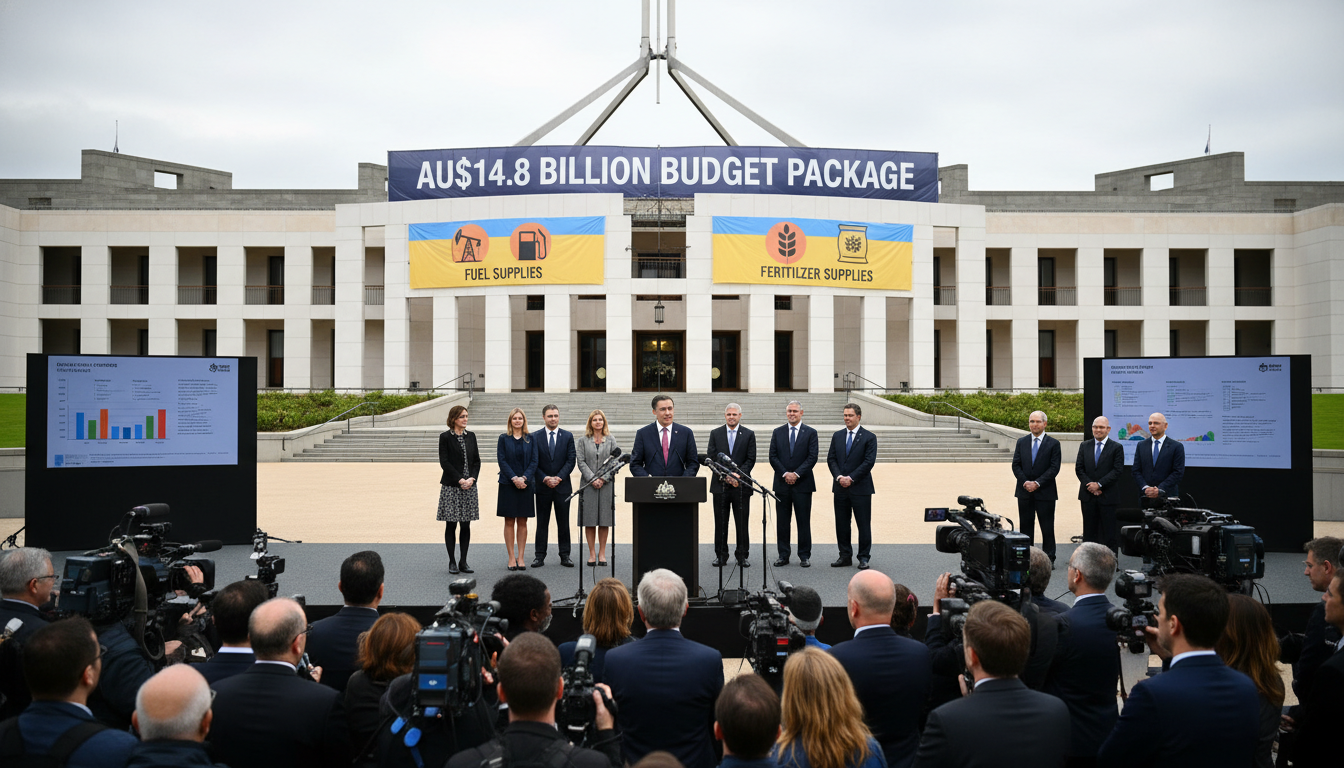
Australia budget directs A$14.8bn to secure fuel and fertilizer amid Middle East conflict
Australia budget channels A$14.8bn to bolster fuel and fertilizer supplies amid Middle East conflict, aiming to protect households, farmers and industry.
Australia’s annual budget announced in Canberra includes a A$14.8 billion package to strengthen fuel and fertilizer supplies as global energy markets are disrupted by conflict in the Middle East. The Australia budget measure aims to shield domestic consumers and primary producers from sharp price swings and supply interruptions. Treasurer Jim Chalmers presented the funding as part of a wider fiscal plan unveiled on Tuesday. Officials say the package is intended to reduce exposure to international shocks and to bolster strategic resilience.
Budget prioritises fuel and fertilizer security
The A$14.8 billion allocation is explicitly focused on shoring up the country’s energy and agricultural inputs, officials said during the budget rollout. Authorities are positioning the funds to cover urgent procurement, logistics, and measures that dampen near-term price volatility for petrol and crop nutrients. While the government framed the move as defensive, it also stressed the need to maintain stable supply chains that underpin manufacturing and food production.
Treasurer frames package as response to global shock
Treasurer Jim Chalmers described the measures as a direct response to an international energy shock triggered by the U.S.-Israel-Iran war, arguing that proactive steps were necessary to protect Australian living standards. He presented the spending as part of the broader fiscal package accompanying the national budget. The government also signalled that some of the resources will be used to build buffer stocks and support critical transport and distribution infrastructure.
Funding details and currency conversion
The government put the package at A$14.8 billion, roughly equivalent to US$10.68 billion at prevailing exchange rates, to provide immediate and medium-term relief. Budget documents presented alongside the announcement set out headline commitments but stopped short of a full granular line-by-line public breakdown. Officials indicated further operational details would be released as implementing decisions are finalised, including timetables and specific allocations to departments and agencies.
Support measures aimed at households and farmers
A central objective of the funding is to blunt the impact of higher fuel and fertilizer prices on households and the agricultural sector. Policy measures under consideration include targeted subsidies, temporary price relief programs, and assistance for transport operators facing elevated diesel costs. For farmers, the package is expected to prioritise access to essential fertilizers and to support logistics that ensure timely delivery to regional producers.
Steps to strengthen domestic supply chains
Beyond short-term relief, the budget outlines investments intended to strengthen domestic production and supply resilience. These plans contemplate expanding strategic fuel reserves, diversifying fertilizer sourcing, and upgrading port and freight infrastructure that links producers to markets. Officials emphasised that reducing reliance on single-source imports and improving stockpiles are central to preventing future disruptions from external conflicts.
Economic and political implications
Economists said the package could help moderate consumer-price pressures if implemented quickly, but they warned about fiscal trade-offs and longer-term cost implications. The government argued the preventive nature of the spending justifies near-term fiscal outlays to avoid broader economic damage from prolonged supply shocks. Politically, the budgetary move is positioned as a protective measure for communities and industries most vulnerable to sudden global disruptions.
The government also indicated the A$14.8 billion response sits alongside other budget initiatives intended to address cost-of-living pressures and housing tax changes, though officials stressed the energy and fertilizer commitment was a distinct emergency response. Parliamentary debate and scrutiny are expected in the coming weeks as details of program delivery are examined.
Analysts will watch closely how quickly funds are deployed and whether the measures succeed in stabilising domestic prices without creating distortions. For farmers and transport operators, the immediate priority will be clarity on eligibility and timing for support, while households will look for tangible relief at the pump and in grocery bills. The effectiveness of the Australia budget’s A$14.8 billion package will be judged by its ability to reduce volatility and maintain essential supplies amid ongoing global uncertainty.

