
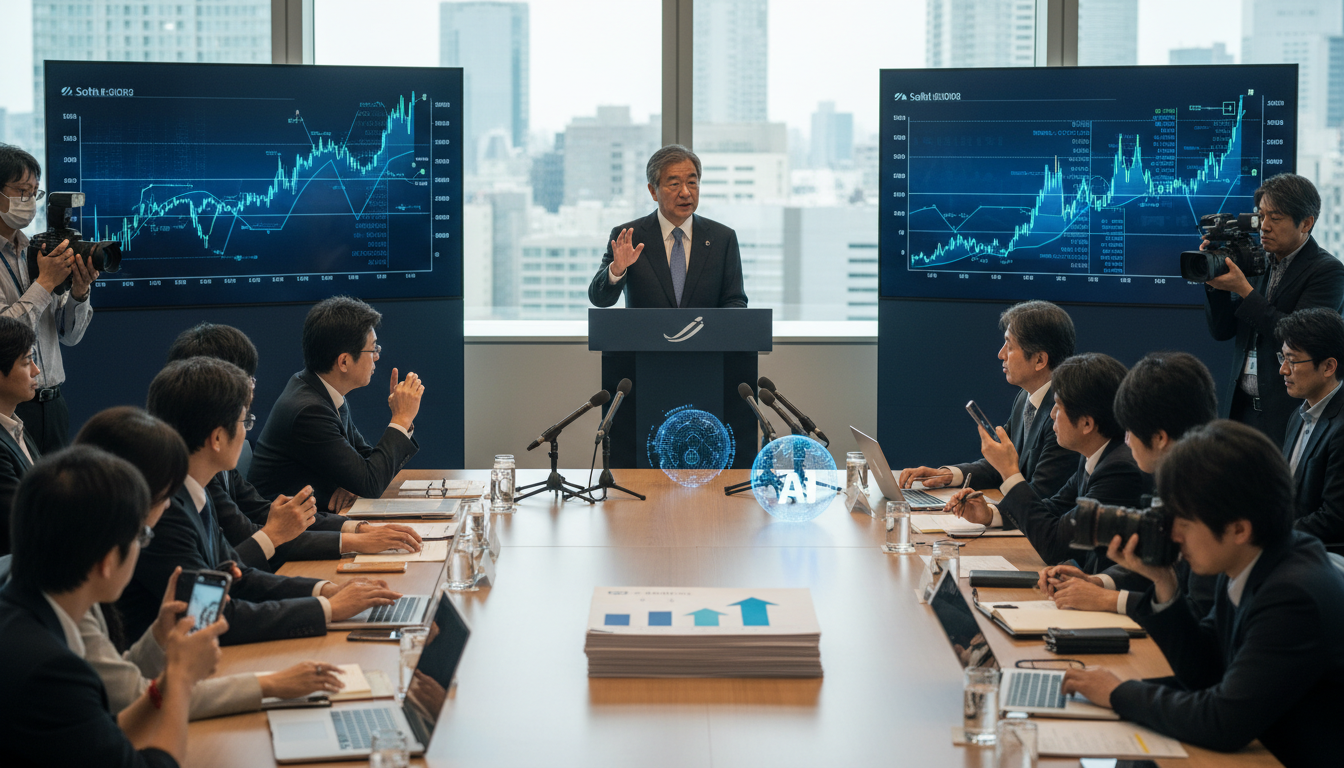
SoftBank Posts ¥5 Trillion Full-Year Profit as OpenAI Investment Fuels Vision Fund Gains
SoftBank posts ¥5 trillion full-year net profit, quadrupling year-on-year, as increased investment in OpenAI and other AI holdings drive gains for the Vision Fund.
SoftBank reported a full-year net profit of ¥5 trillion ($31.6 billion), a fourfold increase from the previous year, driven largely by valuation gains in its AI-focused portfolio. The group said it had boosted its stake in OpenAI and committed additional billions to the ChatGPT developer, underscoring a strategic shift toward artificial intelligence investments. Investors and analysts are parsing the results for signs of sustainability as SoftBank leans more heavily on a small number of high-profile tech bets.
SoftBank records a rare multitrillion-yen profit jump
SoftBank’s headline net profit figure marks one of the largest annual gains in recent memory for the company. The ¥5 trillion result was driven by uplifts in the valuation of major holdings rather than a broad-based earnings increase across its operating businesses. Management framed the outcome as confirmation that its concentrated AI bets are beginning to pay off, even as the firm remains exposed to swings in the values of late-stage technology assets.
OpenAI stake increases and fresh capital commitments
Company disclosures highlighted an expanded commitment to OpenAI, the developer of ChatGPT, with SoftBank channeling billions more into the startup. SoftBank’s chief executive has previously signalled that OpenAI is a cornerstone of the group’s AI strategy, and the new infusion reinforces that stance. The move positions SoftBank as one of the most prominent private backers of generative AI technology.
Vision Fund gains driven by concentrated AI holdings
The Vision Fund, SoftBank’s flagship investment vehicle, captured most of the valuation upside in the reporting period. AI-related companies within the fund accounted for a disproportionate share of gains, reflecting strong investor appetite for generative AI and related services. Fund-level returns were amplified by revaluations of large positions, underscoring the asymmetric risk-reward profile that has characterised SoftBank’s approach.
Balance-sheet effects and reported cash positions
SoftBank’s balance sheet showed substantial non-cash gains from mark-to-market adjustments to private holdings, which inflated headline profitability. Cash and liquid assets remain a focus for management as it seeks flexibility to pursue further strategic investments and weather market volatility. Analysts note that while headline profits have rebounded sharply, underlying operating cash flows will be important to judge the group’s financial health over coming quarters.
Market response and analyst commentary
Markets reacted to the results with a mixed tone, rewarding the strong headline number while questioning sustainability and concentration risk. Some analysts praised the clarity of SoftBank’s AI-focused strategy, while others warned that reliance on a handful of large stakes could amplify volatility. Corporate commentary emphasised the long-term nature of technology investments and the group’s willingness to accept short-term swings in pursuit of outsized returns.
Masayoshi Son’s strategic gamble on generative AI
SoftBank’s chairman has framed the firm’s recent actions as a deliberate pivot toward generative AI, a technology he views as transformative across industries. The increased allocation to OpenAI and similar bets reflects a conviction that early, substantial exposure to market-leading AI platforms will deliver strategic and financial advantages. The approach revives a theme that has defined SoftBank for more than a decade: concentrated, high-conviction investments in disruptive technologies.
SoftBank’s full-year results signal a renewed era in which generative AI investments sit at the centre of the group’s strategy, but the path ahead will hinge on whether valuation gains can be translated into durable earnings and cash generation. Investors will watch upcoming quarters for evidence that the Vision Fund’s AI winners can sustain growth and justify the heightened concentration of capital. SoftBank’s ability to balance bold long-term bets with disciplined portfolio management will determine whether this profit surge marks the start of a sustained recovery or a volatile repricing driven by a few headline investments.

