
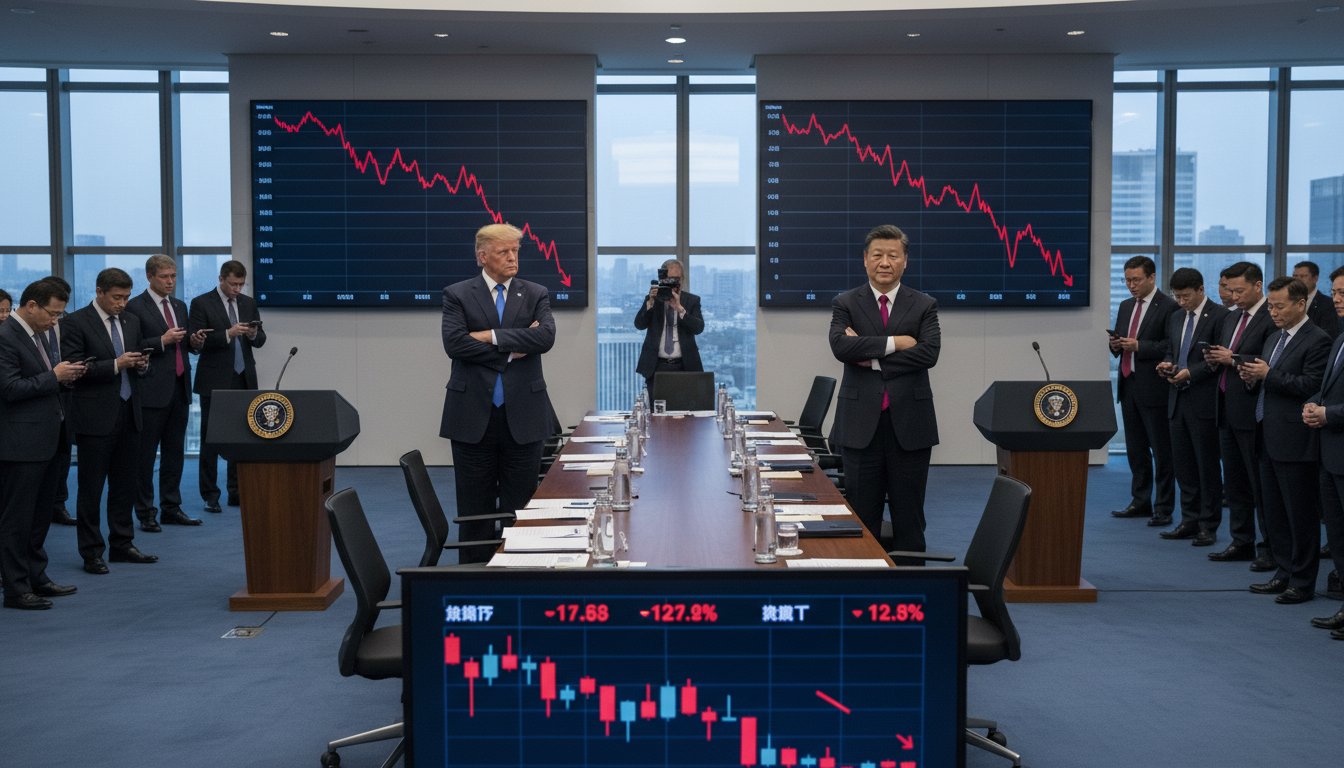
Trump-Xi Summit Stalemate Sends US Stocks Lower as Inflation, Oil and Yields Weigh
US stocks fell after the Trump-Xi Summit ended without breakthroughs; stickier inflation, higher oil and rising Treasury yields prompted selling on May 15, 2026.
The summit between President Donald Trump and President Xi Jinping failed to resolve key disputes on trade and Iran, reinforcing investor caution.
Market participants interpreted the lack of concrete agreements as a trigger to reduce equity exposure amid an already fragile sentiment backdrop.
Markets React to Trump-Xi Summit Stalemate
Equity markets in the United States moved sharply lower on the morning of May 15, 2026 as traders absorbed the news that the Trump-Xi Summit produced no major policy breakthroughs.
Selling pressure was concentrated in rate-sensitive and cyclical sectors as investors recalibrated risk expectations after the largely inconclusive talks in which trade and geopolitical tensions remained unresolved.
Bond Yields and Inflation Concerns Drive Re-pricing
Treasury yields climbed in tandem with equity weakness, reflecting growing expectations that inflation could remain higher for longer.
Analysts said the combination of stickier-than-expected inflation signals and a tougher economic backdrop prompted fixed-income investors to demand higher yields, which in turn weighed on stock valuations.
Oil Price Rise Intensifies Risk Aversion
A notable uptick in oil prices added an extra layer of concern for markets, amplifying fears that energy-driven inflation could complicate policy decisions.
Energy-linked price pressures often feed into broader inflation measures, and traders responded by trimming positions that are most sensitive to margin and cost pressures.
Sector-Level Impact and Investor Shifts
Financials and industrials bore much of the selling as expectations for near-term economic growth were scaled back, while defensive sectors showed relative resilience.
Market participants rotated toward safer assets, including quality government debt and cash positions, as uncertainty from the summit and macro signals intensified.
Corporate Earnings Outlook and Trade Uncertainty
Companies with significant China exposure faced renewed scrutiny as the absence of concrete trade resolutions left tariffs and supply-chain risks on the table.
Corporate guidance for coming quarters may be tightened if firms judge that unresolved trade and geopolitical frictions will depress demand or raise input costs.
Investor Sentiment and Short-Term Outlook
Sentiment indicators reflected heightened caution, with many portfolio managers indicating a preference for reduced risk until clearer policy signals emerge.
Traders said the market is now looking for fresh catalysts—economic data, Fed comments, or follow-up diplomacy—that could either confirm the risk-off move or prompt a recovery in equities.
The Trump-Xi Summit’s lack of decisive outcomes on trade and Iran on May 15, 2026 left markets searching for direction, and the combination of rising oil, stickier inflation readings and higher Treasury yields drove a broad reassessment of risk.
Near term, investors and companies will be watching forthcoming economic releases and central bank remarks for clues about the path of inflation and interest rates.
Absent new diplomatic progress or a clear shift in macro data, markets are likely to remain sensitive to headline developments and policy signals in the weeks ahead.

