
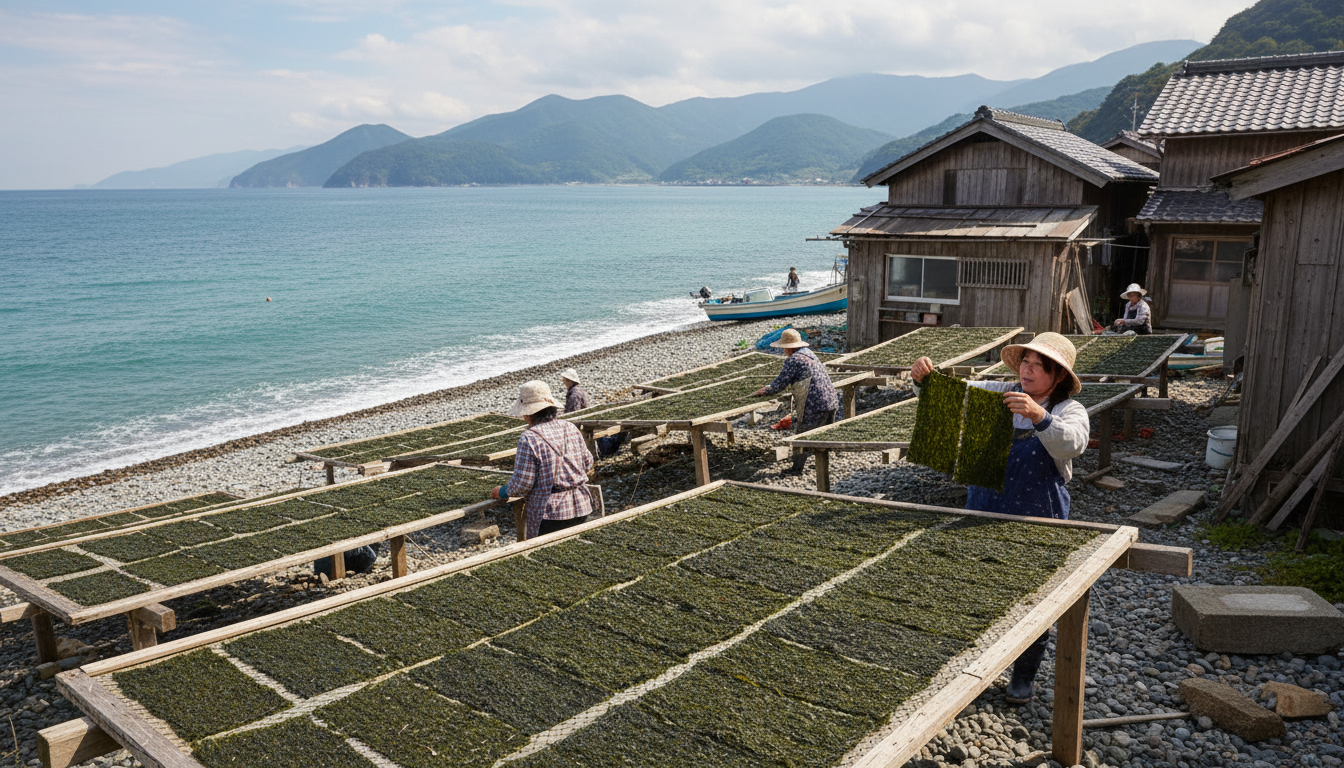
Toyama kombu draws food tourists as kombu workshops revive coastal tradition
Toyama kombu is drawing food tourists to the Sea of Japan coast, where Kombu House workshops and local producers revive traditional curing and tourism.
Toyama prefecture, long known for its rich kelp beds, has seen rising interest in kombu-based culinary experiences this spring. Local operators report growing numbers of visitors eager to learn how kombu is harvested, cured and used to enhance sashimi and other dishes. The trend has turned the region’s kombu industry into both a cultural attraction and a source of renewed local pride.
Kombu production concentrated on the Sea of Japan coast
Toyama’s shoreline and cold currents create ideal conditions for kelp growth, and commercial kombu production has been concentrated along these waters for generations. Fishermen and seafarmers work on seasonal cycles timed to the kelp’s growth and harvest windows, a rhythm that underpins the quality prized by chefs. That marine environment gives Toyama kombu a distinctive umami profile sought by both domestic and international cooks.
Kombu House in Takaoka offers hands-on curing sessions
Kombu House in Takaoka has become a focal point for visitors who want to experience kombu preparation firsthand. Guests wrap fresh sashimi in kombu to cure the fish, learning the technique that enhances flavor and preserves texture. Organizers say these practical workshops are popular with food-lovers and small-group tour operators seeking authentic culinary activities.
Traditional processing methods persist among producers
Local producers emphasize that traditional drying, aging and storage techniques remain essential to creating premium Toyama kombu. Many families and small businesses still follow time-honored steps, including controlled sun-drying and cold-room aging, which they argue concentrate natural glutamates. Producers describe a careful balance between artisanal know-how and modern hygiene standards to meet market demands.
Tourism is boosting coastal economies and small businesses
The surge in kombu-related tourism is generating income beyond the fisheries, supporting guesthouses, eateries and craft shops in coastal towns. Municipalities have begun promoting kombu trails and tasting menus to lengthen visitor stays and diversify local revenue streams. Officials view the food-tourism link as a strategic complement to traditional seafood exports and seasonal fishing income.
Chefs and restaurants adapt kombu for contemporary menus
Chefs in Toyama and nearby urban centers are incorporating Toyama kombu into new preparations, from cured fish to broths and condiments. Innovative restaurants use kombu not only for stock but as a treatment for sashimi, and in pickles and sauces that highlight umami without heavy seasoning. Restaurateurs say the ingredient’s versatility helps attract diners who seek both tradition and modern culinary techniques.
Sustainability concerns shape the kombu sector’s future
Industry voices caution that rising demand must be balanced with sustainable harvesting and careful resource management. Seaweed growth depends on water quality and marine ecosystems, and producers report monitoring programs to prevent overharvest and maintain long-term yields. Local cooperatives and authorities are discussing quotas, cultivation practices and research partnerships to safeguard the kelp beds that support Toyama kombu’s reputation.
Local stakeholders describe kombu as both a culinary staple and a cultural asset that can anchor wider regional revitalization. In Takaoka, Kombu House and cooperative processors are working with tourism officials to standardize visitor experiences while protecting production practices. The collaboration aims to keep teaching opportunities local families can benefit from, rather than allowing commodification that would dilute artisanal quality.
Market observers note that increased visibility of Toyama kombu could expand demand in domestic urban markets and among international buyers who prioritize provenance. Packaging and certification efforts are underway to make product origins clearer and to allow small producers to command higher prices. At the same time, some producers express concern about maintaining consistent quality if volumes rise rapidly.
As the season progresses, organizers plan additional workshops and tastings to accommodate growth without compromising the traditions that distinguish Toyama kombu. Farmers and guides emphasize hands-on education as a means to pass techniques to younger generations and to inform visitors about sustainable practices. For many in the coastal communities, kombu remains a living tradition reshaped by tourism, culinary innovation and attention to the sea that sustains it.

