
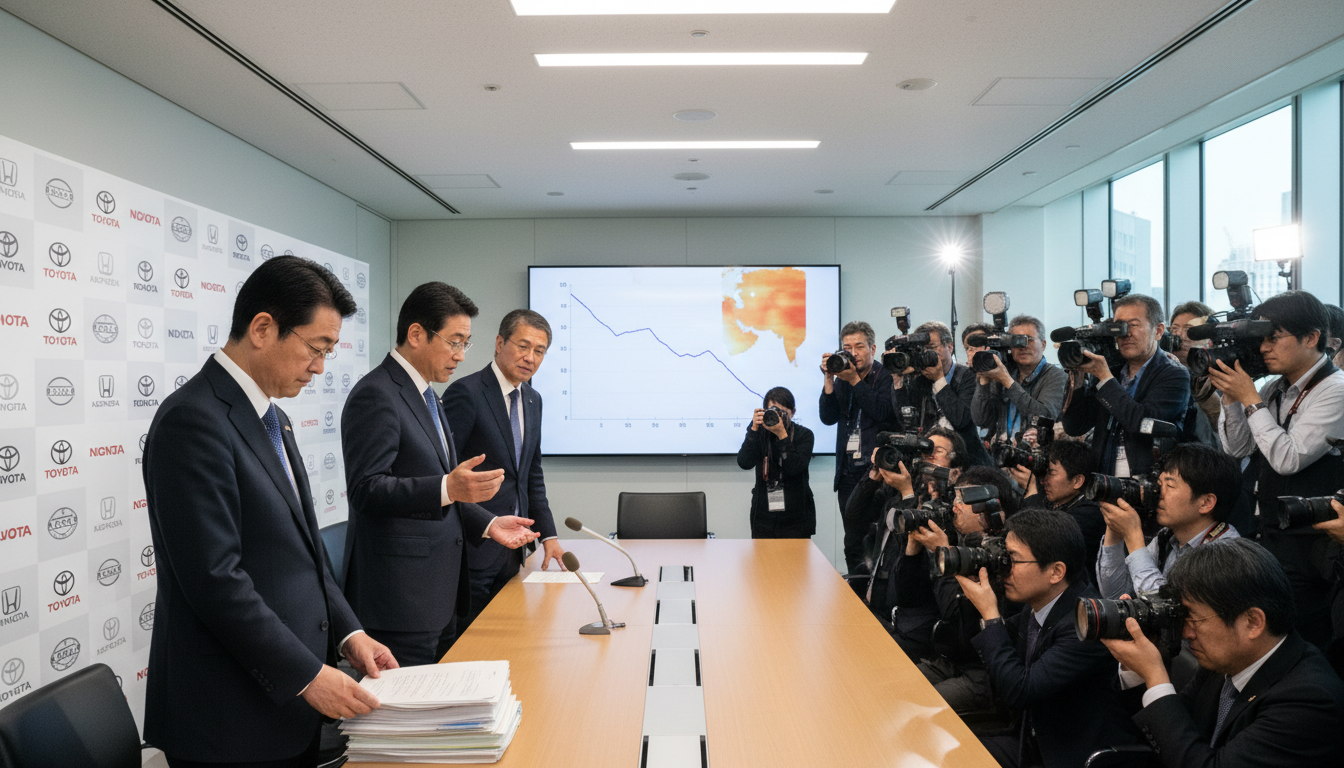
Japanese automakers’ profits set to fall to about half as Iran war pushes up costs
Japan’s largest automakers face profits near half peak this fiscal year as the Iran war pushes up energy, commodity, logistics and insurance costs globally.
Tokyo firms report sharp profit compression
A group of Japan’s seven largest automakers is projecting net profits for the current fiscal year at approximately half the record levels achieved a few years ago. Manufacturers including Toyota, Suzuki and Honda have cited rising costs as the primary factor eroding margins this fiscal year. The companies say the Iran war has amplified energy and shipping expenses, feeding through quickly to their bottom lines.
Energy and freight costs climb after Middle East escalation
Executives and analysts point to higher crude oil prices and steeper freight and insurance premiums as immediate channels for the cost shock. Increased tanker insurance and rerouting of vessels have added to logistics bills, while elevated fuel prices raise both production and distribution expenses. These pressures are particularly acute for automakers that rely on just-in-time supply chains and global parts flows.
Raw-material and component prices squeeze margins
Beyond fuel and shipping, raw-materials such as steel and aluminum have rebounded, lifting input costs for bodywork and components. Automakers are also facing greater costs for chemicals, plastics and other inputs tied to energy prices. While some component segments remain tight, the combined rise in materials and transport has narrowed the gap between vehicle prices and production costs.
Manufacturers pursue pricing and cost-control responses
In response, companies have moved to rebalance margins through selective vehicle price increases, tighter spending controls and targeted productivity drives. Several firms report applying differentiated price adjustments by model and market rather than blanket increases, aiming to limit demand fallout. Cost-control programs include supplier negotiations, factory efficiency measures and postponement of non-essential capital projects.
Production adjustments and sales strategies under consideration
Automakers are weighing production changes to match shifting demand patterns and to reduce inventory exposure to volatile input costs. Some plants may alter line allocations or slow output of less profitable models while prioritizing high-margin vehicles. At the same time, sales incentives and financing offers are being calibrated carefully to avoid undermining pricing actions and long-term profitability.
Investor reaction and near-term outlook remain cautious
Markets have responded with mixed sentiment as investors weigh short-term profit declines against longer-term demand resilience for autos. Analysts say the outlook beyond this fiscal year depends on the trajectory of the Iran war, commodity prices and whether logistics costs normalize. Policy moves, such as subsidies or strategic stockpiling, could ease supply-side strains, but uncertainty is likely to keep earnings uneven in the coming quarters.
Japanese automakers’ profits are therefore expected to remain constrained through the current fiscal cycle, prompting firms to emphasize cost discipline and strategic pricing while monitoring developments in the Middle East and global commodity markets.

