
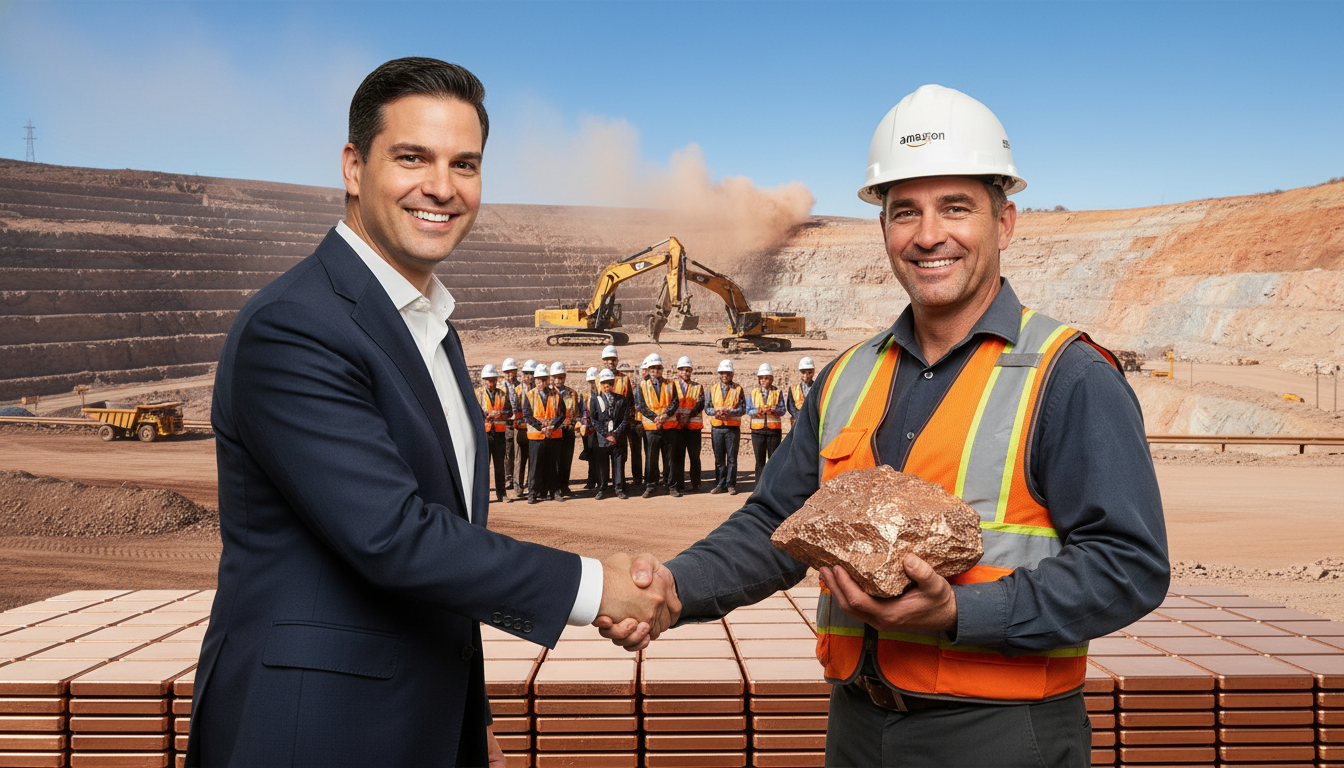
Amazon copper purchase: Company buys directly from Arizona mine as U.S. output restarts
Amazon copper purchase sees the company buy directly from a Tucson, Arizona mine, using Rio Tinto‑backed technology to revive U.S. output amid rising AI demand.
Opening deal in Tucson
Amazon’s direct copper purchase from a mine near Tucson, Arizona, marks an unusual move by a major tech company to secure raw materials at source. The transaction comes as demand for copper has surged with expansion of data centers and artificial intelligence infrastructure across the United States and globally. Rio Tinto venture technology reportedly helped bring the mine back into production, delivering the first new American output in years.
Why Amazon went to the mine
Buying copper straight from a domestic mine lets Amazon shorten supply chains and reduce exposure to international logistics bottlenecks. Direct sourcing can also offer greater visibility over material specifications and delivery timing, factors that matter to firms building large-scale data centers. For Amazon, which operates extensive cloud and server networks, securing reliable copper supplies supports long-term infrastructure planning.
Rio Tinto venture technology and U.S. restart
Industry sources indicate that technology developed by a Rio Tinto venture played a central role in enabling the mine’s restart and first shipments. That technology is said to improve extraction or processing efficiency, helping to make domestic production economically viable again after years of limited new output. The revival underscores how advanced mining techniques can change the economics of U.S. mineral production and attract strategic buyers.
Copper’s role in AI and data centers
Copper remains a foundational material for electrical wiring, high-performance servers and cooling systems in data centers, which are expanding rapidly to meet AI compute needs. Compared with alternatives, copper’s conductivity and durability make it the preferred choice for many power and networking applications in hyperscale facilities. As AI workloads grow, so does the sector’s appetite for stable, high-quality copper supplies.
Market and supply‑chain implications
Amazon’s move is likely to prompt other technology firms to re-evaluate upstream procurement strategies and consider direct deals with producers. Such agreements can ease pressure on spot markets and reduce vulnerability to price volatility and shipping delays. At the same time, increased direct buying by large end users could shift bargaining power toward tech companies and encourage more investment in domestic mining and processing capacity.
Local economic and regulatory consequences
The mine’s restart is expected to generate local employment and contracting opportunities in the Tucson area, from extraction and processing to transport and services. Local officials often emphasize benefits such as job creation when production resumes, while community groups and regulators focus on environmental safeguards and compliance. Navigating permitting, reclamation and water-use issues remains essential for sustained operations and community acceptance.
Industry outlook and potential expansion
Analysts expect that if new technologies continue to lower production costs, additional U.S. projects may become viable, gradually increasing domestic copper output. Higher investment in processing and recycling, combined with strategic partnerships between miners and large consumers, could further strengthen local supply chains. However, expanding production at scale will still require time, permitting approvals and capital commitments from both industry and finance partners.
The Amazon copper purchase in Arizona signals a strategic pivot by a major cloud and AI operator toward securing raw materials closer to its infrastructure footprint. By partnering—directly or indirectly—with producers using novel extraction technology, tech companies are reshaping how critical industrial metals are sourced and supplied. The short-term effect may be tighter alignment between miners and manufacturers, while the longer-term consequence could be a more resilient U.S. copper industry that better serves the demands of the digital economy.

