
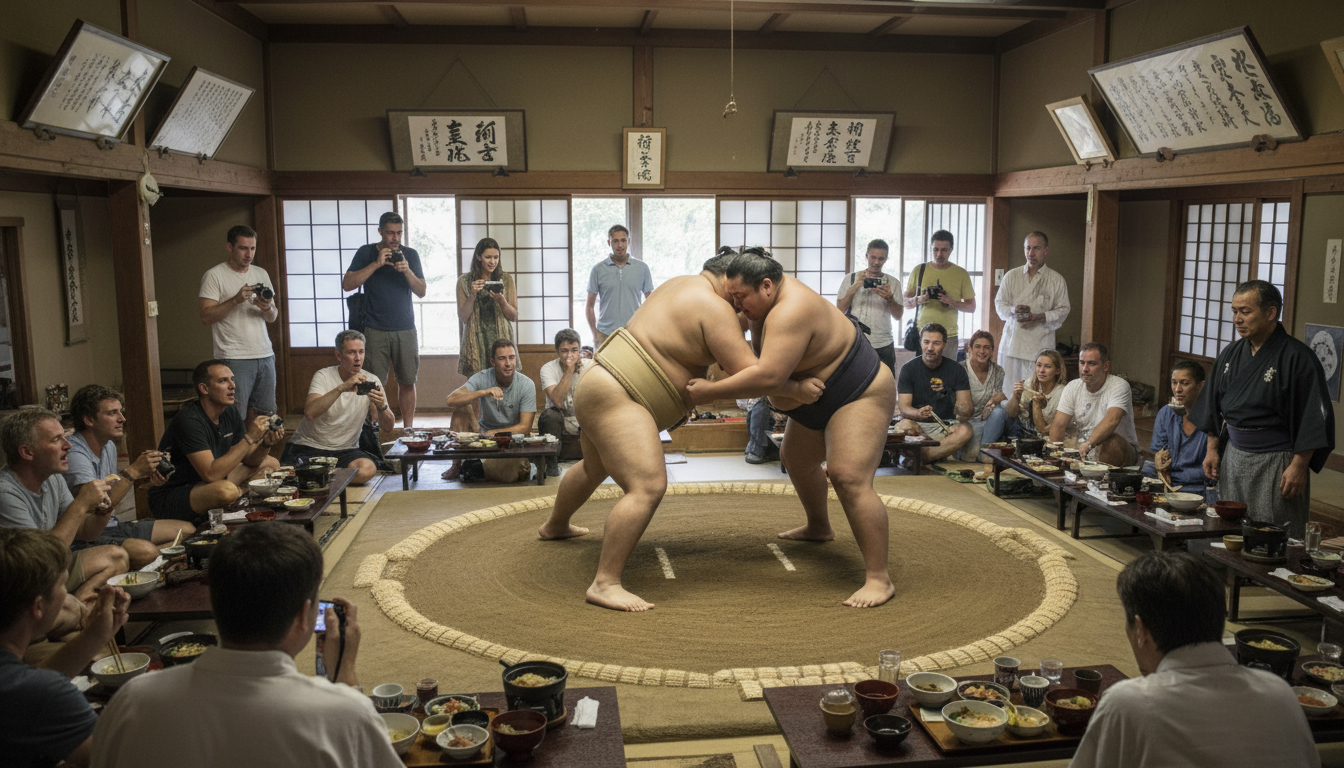
Sumo experiences draw overseas tourists from Asakusa to Osaka
With official tournament tickets scarce, overseas visitors are turning to sumo experiences across Japan — from salt-throwing rituals in Asakusa to hands-on demonstrations and chanko nabe dinners.
Japan’s recovery in inbound tourism has produced strong demand for sumo experiences, as international visitors who cannot secure seats at official tournaments seek immersive alternatives. Operators in Tokyo, Osaka and other cities have expanded packages that combine demonstrations, rituals and wrestler-style meals. These offerings deliver a condensed, accessible version of sumo’s traditions for travelers keen to witness the sport up close.
Surge in bookings at local sumo clubs
Bookings for guided sumo demonstrations and club visits have climbed in recent months, particularly in districts popular with foreign tourists. Small sumo clubs and private operators say they are scheduling more sessions to meet the influx of international visitors. The rise in reservations reflects a broader pattern of tourists shifting from large-scale sporting events to curated cultural experiences.
Visitors are often motivated by limited availability at official honbasho tournaments and the difficulty of obtaining tickets during peak tourism seasons. Many opt for shorter, more affordable programs that fit into busy travel itineraries. For those unable to attend a tournament, a studio demonstration or a meet-and-greet offers a practical alternative.
Hands-on rituals and public demonstrations
A signature element of many packages is a staged purification ritual, in which participants observe or join in the traditional salt-throwing ceremony used to cleanse the ring. Demonstrations typically include explanations of mawashi techniques, basic shiko stomps and the formalities that precede a bout. Operators emphasize experiential learning, letting tourists feel aspects of sumo’s discipline without disrupting professional stables.
Salt-throwing rituals and mock bouts give visitors a sense of sumo’s Shinto roots and the sport’s athletic demands. Presenters often provide short historical context and practical instruction, balancing reverence for ritual with accessibility for first-time spectators. Photographic opportunities are staged so that visitors leave with a clear memory of the ceremony.
Dinner packages and chanko nabe appeal
Many sumo experiences are paired with chanko nabe dinners, the hearty stew associated with wrestlers, which has become a staple of tourist packages. Restaurants and clubs offer set menus that showcase the communal aspect of sumo dining and provide a tangible taste of wrestler nutrition. For travelers, sharing a chanko meal adds a culinary dimension that complements demonstrations and rituals.
Dinner packages are marketed to a range of travelers, from families to solo visitors, and often include short explanations of ingredients and serving customs. These meals can be sold as stand-alone events or bundled with demonstrations, making them an attractive option for visitors on limited schedules. Operators report that food elements help broaden appeal beyond sports enthusiasts.
Operators expand offerings from Asakusa to Osaka
Across Japan, the market for sumo experiences has diversified, with services ranging from short showroom performances in Tokyo’s Asakusa district to longer programs in Osaka and other regional centers. Travel agencies have added themed tours that include sumo-focused stops, while private clubs create bespoke sessions for small groups. This geographic spread has made sumo culture more accessible to tourists who cannot travel to tournaments.
Packages vary by locale and operator, with some emphasizing educational elements and others highlighting entertainment and photo opportunities. Smaller clubs often work with local guides and hotels to integrate sessions into broader sightseeing itineraries. The heterogeneity of offerings allows travelers to choose experiences that match their interests and budgets.
Etiquette, safety and cultural respect emphasized
Organizers of sumo experiences are taking steps to ensure that visitors understand the cultural context and behavioral expectations surrounding the sport. Briefings on etiquette—such as how to approach rikishi, appropriate silence during rituals and respectful conduct in training areas—are now standard. Operators also manage group sizes and staging to protect athletes and preserve the dignity of ceremonies.
These precautions are intended to maintain a balance between accessibility and preservation of tradition. Hosts frequently remind visitors that staged demonstrations are not substitutes for official tournaments, and that certain elements of professional stables remain off-limits. Clear guidance helps reduce misunderstandings and supports a positive exchange between tourists and the sumo community.
Japan’s tourism rebound has created a practical outlet for international interest in sumo, allowing visitors to engage with the sport’s rituals, techniques and cuisine even when tournament tickets are unavailable. As operators refine packages and expand regional options, sumo experiences are likely to remain a prominent draw for travelers seeking authentic cultural encounters.

