
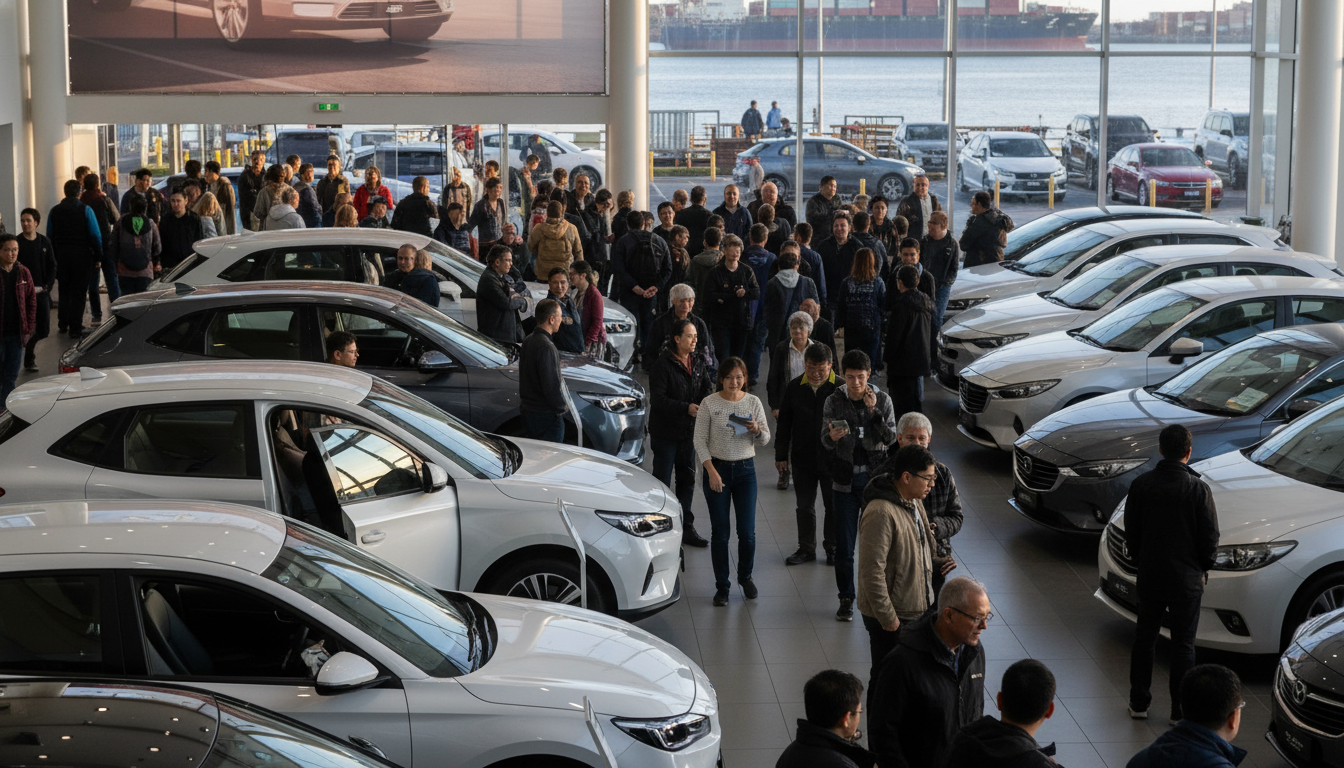
Chinese automakers in Australia surge as imports from China overtake Japan in 2026
China car imports to Australia surpass Japan in 2026 as EV demand, led by BYD, surges amid higher fuel costs and cost-of-living pressures, reshaping the market.
Chinese automakers in Australia have made a decisive advance in 2026, with imports from China overtaking those from Japan, according to newly reported industry figures. The shift is being driven principally by strong demand for electric vehicles and sharply rising fuel costs linked to geopolitical tensions in the Middle East. Consumers facing a cost-of-living squeeze are increasingly choosing lower-running-cost EVs and competitively priced Chinese models. Automakers and dealers say the change marks a notable turning point in Australia’s passenger vehicle market.
2026 import milestone recorded in May
Industry data compiled through May 2026 shows shipments and registrations of Chinese-built cars now exceed those from Japan for the first time in the year. The change reflects both higher volumes of battery electric vehicles and a recalibration of purchasing decisions among Australian drivers.
Analysts caution the milestone is a snapshot of a fluid market influenced by prices, incentives and supply-chain dynamics. Nonetheless, the trend has prompted attention from manufacturers, retailers and policymakers across the automotive sector.
Electric vehicles identified as principal driver
Electric vehicle uptake is central to the surge in Chinese imports, with a growing share of new-car sales in Australia attributable to battery EVs. Chinese brands have marketed low-cost, feature-rich EVs that appeal to buyers seeking relief from volatile petrol prices.
Rising fuel costs — in part linked by industry observers to the war in the Middle East — have increased the relative attractiveness of EV ownership. Longer-term operating savings and improved model variety are persuading cost-conscious households to consider brands they previously overlooked.
BYD leads sales growth among Chinese marques
BYD has emerged as a leading beneficiary of the shift, reporting sharp sales growth in Australia as it expands retail networks and model availability. The company’s mix of compact and mid-size electric models has resonated with urban and regional buyers seeking affordability and range.
Importers of other Chinese brands are also widening their presence, introducing hybrids and pure EVs while strengthening after-sales arrangements. Competitive pricing, generous equipment levels and growing consumer familiarity have reduced barriers that once limited Chinese marques’ appeal.
Dealerships and service networks adapting to demand
Rapid market change has placed pressure on dealership capacity and service infrastructure, prompting investment in training, parts logistics and charging facilities. Some dealers have accelerated partnerships with local groups to scale sales and maintenance capabilities quickly.
Consumer groups and industry bodies say addressing warranty coverage, resale values and access to repairs will be critical to sustaining growth. Importers argue that expanding physical networks and certified service centers will help build long-term confidence among buyers.
Japanese manufacturers respond with new strategies
Japan’s established automakers have reacted by stepping up electrification plans and adjusting pricing strategies in Australia. Several brands have announced expanded EV lineups, promotional offers and refreshed hybrid ranges to protect market share.
Executives stress that Japanese firms retain strengths in reliability, resale values and broad dealer coverage, but acknowledge the need for faster adaptation to an EV-led marketplace. The competitive pressure has accelerated product launches and sparked renewed focus on value and local service.
Market outlook shaped by fuel prices, infrastructure and policy
Looking ahead, the pace of EV adoption in Australia will be shaped by fuel-price volatility, the rollout of public charging infrastructure, and any changes to incentives or regulatory settings. Continued geopolitical uncertainty could keep petrol prices elevated, reinforcing the economics of EV ownership for many buyers.
Industry forecasters say sustained competition from Chinese automakers could lower retail prices and broaden consumer choice, but they also warn that consolidation in distribution and stronger after-sales networks will be essential for long-term success. Stakeholders will be watching vehicle availability, charging coverage and policy signaling closely in coming months.
This reordering of import sources reflects a broader global shift toward electrification and price-competitive manufacturing, and highlights how short-term shocks such as rising fuel costs can accelerate structural change in national vehicle markets.

