
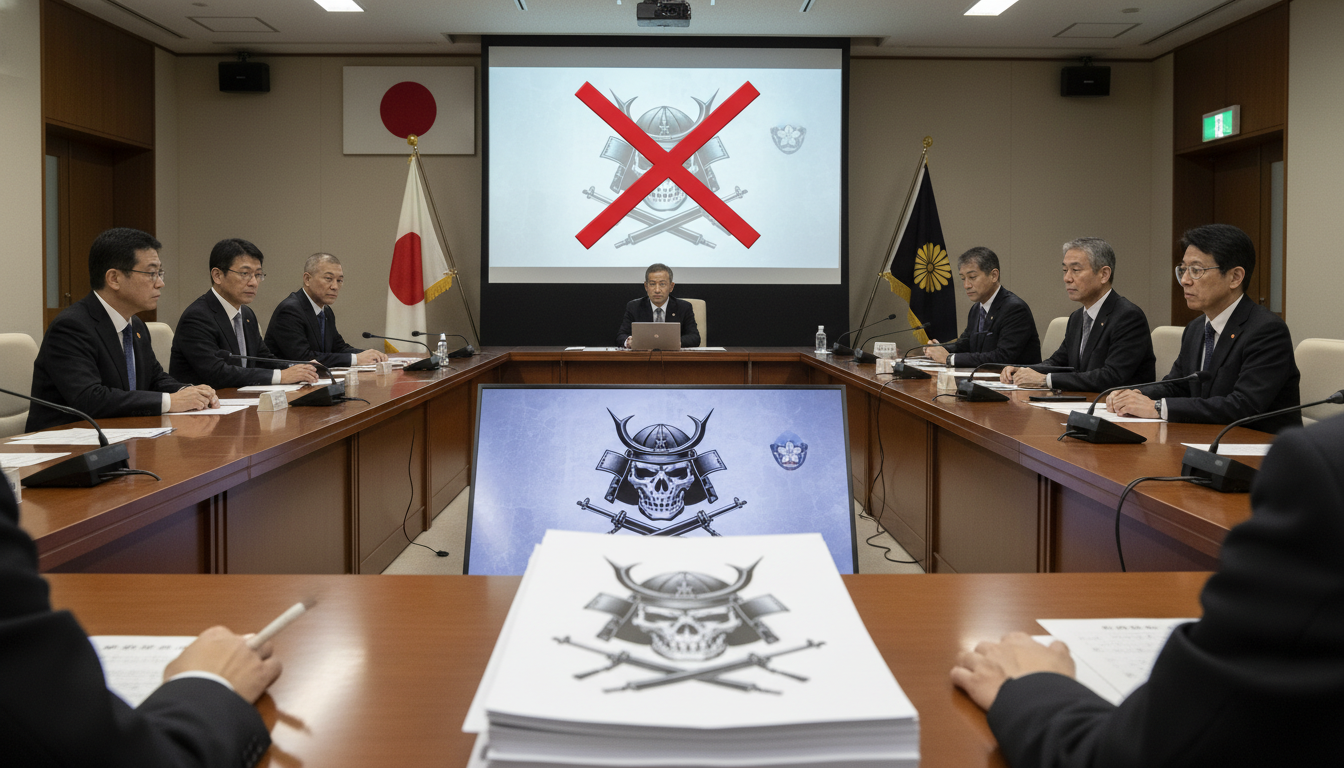
JGSDF logo pulled after online backlash over skull-and-rifle design
JGSDF logo featuring an elephant with a rifle, skull emblem and blue flame was created with generative AI and removed after social media criticism and copyright concerns.
Incident and timeline
On April 29 the Japan Ground Self-Defense Force (JGSDF) posted a new unit emblem on its official X account that drew immediate public attention. The image, attributed to the 1st Division’s 1st Infantry Regiment based in Nerima, Tokyo, was taken down three days later amid mounting criticism.
Masayoshi Arai, Chief of Ground Staff, addressed the matter at a May 19 press conference and said the force would take care to ensure units are presented in a way the public can understand and feel comfortable with. The rapid removal and official comment highlighted the sensitivity of military imagery on social media.
Design details that provoked criticism
The contested emblem depicted a camouflage-clad elephant holding a small arm, with a human skull on its left chest and a blue flame over its left eye. Critics described the visual as overly belligerent and resembling a “kill-oriented” military insignia.
Users on social media also pointed to visual similarities with a logo associated with Thailand’s border police, raising questions about potential copyright infringement. The combination of a skull motif and weapon imagery drove much of the negative reaction from both civilians and online commentators.
How the emblem was created and approved
According to JGSDF officials, the unit sought to modernize a logo that had been in use since 2002. A service member used the generative AI tool ChatGPT to produce the new design, prompting the model with keywords such as “elephant,” “personification,” “blue flame,” “cool,” and “Self-Defense Forces.”
The resulting image was authorized by the company commander, and the post to the regiment’s official X account was approved by the 1st Infantry Regiment commander. That internal approval chain did not prevent the emblem from sparking public controversy once it was exposed to a wider audience.
Public reaction and legal concerns
Social media commentary framed the emblem as inappropriate for a force whose constitutional role and public mandate emphasize defense, not aggression. Phrases like “too belligerent” and “looks like a logo for killing” were common in the online response.
Separately, observers noted the emblem’s resemblance to symbols used by foreign law-enforcement units and asked whether copyright or trademark rules had been violated. JGSDF officials have acknowledged the concerns and indicated they would review the matter, but the suspension was enacted promptly to address immediate public unease.
Broader implications for AI and military communications
The incident exposes a recurring challenge for public institutions now using generative AI: rapid production can outpace oversight and established approval procedures. Military organizations, in particular, must weigh operational, legal and reputational risks when adopting automated tools for visual design.
Communications specialists say the episode underlines the need for clear internal guidelines governing the use of AI in crafting public-facing materials. Without such standards, well-intentioned initiatives risk producing imagery that conflicts with an institution’s public image or legal constraints.
Need for clearer rules and public dialogue
The JGSDF’s swift decision to stop using the emblem and the chief’s pledge to be more careful signal an institutional recognition that social media outreach requires tighter controls. Observers expect the ground force to revise its vetting processes for insignia and other digital content created with AI.
Experts in public affairs and legal compliance suggest military units should adopt checklists for visuals, require third-party reviews when AI is used, and train personnel on intellectual property and cultural sensitivities. These steps can reduce the likelihood of repeat controversies and restore public confidence in official communications.
The emblem controversy is a reminder that the speed of digital content creation must be matched by equally prompt and rigorous review, especially when a national institution’s image is at stake.

