
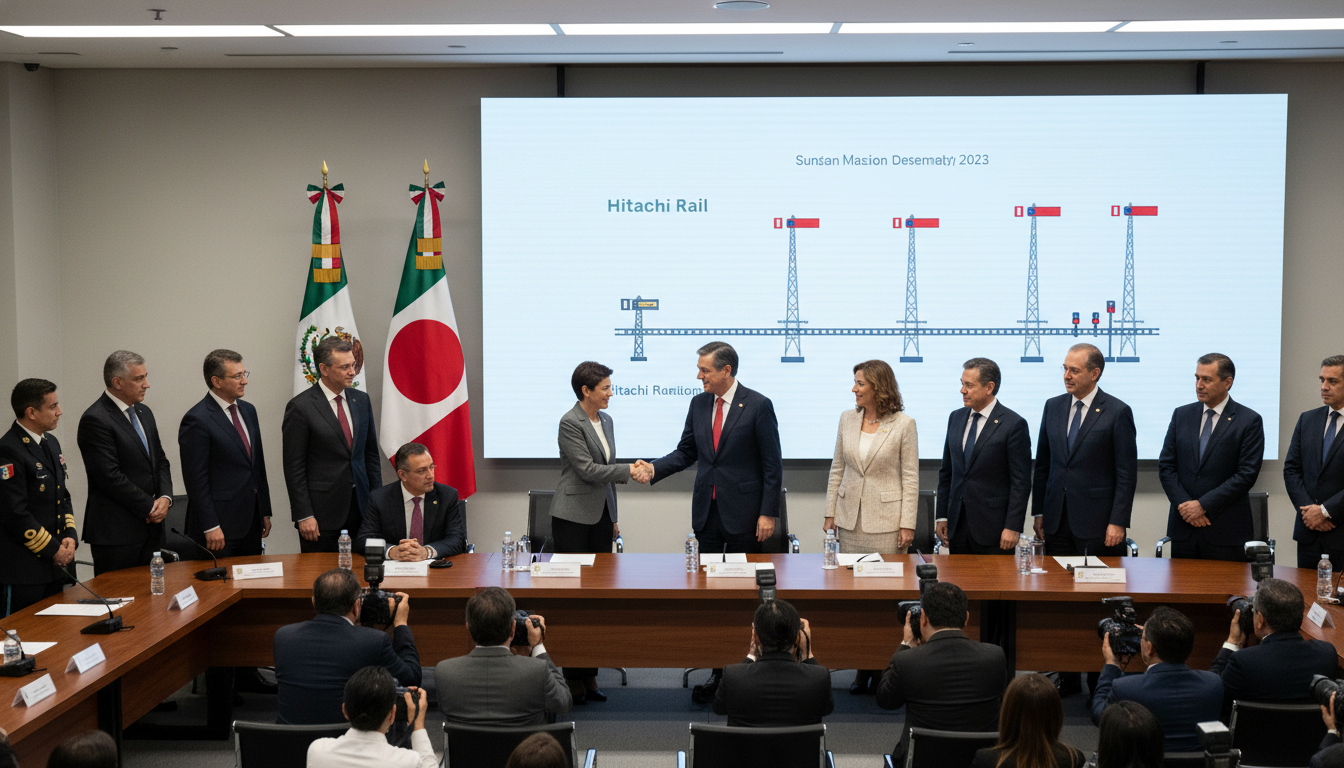
Hitachi wins €168m Mexico rail signalling contract for 396-km northeast line
Hitachi wins €168m contract to install signalling and telecoms on a 396-km passenger line in northeast Mexico, expanding Hitachi Rail’s systems business.
Opening summary
Hitachi has secured a €168 million ($195 million) contract from the government of Mexico to supply and install a passenger rail signalling and telecommunications system on a 396-kilometre line in the country’s northeast. The Hitachi Mexico rail signalling contract marks a significant order for Hitachi Rail as the company pushes deeper into operations systems and rail IT beyond its traditional rolling stock business. Company officials described the work as a turnkey systems delivery that will cover both signalling and communications infrastructure across the full corridor.
Contract details and scope
The award covers design, supply, installation and integration of signalling and telecommunications equipment for the 396-km passenger route, the government said in the contract notice. The package, valued at €168 million, will provide the control and communications backbone required for modern passenger operations over the entire line. The order was placed directly by the Mexican federal government, underlining public-sector investment in rail upgrades in the region.
Technical systems and installation
The programme calls for deployment of interlocking systems, train control modules and an integrated telecoms network to support both safety-critical signalling and on-board passenger services. Hitachi Rail is expected to link wayside equipment with central traffic management systems and to implement continuous communications for train-to-ground data exchange. The systems will be tailored to passenger operation requirements, including line-side detection, traffic sequencing and redundancy measures to maintain service reliability.
Hitachi Rail’s strategic expansion
The contract highlights Hitachi Rail’s strategic shift toward systems, software and operational services as a growing revenue stream alongside rolling stock manufacturing. In recent years the company has marketed signalling, traffic management and digital maintenance tools as bundled offerings to governments and operators. Securing a major government contract in Mexico reinforces Hitachi’s push to sell end-to-end rail solutions that combine hardware with IT-enabled operations.
Implications for mobility in northeast Mexico
Upgrading signalling and communications on a long-distance passenger corridor could enable more frequent services, higher operating speeds and improved safety margins, transportation analysts say. Modern signalling systems also allow tighter headways and better traffic recovery after disruptions, which can increase the commercial viability of passenger lines. For communities along the 396-km route, the investment may translate into more reliable intercity connections and stronger incentives for modal shift from road to rail.
Local supply chain and workforce considerations
While Hitachi will deliver the core systems, large-scale installation projects typically draw on local contractors and technicians for civil works, tower installations and ancillary services. The contract presents opportunities for Mexican firms to participate in cabling, power works and site preparation, though Hitachi has not released a full subcontracting plan. Training and knowledge transfer for local maintenance teams are likely components, given the long-term operational nature of signalling systems.
Broader industry context
Major infrastructure orders for signalling and communications reflect a wider trend of rail operators seeking integrated digital solutions to improve capacity and resilience. Suppliers that can combine signalling expertise with digital traffic management and remote monitoring increasingly win large corridor contracts. Mexico’s decision to invest in full corridor systems aligns with global moves to modernize passenger networks and strengthen safety through standardized, interoperable control architectures.
The Hitachi Mexico rail signalling contract represents a notable win for the Japanese firm and a concrete step toward modernising passenger services in Mexico’s northeast, with potential benefits for frequency, safety and long-term operational efficiency.

