
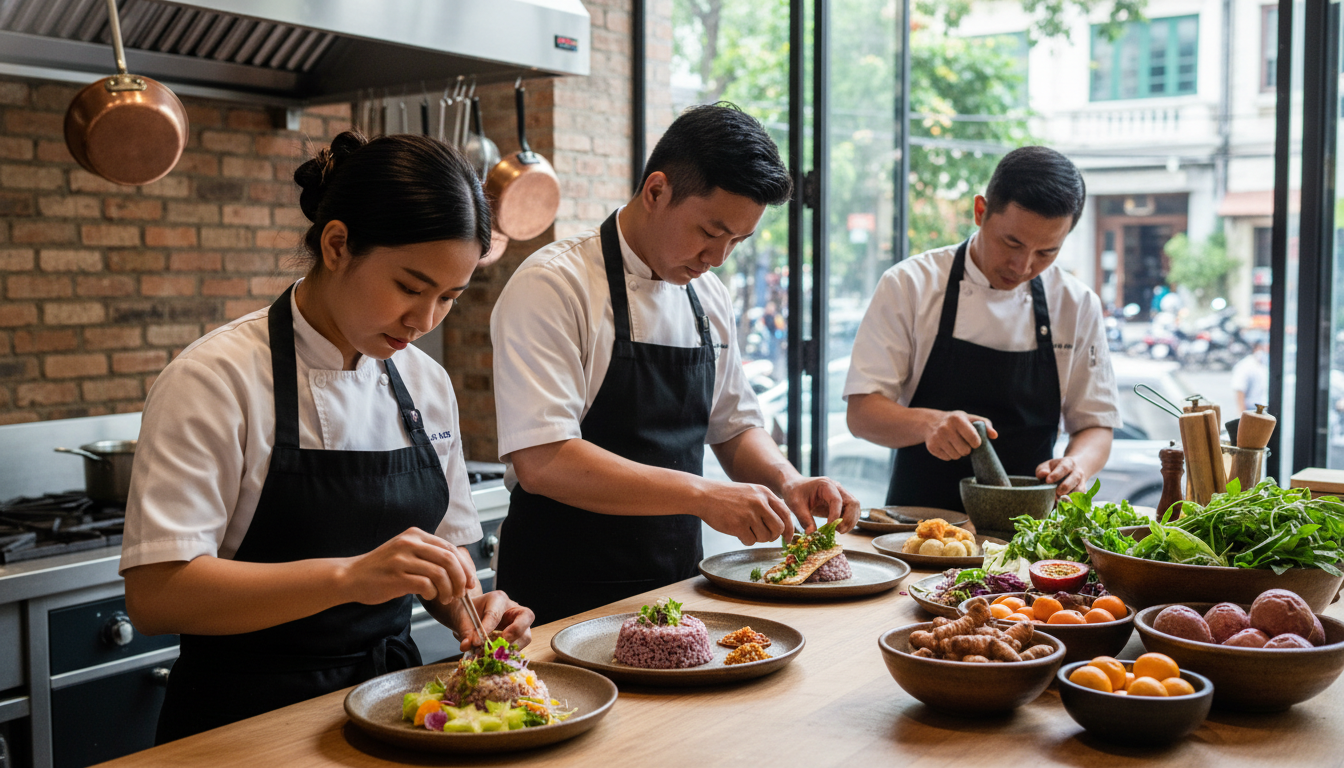
Hanoi culinary scene shifts as chefs fuse artisanal ingredients with modern technique
Chefs across Hanoi are redefining Vietnamese cuisine with artisanal ingredients and modern techniques, reshaping the Hanoi culinary scene and drawing diners.
Contemporary kitchens change Hanoi’s dining map
Hanoi’s restaurant landscape is seeing a clear shift toward contemporary interpretation of local fare, with small kitchens and tasting menus appearing alongside long-established street stalls. Chefs are experimenting with texture, fermentation and local preservation methods to present familiar flavors in new formats. The trend is visible across neighborhoods where intimate dining rooms and refined casual eateries now share a table of patrons who once only sought pho and bun cha.
Chapter Dining and other pioneers lead experimentation
Several new establishments have become reference points for the movement, introducing dishes such as eel caviar and other reinterpretations of Vietnamese ingredients. These venues are notable for pairing artisanal sourcing with tightly edited menus that change frequently. Head chefs emphasize provenance and technique, often sourcing directly from farmers, fishers and small-scale producers to craft plates meant to provoke and comfort in equal measure.
Local sourcing reshapes menus and supply chains
Chefs are prioritizing regional produce, heirloom rice varieties and small-batch condiments, forcing supply chains to adapt to higher-quality, lower-volume demand. That shift has encouraged closer relationships between restaurants and suppliers, with kitchens investing in preservation, smoking and fermentation to extend seasonality. As a result, menus now read as maps of local ecosystems, with ingredients traced back to specific provinces and smallholders.
Regional traditions reinterpreted on modern plates
Rather than discarding regional techniques, many chefs are reworking them, bringing northern restraint, central spice blends and southern sweetness into composed courses. Traditional preparations such as braising, drying and pickling are being retooled alongside contemporary plating and service. This reinterpretation has allowed chefs to showcase the diversity of Vietnamese food while positioning dishes within the language of modern dining.
Demand for tasting menus and intimate service grows
A growing cohort of diners in Hanoi seeks curated experiences, and restaurants are responding with set menus, wine pairings and multi-course tastings that frame local ingredients as part of a narrative. These formats allow kitchens to sequence flavors and textures deliberately, offering diners a guided encounter rather than an à la carte selection. Reservations and limited seatings have become more common as operators balance the economics of small-format service with higher price points.
Tourism and local appetite drive economic impact
The rise of contemporary dining in Hanoi is drawing increased attention from both domestic food enthusiasts and international visitors, boosting culinary tourism in the capital. Hotspots are creating demand for training, skilled front-of-house staff and specialized suppliers, which in turn supports allied businesses such as artisanal producers and boutique distributors. This ripple effect is contributing to an evolving hospitality ecosystem that values craft, transparency and story.
Chefs leading this movement say the objective is not to replace street-level cooking but to add another chapter to the city’s food story, one that honors tradition while embracing experimentation. The Hanoi culinary scene now includes a widening spectrum of places where artisanship, locality and modern technique intersect to create unmistakably Vietnamese yet forward-looking dining.

