
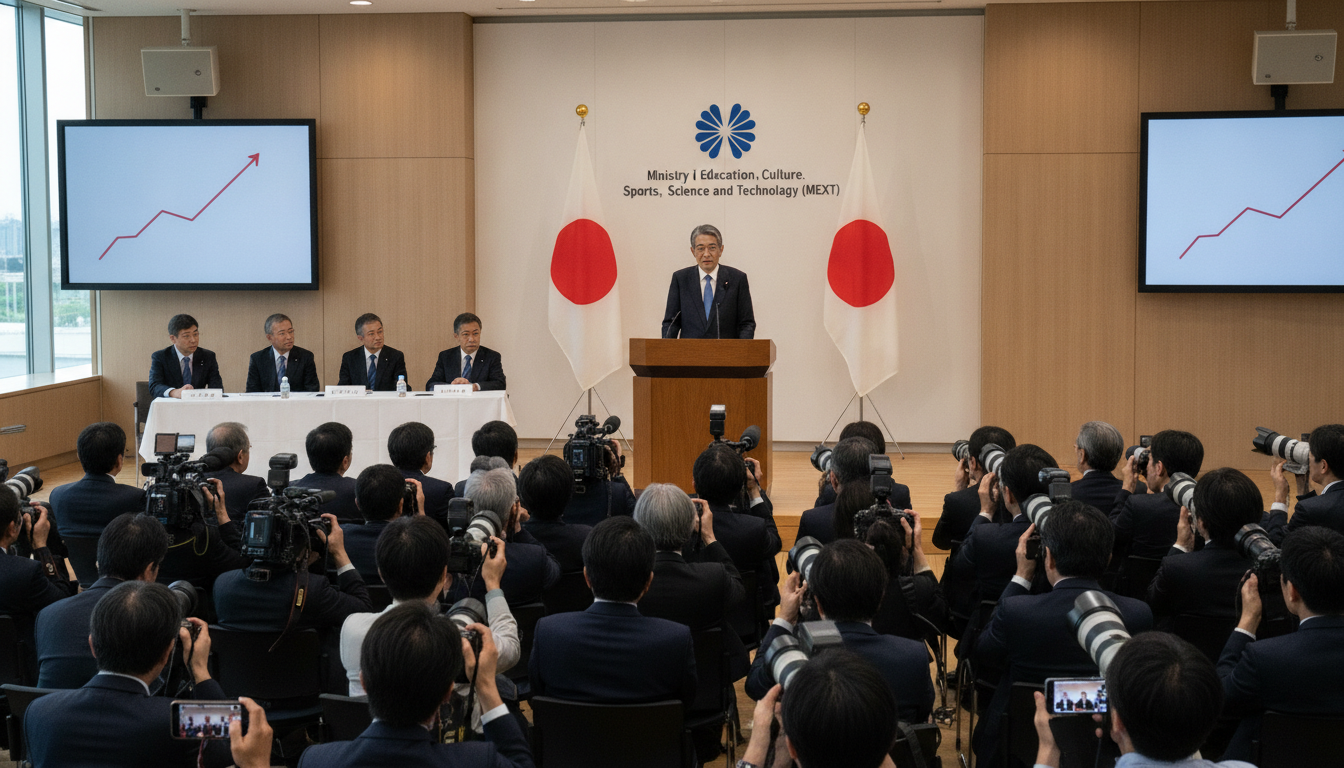
Japan Aims for 20,000 Ph.D. Holders Annually by Fiscal 2030, Boosts Fellowships
Japan aims to produce 20,000 Ph.D. holders annually by fiscal 2030, increasing research fellowship grants and encouraging overseas study for young scholars, officials said.
Japan will raise research fellowship funding and pursue measures to generate 20,000 Ph.D. holders annually by fiscal 2030, the government announced following a Council for Science, Technology and Innovation meeting on July 10. The target is paired with plans to expand opportunities for young researchers to study abroad and strengthen career pathways after graduation. Officials said the moves are intended to bolster Japan’s research capacity and global competitiveness in science and technology.
Government sets target of 20,000 Ph.D. holders annually by fiscal 2030
The Cabinet endorsed a goal to increase the annual number of Ph.D. degree recipients to 20,000 by the start of fiscal 2030. The decision, revealed at the July 10 council meeting attended by Prime Minister Sanae Takaichi, is part of a broader push to reinvigorate Japan’s scientific workforce. Authorities framed the objective as essential for long-term innovation, economic resilience and meeting the demands of emerging technologies.
The government described the target as a benchmark to guide funding allocations, university admissions and industry cooperation. Officials emphasized a multi-year timeline and signaled that ministries will coordinate to align scholarships, research grants and institutional incentives with the goal.
Fellowship funding to be increased, officials say
A central pillar of the plan is to enlarge research fellowship grants for doctoral students and early-career researchers. Officials said higher stipends and more generous grant packages will be offered to reduce financial barriers and make doctoral study more attractive. The expanded fellowships are expected to cover living costs more effectively and to provide flexible support for international mobility.
Authorities also indicated that funding will be tied to outcomes such as research productivity, international collaboration and career transition support. The government intends to phase increases to fellowships over multiple fiscal years to ensure budgetary sustainability.
Policy to expand overseas placements for young researchers
Tokyo announced efforts to send more young scholars overseas through fellowships, short-term exchanges and joint doctoral programs. Officials argued that international study and research placements would expose students to global networks and training environments that can accelerate skill development. The policy aims to create a larger cohort of researchers with international experience who can lead collaborative projects and attract foreign investment.
Programs under consideration include funded visiting research stints at partner institutions, language and cultural preparation, and strengthened ties with universities in Europe, North America and Asia. The government said it will work with academic institutions to expand recognition of overseas credits and to ease re-entry into domestic research positions.
Universities urged to scale doctoral programs and industry links
The government has called on universities to increase doctoral admissions and to redesign curricula with clearer links to industry needs. Officials recommended stronger partnerships between academia and private firms to create employment pipelines for Ph.D. graduates outside the tenure track. Universities are being encouraged to offer professional development, entrepreneurship training and internships that enhance employability.
Education ministries are also expected to review accreditation standards and to provide targeted funding for universities that demonstrate capacity-building plans. Stakeholders noted that some institutions will need to expand supervisory capacity and lab infrastructure to train larger cohorts effectively.
Economic and workforce challenges remain, analysts warn
Policy experts cautioned that meeting the 20,000 annual Ph.D. target will require overcoming structural obstacles in Japan’s research and labor markets. Concerns include the limited number of permanent academic positions, the need for greater private-sector absorption of doctoral talent, and the costs of sustained fellowship increases. Observers also highlighted demographic pressures and the uneven distribution of research opportunities across regions and disciplines.
Analysts said success will depend on coordinated reforms that extend beyond funding: creating stable career paths, incentivizing industry hiring of doctoral talent, and ensuring quality supervision. Without these complementary measures, an increase in degree numbers could strain the system without delivering the anticipated gains in innovation.
Next steps and implementation timeline outlined by ministries
Ministries will develop concrete implementation plans in the coming months, including budgets, performance indicators and pilot programs. Authorities indicated they will begin phased fellowship increases and pilot overseas exchange schemes in the next fiscal cycle, with broader rollouts tied to yearly assessments. The government said it will monitor progress against interim targets leading up to fiscal 2030 and adjust measures based on results.
Officials emphasized collaboration with universities, private companies and international partners to ensure the reforms translate into tangible research capacity and career outcomes. The council meeting on July 10 set the policy direction; detailed policies and funding allocations are expected to follow through formal budget processes.
Japan’s pledge to expand its pool of Ph.D.-level researchers reflects growing recognition that a deeper and more internationally connected research workforce is central to long-term economic and technological competitiveness. As the program moves from announcement to action, its impact will hinge on sustained funding, institutional reform and stronger ties between academia and industry.

