
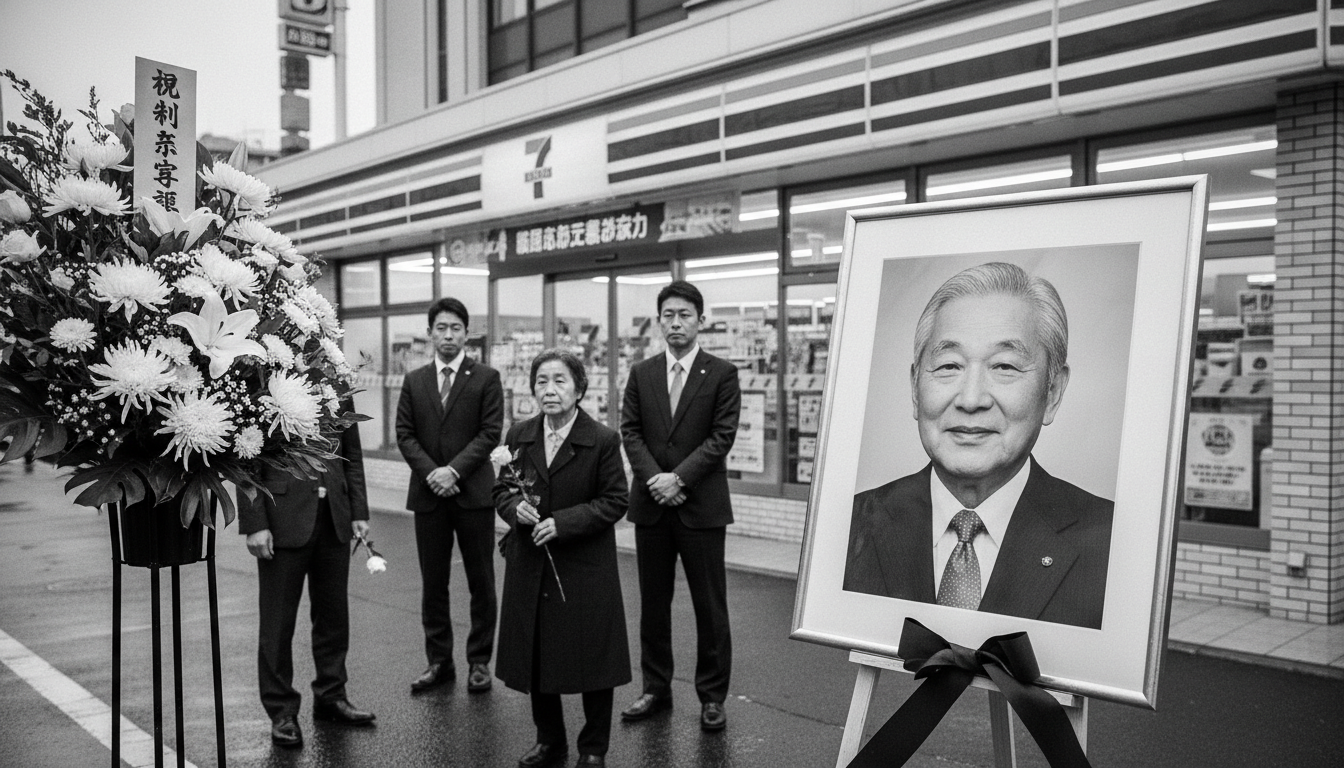
Toshifumi Suzuki, architect of Japan’s 7-Eleven growth, dies at 93
Toshifumi Suzuki, the executive who built 7-Eleven into Japan’s largest convenience chain, died on May 18, 2026 at age 93. Mourned by the industry and former colleagues, he was credited with reshaping Japanese retail.
Announcement of Death and Immediate Details
A company statement confirmed that Toshifumi Suzuki passed away on May 18, 2026 at the age of 93. He had served as chief executive and president of Seven & i Holdings, the parent company of 7-Eleven in Japan, and remained a defining figure in the convenience-store sector.
Family members and current company officials released condolences and noted his decades-long influence on retail strategy and operations. Plans for a commemorative event were described as being coordinated with his family and business partners.
Early Career and Rise to Executive Leadership
Toshifumi Suzuki began his career in the retail and distribution sector, where he developed operational expertise that later became central to his leadership style. Over the years he moved from management roles into senior executive positions, culminating in his stewardship of the group that operates Japan’s largest convenience-store network.
Colleagues remember him as pragmatic and disciplined, with a hands-on approach to store operations and franchise relationships. Those traits helped him navigate the complex relationship between franchisors and independent store owners as the chain expanded nationwide.
Expansion of 7-Eleven across Japan
Under Suzuki’s direction, the 7-Eleven network grew rapidly, surpassing competitors to become Japan’s most extensive convenience-store chain. He emphasized dense store placement and a standardized model that prioritized quick replenishment and consistent service across locations.
The strategy focused on meeting local consumer needs through tailored product selection while maintaining rigorous logistical systems. That combination enabled stores to sustain high daily traffic and established a new benchmark for convenience retailing in Japan.
Operational Innovations and Franchise Strategy
A hallmark of Suzuki’s tenure was his commitment to operational efficiency and a franchise model that balanced corporate oversight with local autonomy. He invested in logistics, in-store training, and systems that allowed individual stores to react swiftly to customer demand.
The company’s inventory and distribution frameworks became studied examples in retail management circles for reducing waste and maximizing shelf turnover. Such operational advances helped the chain introduce new services and expand into adjacent businesses, including financial services and fresh food offerings.
Boardroom Challenges and Later Years
Suzuki’s long tenure also included high-profile governance debates and leadership transitions as the company navigated domestic saturation and international ambitions. Internal disagreements over strategy and succession occasionally played out in public, reflecting the scale and complexity of the group he led.
In later years he stepped back from day-to-day management but remained a respected elder statesman in the sector, offering counsel during periods of merger activity and corporate restructuring. His departure from executive office did not diminish his influence on company culture and operational priorities.
Industry Reaction and Corporate Statements
Executives across the retail and logistics industries issued statements acknowledging Toshifumi Suzuki’s role in transforming convenience retail. Competitors and suppliers noted that many current practices across the sector trace back to innovations he championed.
Company representatives highlighted his focus on customer convenience and employee training as enduring elements of the business. Observers said that the systems he put in place continue to shape how retailers approach urban density, product assortment, and service delivery.
Toshifumi Suzuki’s passing has prompted renewed discussion about the future of convenience stores in Japan, where changing demographics and digital commerce are prompting adaptations to the model he helped build.
His legacy is visible in the ubiquity of small-format stores across city neighbourhoods, the sophisticated logistics that undergird rapid restocking, and the emphasis on convenience as a daily habit rather than a single retail format.
Retail analysts say that while competitors will continue to innovate, the structural changes Suzuki introduced—particularly in franchise relations and logistics—remain central to the industry’s resilience. New leaders face the twin challenges of honoring the operational foundations he set while evolving the business for digital-era demands.
As Japan’s retail landscape continues to shift, the contribution of Toshifumi Suzuki will be measured both in the physical presence of thousands of stores and in the operational playbook that guides them. His influence on consumer habits and on the business practices of convenience retail stands as a lasting part of Japan’s postwar commercial development.

