
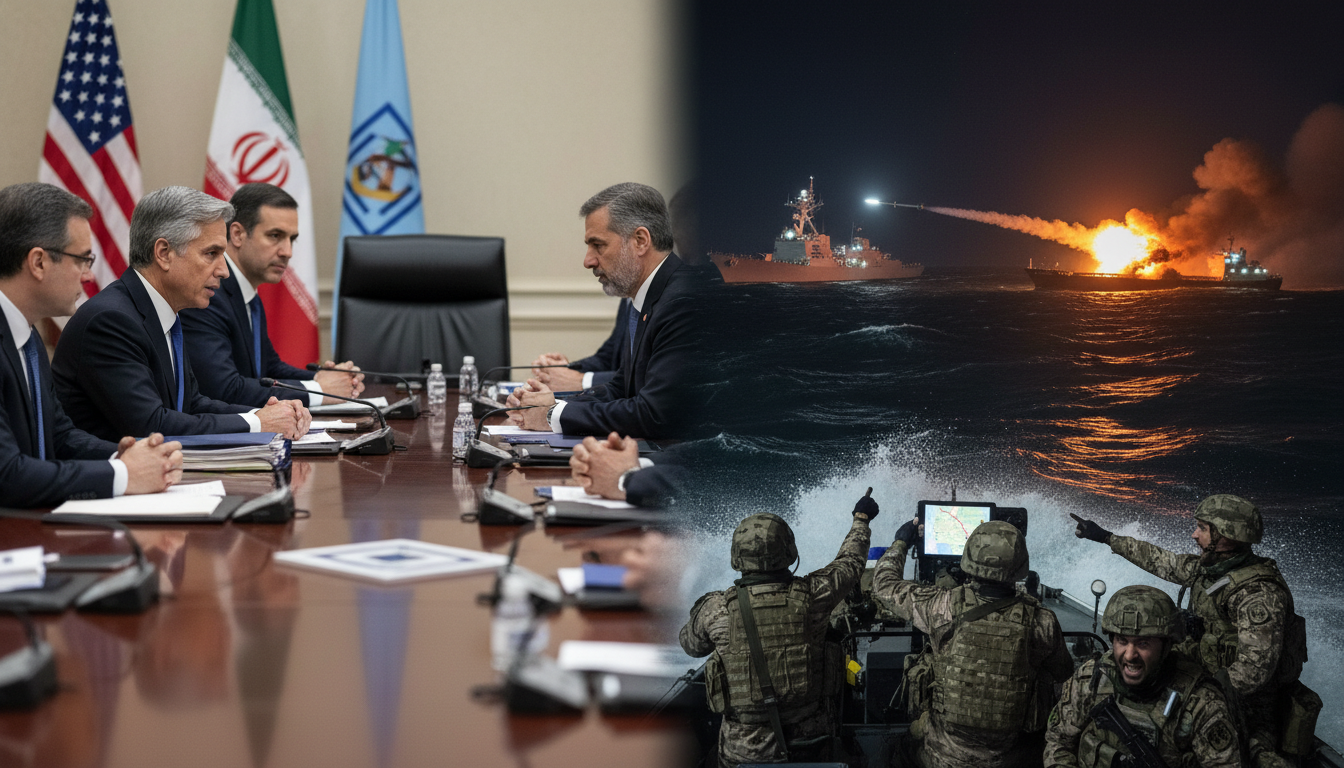
U.S.-Iran ceasefire talks falter as strikes and asset moves raise tensions
U.S.-Iran ceasefire talks face setbacks while Washington and Tehran clash over wording, asset releases and strikes in the Gulf, heightening regional tensions.
Opening summary of negotiations and incidents
U.S.-Iran ceasefire talks have shown signs of progress on some fronts but remain fragile as both sides dispute final wording and recent military actions complicate diplomacy. U.S. officials say negotiations continue over the exact terms of any agreement, while Iranian state-linked media report movement on the issue of frozen assets. At the same time, U.S. strikes against vessels it says were involved in mine deployment, and Tehran’s allegations of violations, have deepened mistrust.
The competing narratives underline the gap between technical agreement on some elements and political obstacles that could scuttle a deal. Diplomats involved in back-channel and public talks describe an environment where small textual differences are amplified by operational incidents at sea.
Negotiations stall over draft language
U.S. sources describe the main impediment to a ceasefire deal as disagreement over phrasing rather than principle, with negotiators trading proposals on specific clauses. The dispute over wording affects verification, timelines and the sequencing of actions such as asset releases and troop or proxy withdrawals. Officials say both sides are attempting to preserve domestic political space, which makes final language especially sensitive.
Analysts note that when diplomatic negotiations hinge on precise language, delays and revisions are normal but can become protracted if trust is low. In this case, mistrust has been fuelled by concurrent military incidents that parties view as evidence of bad faith.
Iran signals progress on frozen assets
Iranian media outlets reported what they characterized as progress on the unfreezing of financial assets long held abroad, presenting it as a key concession that could facilitate a ceasefire. Tehran’s narrative emphasizes the economic urgency and frames asset access as both humanitarian relief and leverage in talks. Iranian authorities have pushed for clear, verifiable commitments tied to concrete actions by the United States and its partners.
Western officials acknowledge discussions about funds and sanctions relief but caution that technical and legal hurdles remain. Financial institutions and third-party intermediaries would need assurances before moving significant sums, complicating rapid implementation.
U.S. attacks target vessels alleged to be laying mines
U.S. forces publicly acknowledged strikes on vessels they identified as being used to lay mines in southern Iranian waters, saying the actions were aimed at protecting freedom of navigation and regional security. Washington characterized the strikes as limited and targeted, aimed at preventing further maritime hazards that threaten commercial shipping. U.S. statements stressed that operations were defensive and tied to specific, suspected hostile activities.
Observers warn that even narrow military actions can have outsized diplomatic consequences, particularly when talks are ongoing. Iran denounced the strikes as a breach of the negotiation process and warned of reciprocal measures.
Iran accuses U.S. of violating ceasefire principles and reports downing a drone
Tehran condemned the U.S. strikes as a violation of ceasefire norms and argued they undermined the negotiating atmosphere. Iranian officials and state-affiliated media alleged that the attacks contradicted commitments under discussion and demanded accountings for the incidents. Separately, Iranian statements claimed the downing of a U.S. unmanned aerial vehicle, a claim that if confirmed would mark a significant escalation in military posture.
U.S. authorities have not uniformly corroborated all Iranian accounts, and independent verification remains limited in the immediate aftermath. The conflicting claims have added urgency to diplomatic efforts to clarify intent and prevent miscalculation.
Security and economic implications for the region
Maritime incidents and the specter of resumed hostilities have immediate implications for shipping insurance, commercial routes and investor confidence in the Gulf region. Energy markets and supply chains could face disruptions if mine threats or targeted strikes escalate, prompting international calls for restraint. Regional governments and trade bodies are monitoring the situation for impacts on trade flows and port operations.
Security analysts emphasize that even localized skirmishes can ripple across diplomatic alignments, encouraging third parties to intervene or mediate to prevent broader conflict. The combination of contested financial measures and kinetic actions at sea creates complex incentives for both de-escalation and retaliation.
Diplomatic pathways and next steps
Despite the tensions, both sides have signaled continued engagement through diplomats and intermediaries, suggesting a mutual interest in avoiding full-scale escalation. Negotiators are reported to be working on bridging text-based differences and establishing verification steps that could reassure domestic constituencies. International actors with influence in the region may play a role in facilitating implementation mechanisms and confidence-building measures.
Observers expect that any near-term breakthrough would require pairing concrete security guarantees with verifiable financial arrangements, accompanied by rapid communication channels to manage incidents at sea. Absent such mechanisms, incidents like the recent strikes risk derailing painstaking diplomatic work.
The negotiations remain in a precarious phase where technical progress on issues such as frozen assets coexists with operational clashes that test political will. Continued diplomatic engagement and robust incident-management procedures will be essential to prevent further escalation and to create conditions in which a durable ceasefire can be codified.

