
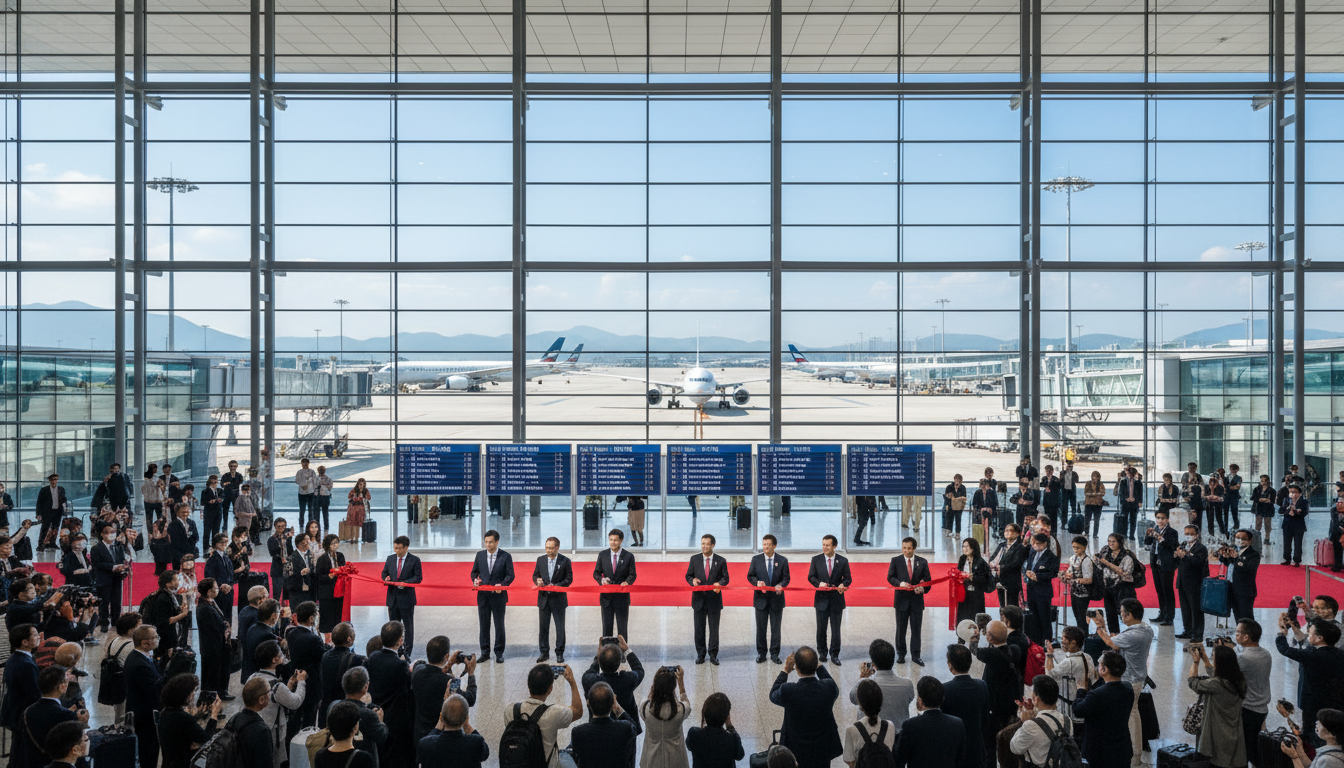
Hong Kong International Airport Terminal 2 Opens on May 27, 2026, as Guangzhou and Shenzhen Step Up Expansion
Hong Kong International Airport Terminal 2 opens May 27, 2026, aiming to streamline regional travel as Guangzhou builds a new hub and Shenzhen upgrades capacity in the Greater Bay Area.
Terminal 2 opens at Hong Kong International Airport
The rebuilt Terminal 2 at Hong Kong International Airport formally opened its departure facilities on May 27, 2026, marking the first major passenger-facing change from the airport’s long-running expansion programme. The Airport Authority held an opening ceremony and said the upgraded hall will start handling check-in, immigration and security functions to relieve pressure on Terminal 1. (hongkongairport.com)
Layout and passenger features of the new departure hall
The terminal’s design emphasizes faster processing and a younger, tech-forward passenger experience, with smart check-in kiosks, automated e-security lanes, and streamlined transfers to Terminal 1 for departures. Authorities said enhancements include facial-recognition systems at e-security gates and improved passenger flows aimed at easing queues during the summer peak travel season. (hongkongairport.com)
Airline operations and phased rollout
Airport managers expect a phased transition of carriers into T2, with about 15 airlines scheduled to move short-haul and regional services in the initial stages to concentrate regional traffic in the rebuilt terminal. The shift is intended to speed turnaround times for regional flights and to create clearer operational separation between long-haul services at Terminal 1 and short-haul services at T2. (scmp.com)
Guangzhou breaks ground on the Pearl River Delta hub
Meanwhile, Guangdong authorities have launched construction of a new Pearl River Delta Hub — branded as the Guangzhou New Airport — in Foshan’s Gaoming district, with groundworks beginning on March 25, 2026. The project is designed to add substantial capacity on the western side of the delta, relieve congestion at existing hubs and reshape intra-regional connectivity across the Greater Bay Area. (english.news.cn)
Shenzhen accelerates terminal and cargo upgrades
Shenzhen Bao’an International Airport has also pressed ahead with upgrades, breaking ground on a new terminal zone and a northern cargo area intended to boost logistics throughput and support high-end manufacturing and cross-border e-commerce. The city has rolled out service and security upgrades in recent months, including new baggage-screening equipment and expanded inbound duty-free and retail offerings to strengthen Shenzhen’s role as a fast-growing aviation gateway. (szairport.com)
What the Greater Bay Area build-out means for Hong Kong
The simultaneous moves by Guangzhou and Shenzhen underscore intensified competition for passenger and cargo flows across the Guangdong-Hong Kong-Macao Greater Bay Area. Planners in the province have framed the projects as complementary elements of a regional transport network, but airport authorities and carriers will face new commercial choices as catchment areas and route economics adjust. Provincial planning documents and local officials have highlighted rail links and high-speed connections as key to integrating the new facilities into the wider transport grid. (newsgd.com)
The opening of Terminal 2 gives Hong Kong a near-term operational boost by redistributing regional services and improving passenger processing, but analysts say the airport will need sustained marketing to retain hub traffic as new capacity comes online in neighbouring cities. Airlines will weigh operational costs, slot availability, and surface access improvements when deciding how routes and resources are allocated across the region.
Passengers arriving at the rebuilt T2 should expect digital-first touchpoints, clearer signage for cross-terminal transfers and a concentration of short-haul carriers that could shorten transfer times for many regional itineraries. For business and tourism planners, the broader infrastructure build-out across Guangzhou and Shenzhen promises more route choices and lower travel times across the Pearl River Delta over the coming decade.
Longer term, the dynamics between Hong Kong, Guangzhou and Shenzhen will be shaped by rail-link completion, airline network strategies and policy choices on customs arrangements and joint-clearance mechanisms. The three hubs together position the Greater Bay Area to handle far larger passenger and cargo flows than any single airport can serve, but the balance of traffic and commercial advantage will remain contested as new runways and terminals come into operation.
Hong Kong’s Terminal 2 opening on May 27, 2026, is a tangible step in a shifting regional aviation map that now includes a newly launched construction programme for the Guangzhou New Airport and continued expansion at Shenzhen, forcing carriers and policymakers to recalibrate routes and infrastructure priorities across southern China. (hongkongairport.com)

