
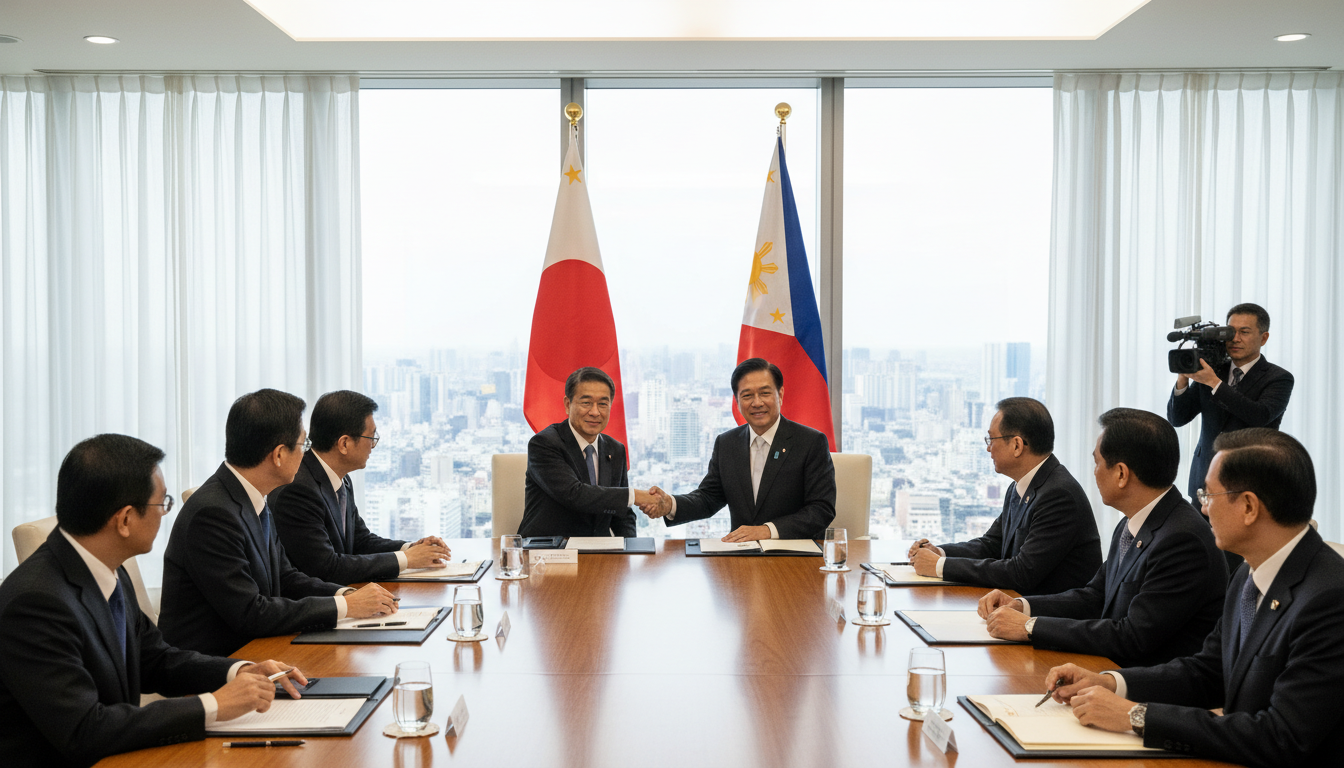
Japan–Philippines ties elevated to highest diplomatic level in Tokyo summit
Japan–Philippines ties were elevated to one of the highest diplomatic levels after Prime Minister Sanae Takaichi and Philippine President Ferdinand Marcos Jr. met in Tokyo on May 28, 2026, citing shared concerns over China’s regional assertiveness.
Japan and the Philippines announced on May 28, 2026, that they had upgraded their bilateral relationship to one of the highest diplomatic levels during a summit in Tokyo. The leaders, Prime Minister Sanae Takaichi and President Ferdinand Marcos Jr., framed the move as a response to heightened regional tensions and the need for deeper cooperation on security, maritime safety and economic resilience. Officials described the decision as a strategic step to strengthen ties across defence, trade and people-to-people links.
Diplomatic upgrade announced in Tokyo
Both governments described the upgrade as a significant elevation of Japan–Philippines ties, reflecting closer political alignment and broader practical cooperation. The announcement followed talks that emphasized mutual interests in preserving regional stability and ensuring the safety of maritime routes crucial to trade. Leaders said the enhanced relationship would be pursued through regular high-level consultations and more frequent ministerial meetings.
Diplomats in Tokyo said the elevation is a formal recognition of the two countries’ increasingly overlapping strategic priorities. The move is intended to institutionalize closer coordination on security matters while expanding economic and development cooperation to reduce vulnerabilities in critical supply chains.
Security and maritime cooperation emphasized
Security and maritime concerns were central to the talks, with both leaders highlighting the importance of safeguarding freedom of navigation in regional waters. The summit underscored plans to deepen cooperation on maritime domain awareness, information-sharing and non-combat support capabilities aimed at improving situational awareness. Observers noted that the measures stop short of a mutual defence treaty but signal a closer security partnership.
Analysts said the upgrade will likely accelerate joint training, logistical support arrangements and practical cooperation between coastguard and maritime agencies. Officials framed these steps as defensive and aimed at crisis prevention, while stressing that they were designed to uphold international law and stable regional order.
Economic and infrastructure cooperation to grow
Beyond security, the summit placed renewed emphasis on economic ties, investment and infrastructure projects between Tokyo and Manila. The two sides discussed ways to boost trade, diversify supply chains and expand Japanese investment in Philippine manufacturing, logistics and energy. Officials indicated that enhanced cooperation would include support for critical infrastructure and initiatives to improve connectivity across Southeast Asia.
Economic advisers highlighted opportunities for Japan to back initiatives in renewable energy, ports and digital infrastructure that strengthen the Philippines’ economic resilience. Such projects are expected to complement Tokyo’s broader strategy of supporting regional partners through economic statecraft as a means of enhancing collective stability.
Diplomatic message to regional actors
The upgrade of Japan–Philippines ties sends a clear diplomatic message across the region about closer cooperation among U.S. allies and partners in East Asia. While Tokyo and Manila emphasized that their actions were not directed at any single country, the timing and content of the summit were widely seen as a response to growing maritime assertiveness in the region. Regional diplomats said the move may encourage similar deepening of ties among other Southeast Asian states concerned about maritime security.
Japanese and Philippine officials portrayed the elevated relationship as part of a broader effort to reinforce rules-based order and peaceful dispute resolution. The summit also underscored the two countries’ shared interest in working through multilateral institutions and aligning with like-minded partners to address transnational challenges.
Implementation steps and follow-up
Both capitals signalled that concrete follow-up steps would be taken to operationalize the upgraded ties, including working-level mechanisms to coordinate defence, maritime and economic initiatives. Officials outlined plans for expanded ministerial exchanges, joint exercises between security agencies and greater collaboration on capacity-building in the Philippines. Timetables and precise measures were not disclosed at the summit, with diplomats saying details would be announced as part of implementation tracks.
Observers noted that the success of the upgrade will depend on prompt, measurable actions and sustained political will from both governments. Stakeholders on both sides will be watching for financing, project timelines and legal frameworks that translate political commitments into tangible cooperation.
The Tokyo summit marked a visible strengthening of Japan–Philippines ties at a moment of heightened regional uncertainty. By elevating their diplomatic relationship, the two countries have signalled a willingness to deepen practical cooperation across security and economic fronts while preserving channels for diplomacy and dialogue.

