
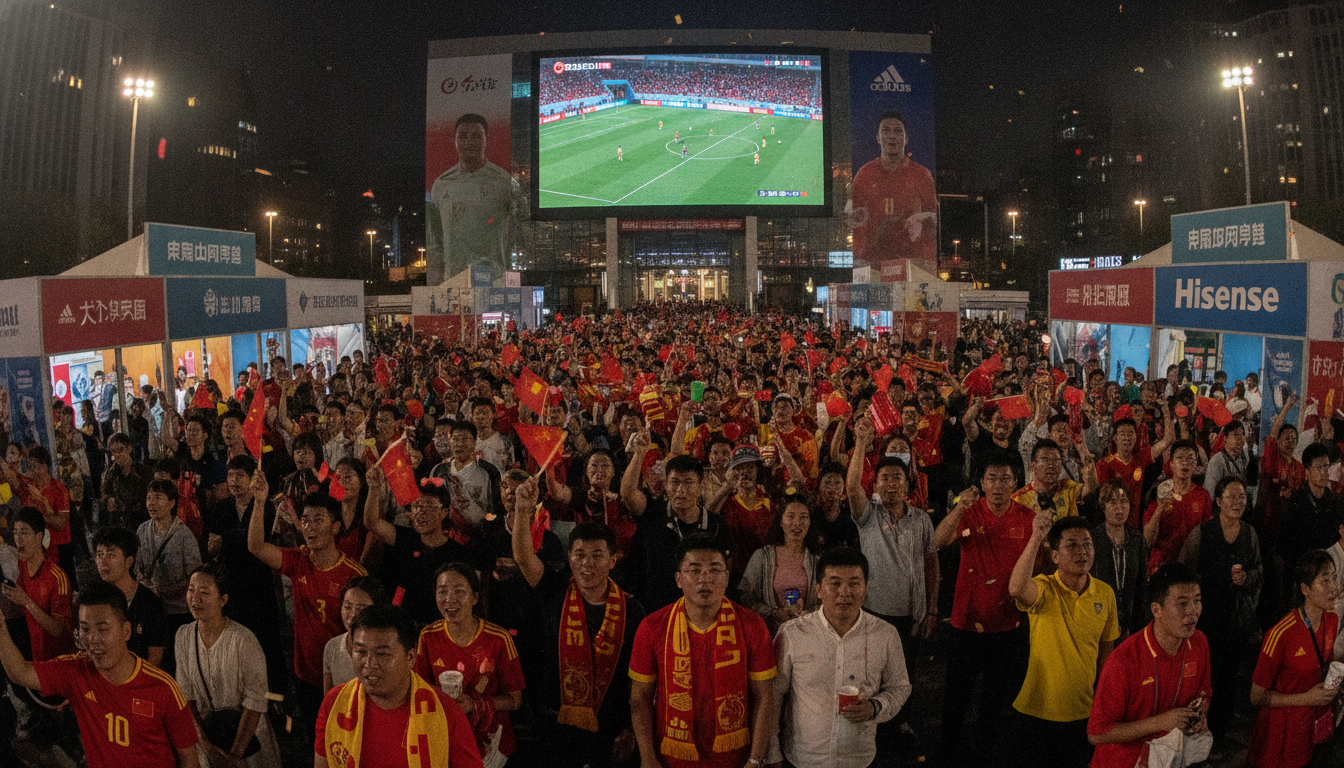
Chinese fans tune into World Cup despite national absence, fueling watch parties and supplier gains
Chinese fans tune into the 2026 World Cup despite their team’s absence, spurring late-night watch parties, viral Haaland coverage and supplier sales growth.
China’s absence from the tournament has not curbed enthusiasm, as Chinese fans tune into the World Cup through televised matches, streaming platforms and public watch events. Crowds in cities such as Shanghai gathered for group screenings, with a Reuters photograph showing supporters cheering during an Argentina–Algeria match on June 17. The surge in viewership has created a clear commercial opening that both domestic and international brands are moving to exploit.
Watch Parties Fill Shanghai Streets
Large public screenings and private gatherings have multiplied in Shanghai and other major cities, where residents gather to follow matches into the early hours. Organizers say these events attract a cross-section of fans, from expatriates to local football clubs and casual viewers seeking communal atmosphere. The social energy of these watch parties has translated into foot traffic for bars, restaurants and retail vendors near screening sites.
Event promoters and venue operators report that late-night service windows and extended opening hours are now part of their planning to accommodate match schedules. Local authorities have also adapted logistics for crowd safety and transport, reflecting the predictable peaks in arrivals and departures around fixture times.
Late Nights and Social Media Momentum
Matches played in different time zones have pushed many viewers in China into late-night and early-morning viewing habits. That pattern has amplified social media conversation, with highlights, memes and short clips spreading widely across Chinese platforms in near real time. International stars such as Erling Haaland have triggered particular spikes in engagement, with goal clips and reaction posts generating high visibility.
The momentum on social feeds creates a feedback loop that prolongs interest beyond single matches, keeping the World Cup centrally visible in public conversation. Broadcasters and streamers are responding by curating highlight packages and short-form content tailored for mobile consumption during and after games.
Brands and Suppliers See Noticeable Uplift
Retailers, food and beverage suppliers, and consumer electronics vendors have reported stronger demand tied to matchdays. Beverages, snacks, and portable screens are among the product categories that benefit when households and public venues assemble to watch games. Suppliers positioned to serve event-driven consumption — from quick-serve restaurants to packaging and logistics firms — say they are capturing incremental sales.
Sponsorship and merchandising efforts are also playing a role, as companies leverage the tournament’s visibility to run promotions and limited-time offers. While exact sales figures vary by firm, the consensus among market observers is that the World Cup provides a measurable seasonal boost to several sectors connected to live viewing.
Broadcast and Streaming Demand Rises
Traditional broadcasters and online platforms have both experienced higher-than-expected traffic, prompting infrastructure and scheduling adjustments. Streaming services report peaks in concurrent viewers during marquee fixtures and have increased content moderation and bandwidth allocation in response. For rights holders, the large audience—even where a national team is absent—underscores the event’s continuing commercial value.
Media buyers and advertisers are reallocating budgets to capture this tuned-in audience, particularly around matches that feature globally popular players or historically significant teams. The period has become a testing ground for new ad formats and sponsored content adapted to both live and on-demand viewing.
Merchandise Trends and Consumer Behavior
Merchandise sales show a mix of traditional replica jerseys and alternative products such as team-themed accessories and viewing-party kits. Consumers appear willing to spend on products that enhance the matchday experience, from portable speakers to themed snacks. Retailers have observed that purchases are often impulse-driven and clustered around match schedules.
The merchandising push is not limited to football apparel; lifestyle brands and local designers are introducing World Cup-inspired items that appeal to younger buyers. These offerings create additional touchpoints for brands to engage fans who may not have a direct affiliation with any national team.
Economic Impact on Local Services
Beyond retail and media, service sectors including transport, hospitality and cleaning services have reported incremental activity linked to match gatherings. Hotels hosting viewing events and restaurants catering to groups saw increased reservations on match nights. Small businesses in neighborhoods with popular screening spots note improved evening revenues during the tournament window.
Urban planners and local businesses are taking note of these patterns as temporary shifts that can influence longer-term commercial strategies. The intersection of global sport and local consumption is shaping how firms plan staffing, inventory, and event programming during international tournaments.
Public enthusiasm for the World Cup in China, despite the national team’s absence, demonstrates the tournament’s broad cultural reach and commercial potential. The combination of packed watch parties, social media virality around standout players and a ripple of supplier demand has made the event an unmistakable economic and social moment across cities such as Shanghai. As the competition moves into later stages, businesses and broadcasters alike are positioning to capture continued interest and the spending that follows.

