
Tokyo fireworks festivals 2026: dates, top displays and practical viewing guide
Complete guide to Tokyo fireworks festivals 2026 — dates, major displays from Sumidagawa to Edogawa, viewing tips, transport guidance and nearby day‑trip events.
Tokyo fireworks festivals are returning in force for 2026, with a packed calendar of large-scale displays, neighborhood shows and competitive pyrotechnic events across the metropolitan area. This guide to Tokyo fireworks festivals lists confirmed dates, highlights the biggest spectacles — including Sumidagawa on July 25, 2026 — and offers practical advice for getting the best view while avoiding the worst of the crowds. It also covers smaller, family-oriented displays and notable out‑of‑season events around the capital to help readers plan evening outings or short day trips.
Major Tokyo fireworks festivals and confirmed dates for 2026
Many of Tokyo’s largest displays are scheduled through July and August, with several events attracting hundreds of thousands of spectators. Key large-scale shows include Sumidagawa in Asakusa (20,000 shots) on July 25, 2026, Katsushika’s 20,000-shot display on July 28, and Edogawa’s August 1 presentation, which will feature the Fuji no Daikageki. These marquee events are historical and competitive, often featuring entries from national pyrotechnic houses.
Other high-attendance displays include the Tokyo Racecourse fireworks on July 1, 2026, with approximately 14,000 fireworks and reserved-ticket seating, and Adachi’s May 30 event, which moved to late May in recent years to avoid peak summer heat. Local and suburban shows fill the calendar through August and beyond, giving residents and visitors multiple options for evening entertainment across the metropolis.
Several events provide paid reserved seating while maintaining free viewing zones nearby; entry arrangements vary by municipality. For many of the best vantage points — riverbanks, parks or paid seating areas — planning and early arrival are essential to secure space and avoid long station lines after the show.
Sumidagawa in Asakusa: the capital’s largest single-night spectacle
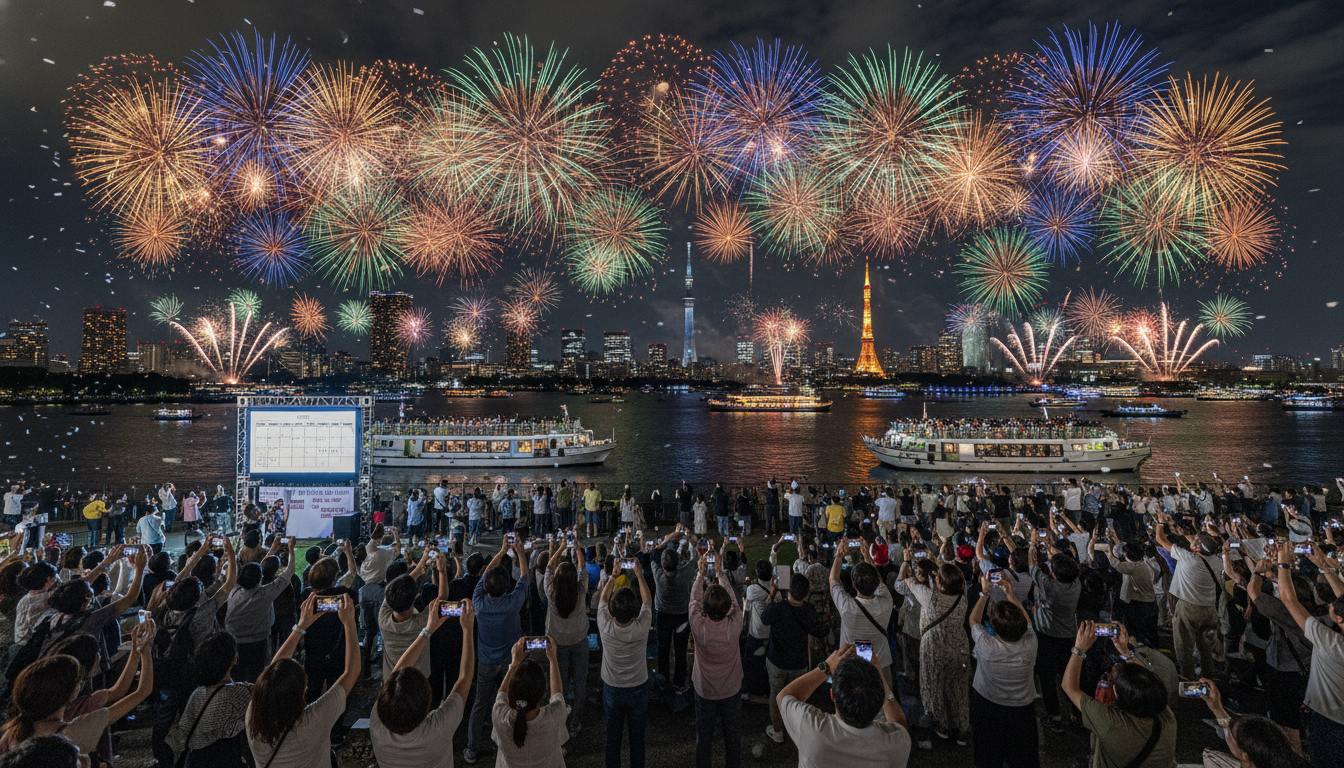
Sumidagawa Fireworks Festival in Asakusa remains Tokyo’s most famous single-night display, drawing roughly one million spectators and offering an intense, historic spectacle. The 2026 edition is scheduled for July 25 and will feature about 20,000 fireworks, including competitive sequences from top pyrotechnic companies that often push technical and visual boundaries. The event is rooted in a long history dating back to the 18th century and remains a cultural highlight of the city’s summer calendar.
Crowds around the Sumida River are extremely dense; many visitors watch from riverboats, rooftops, or packed streets along the riverbanks. Spectators who prefer less frenetic viewing should consider nearby elevated locations or paid rooftop and boat options, which charge for guaranteed sightlines but save hours of queuing and provide easier post-show egress. Regardless of where you watch, expect severe congestion at train stations after the finale and plan your return route accordingly.
Photographers and families should prepare differently: photographers seeking iconic skyline-and-fireworks shots will often need permits or paid vantage points, while families with young children should identify exit routes and meet-up points beforehand. Basic supplies such as water, compact picnic blankets, and small fans improve comfort during long waits, and sober, considerate behavior reduces crowd friction.
Katsushika, Edogawa and Tokyo Racecourse: distinct shows with different logistics
Katsushika’s Noryo Hanabi in Shibamata is scheduled for July 28, 2026, and offers a 20,000-shot program on a weekday evening that nevertheless attracts large crowds. The venue lies close to Shibamata Station and the Shibamata Baseball Field; local transport options make it accessible, but the event’s longevity and popularity mean streets will be busy well before the fireworks begin. Vendors and local festivities often accompany the main display, creating a neighborhood atmosphere that contrasts with the more metropolitan Sumidagawa.
Edogawa’s display on August 1, 2026, marks another long-running festival that celebrated its 50th anniversary recently and plans to include the Fuji no Daikageki — a notably tall sequence designed to create dramatic vertical impact. The main launch area is along the Edogawa riverbank, with the walk from Koiwa or Shinozaki stations ranging from 15 to 25 minutes; expect dense pedestrian flows and consider arriving early to avoid long approaches to the site. The event is free to view from public vantage points, though some municipalities offer reserved seats for a fee.
The Tokyo Racecourse event on July 1, 2026, presents a different model: the primary viewing area is inside the racecourse and requires purchased tickets, but riverside parks and roads south of the venue also provide sightlines. Ticketed stadium seating reduces unpredictability, but obstructed views are possible from offsite spots. Notably, the racecourse program is tied to other festivities this year and will pay tribute to the 50th anniversary of musician Shogo Hamada, adding a music element to the evening’s entertainment.
Smaller city and suburban festivals that suit families and local visitors
Not every Tokyo fireworks event is about shoulder-to-shoulder crowds; smaller festivals offer more relaxed settings and are ideal for families or visitors seeking a local experience. Showa Kinen Park in Tachikawa hosts a July 25, 2026 display with around 5,000 fireworks and is particularly picnic-friendly thanks to the park’s ample grounds. Families who prefer a day-and-night outing can secure space inside the park and enjoy a less frantic atmosphere than riverside events downtown.
Hachioji’s display at Fujimori Park on August 1, 2026, is modest in scale with roughly 4,000 shots and attracts mainly local crowds, making it easier to access and comfortable for visitors with children. The Okutama Nōryō Fireworks Festival, held in early August, is a countryside option set beside a river; it’s one of the most local-feeling shows and is best suited to travelers prepared for a longer train journey and limited late-night transport. Koto’s festival on August 11, 2026, at Sunamachi Mizube Park is another community-oriented event with reserved seating limits and a capped venue capacity that helps manage crowd size.
Many smaller festivals maintain free entry but institute clear limits on the number of spectators or sell reserved seats to protect local neighborhoods from overwhelming visitation. These events often include food stalls and community programming that make them appealing as full-evening outings rather than strictly once-only spectacles.
Fireworks near Tokyo and out-of-season displays to extend the experience
The region around Tokyo hosts numerous notable displays that are easily reached by train or car and can be combined with day trips. Lake Kawaguchiko’s August 5, 2026 fireworks, set against the silhouette of Mount Fuji, remain a uniquely photogenic option and are popular for late-summer sightseeing. Kawaguchiko draws visitors to both the lakefront and nearby hotels; travel planners should account for heavier-than-usual local traffic and high demand for lodging on event nights.
Coastal and resort towns such as Atami stage multiple displays across the summer weeks, with the Atami Marine Sea Fireworks Festival timing several shows in July and August that appeal to beachgoers and visitors using the Shinkansen. Closer escapes include Kamakura’s July 10, 2026 beach display at Yuigahama, which pairs a daytime visit to temples and shrines with an evening show on the sand. These locations often provide a more scenic backdrop and a range of nighttime hospitality options compared with urban riverbank settings.
Outside the traditional summer window, Tokyo-area festivals continue into autumn and early winter. Chōfu’s Tama River display on September 12 and Tamagawa’s October 3 event cater to late-season crowds, while regional competitions such as Tsuchiura’s All Japan Fireworks Competition in Ibaraki deliver extended programs and an emphasis on technical display design. These out-of-season dates attract dedicated spectators and can offer clearer skies and cooler temperatures for viewing.
Transport, tickets, crowd management and safety recommendations
Public transport planning is essential for any fireworks outing in Tokyo; major events create long station queues and extended travel times, especially on return journeys immediately after the finale. For the largest shows, arriving at least two to three hours before the scheduled launch helps secure space and avoids the most congested phases of station entry. Consider alternative egress plans such as walking to a less busy station, using paid viewing areas with assured exit routes, or pre-booking taxis if available.
Ticketing policies vary by event and location: some festivals rely entirely on free public viewing while others sell reserved seating or limited-capacity tickets to control crowds and generate revenue. Purchasing official reserved seats for stadiums, rooftop venues or river boats is recommended when available and affordable, particularly for visitors who cannot invest long waiting time. Note that many municipal events will cancel in the case of severe weather without a set postponement date, so verify the municipality’s cancellation policy before making travel arrangements.
Respectful behavior and adherence to local rules improve the experience for everyone; common expectations include disposing of trash at designated collection points, avoiding alcohol-fueled obstructive conduct, and keeping aisles clear to allow emergency access. Visitors with children or limited mobility should identify meeting points and emergency contacts in advance, and carry essentials such as water, a small flashlight, and weather-appropriate clothing. Municipal websites and official event notices typically publish the most current guidance on access restrictions, prohibited items and accessibility services.
A final practical note: photography and drone use are heavily regulated at most events, and unauthorized attempts to capture aerial footage can present safety and legal risks. For professional photography or broadcast plans, secure the necessary permissions well in advance and respect designated media zones during the show.
Tokyo’s fireworks season offers a wide array of experiences — from the frantic grandeur of Sumidagawa to intimate local displays along suburban riverbanks. With confirmed dates through the summer and autumn of 2026, planning in advance for transport, seating and weather will make the difference between a memorable evening and a stressful night in the crowds.

