
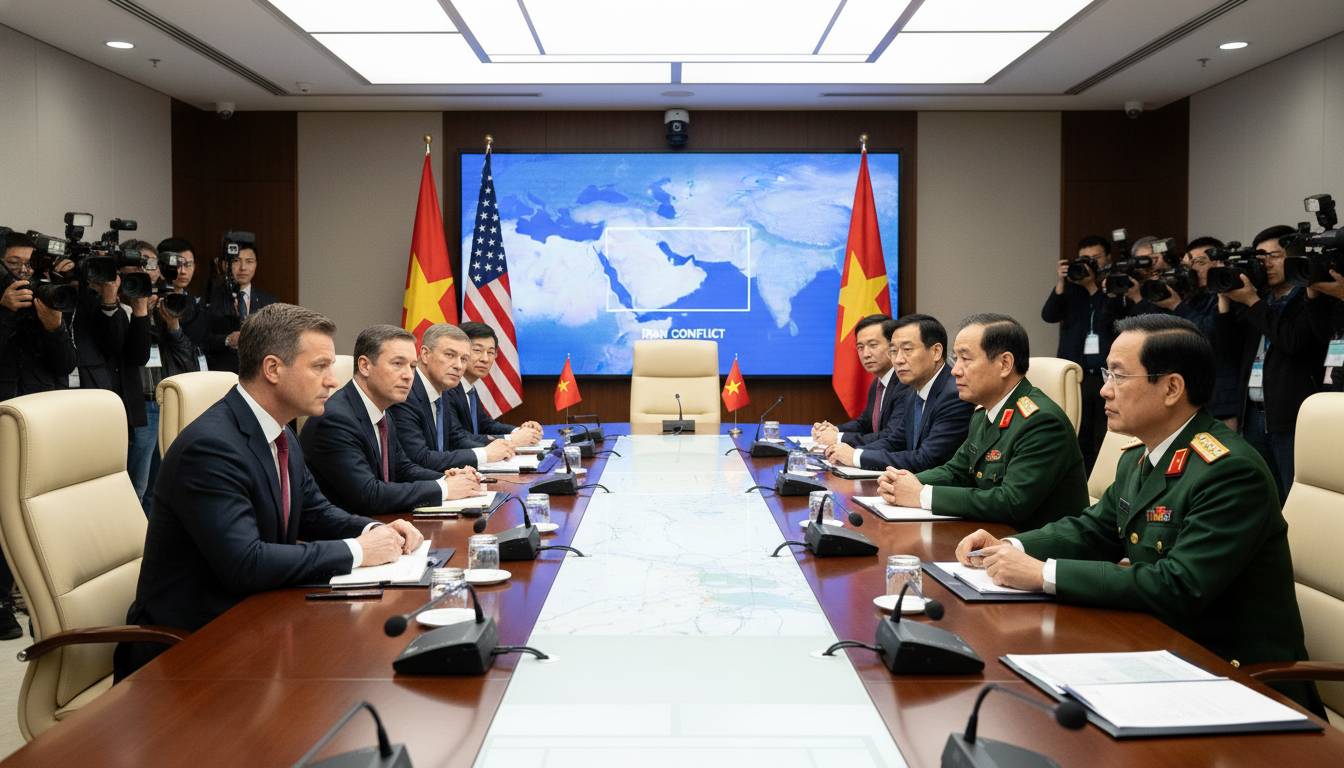
Shangri-La Dialogue draws U.S. envoy Pete Hegseth and Vietnam’s To Lam amid regional security concerns
Shangri-La Dialogue summit in Singapore will feature U.S. envoy Pete Hegseth and Vietnam Communist Party leader To Lam, as regional leaders weigh Asia security amid the Iran war.
Global defense leaders converged in Singapore for the annual Shangri-La Dialogue, where Washington’s strategy in the Indo-Pacific and the wider implications of the war with Iran are expected to dominate discussions. U.S. representative Pete Hegseth and Vietnam’s Communist Party leader To Lam are scheduled to deliver high-profile addresses that will set the tone for bilateral and multilateral talks. The meeting provides a forum for defense ministers, service chiefs and security officials to test policy alignments and manage rising regional tensions.
Keynote Addresses and Delegations
To Lam is slated to deliver a keynote speech that officials say will outline Hanoi’s security priorities and its approach to regional cooperation. Delegations will include senior defense officials from across the Indo-Pacific and beyond, reflecting a broad cross-section of state and military leadership. Bilateral meetings and side events are expected to multiply as countries seek to clarify commitments and explore areas for cooperation.
U.S. Representation and Policy Signals
Pete Hegseth’s presence as Washington’s representative is being watched for indications of U.S. policy balance between commitments in the Middle East and priorities in Asia. Analysts say his remarks will likely aim to reassure allies on deterrence in the Indo-Pacific while acknowledging pressure on U.S. resources arising from the Iran conflict. Observers will scrutinize any operational changes, including naval deployments or shifts in security assistance, signaled during and after the Dialogue.
Vietnam’s Participation and To Lam’s Role
Vietnam’s elevated profile at the Shangri-La Dialogue underscores Hanoi’s growing engagement in regional security conversations. To Lam’s address is expected to touch on maritime security, ASEAN centrality, and practical steps for confidence-building among neighbors. Vietnam has increasingly sought a balanced approach, expanding ties with major powers while emphasizing the need for rules-based order in regional waters.
Iran War and Indo-Pacific Security Implications
The war between the United States and Iran has injected uncertainty into planning for Indo-Pacific defense posture, diplomats say. Participants at the Dialogue will assess risks that the conflict could divert attention, naval assets or political bandwidth away from Asia, with potential consequences for maritime security and supply-chain protection. Speakers are likely to explore contingency measures to mitigate spillover effects and to maintain stability in key sea lanes.
Regional Responses and Alliance Dynamics
ASEAN members, Japan, Australia, India and other partners will use the forum to coordinate responses and to reaffirm lines of cooperation. The Dialogue offers a stage for reinforcing existing security arrangements and for testing new mechanisms for information sharing and capacity-building. Smaller states are expected to press for measures that deter coercion while avoiding steps that escalate tensions.
Agenda Priorities and Expected Outcomes
Top agenda items include maritime security, cyber and space resilience, defence industrial cooperation and measures to prevent miscalculation. Officials plan a mix of plenary exchanges and closed-door bilateral consultations aimed at translating dialogue into practical steps. While sweeping agreements are unlikely, the event should produce clearer signals on intent, increased diplomatic engagement and a roster of follow-up meetings.
The Shangri-La Dialogue arrives at a moment of heightened strategic competition and operational strain, giving participating states a vital opportunity to clarify policies, test partnerships and pursue pragmatic measures that reduce the risk of regional escalation.

