
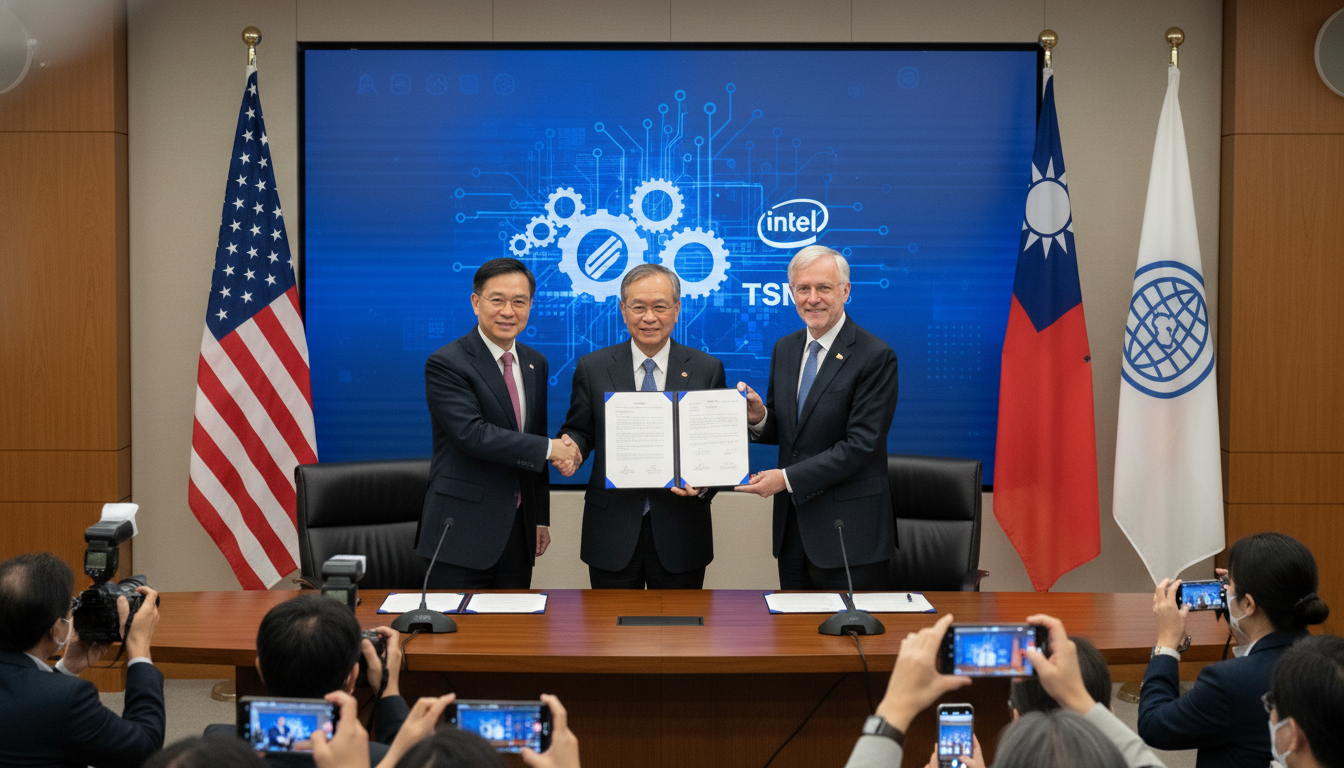
MediaTek confirms Intel collaboration for advanced chip packaging alongside TSMC
MediaTek teams with Intel for advanced chip packaging alongside TSMC, expanding options for AI-focused customers and boosting foundry competition for chips.
MediaTek has begun working with Intel on advanced chip packaging while maintaining its established relationship with Taiwan Semiconductor Manufacturing Co. (TSMC), the company said. The move, announced by the Taiwan-based mobile chip designer, comes as MediaTek pivots to capture growing demand for artificial intelligence hardware and infrastructure. The announcement signals a strategic shift toward diversified packaging options that could affect customer choice and the broader foundry market.
MediaTek confirms collaboration with Intel for advanced packaging
MediaTek said it has started technical cooperation with Intel to employ advanced packaging technologies alongside its existing use of TSMC processes. Company statements framed the step as part of a wider effort to support customers building more complex, performance‑sensitive systems. MediaTek emphasized that enabling multiple packaging partners will help it serve a broader range of device and infrastructure needs.
MediaTek did not disclose commercial terms or a timeline for volume production with Intel, but described the collaboration as an extension of its foundry and packaging strategy. The firm positioned the arrangement as complementary to its long‑standing work with TSMC rather than a replacement. Officials characterized the ability to combine different packaging approaches as an advantage for customers designing AI‑capable products.
Deal expands MediaTek’s packaging options beyond TSMC
By adding Intel’s packaging technologies to its supply chain, MediaTek gains alternative routes for advanced integration and multi‑chip solutions. Advanced packaging — which includes techniques such as chiplets, 3D stacking and heterogeneous integration — is a critical enabler for higher performance and energy efficiency in AI accelerators and mobile SoCs. Access to more than one packaging ecosystem gives MediaTek flexibility in matching production capacity and technical trade‑offs to customer requirements.
For customers, the practical effect is fewer constraints when selecting a partner for final assembly and advanced interconnects. That can shorten development cycles for companies combining CPUs, NPUs, modems and other components into a single package. MediaTek’s move thus aims to lower barriers for device makers seeking differentiated form factors and compute density.
Strategic push toward AI hardware and infrastructure
MediaTek has publicly signalled a strategic emphasis on artificial intelligence as a core growth driver, and advanced packaging is central to that aim. As AI workloads demand higher memory bandwidth and more power‑efficient compute, packaging technologies that reduce interconnect distances and increase integration density become commercially attractive. MediaTek’s broader roadmap reflects this shift, prioritizing solutions that support both edge devices and larger infrastructure components.
The collaboration with Intel complements MediaTek’s product roadmap by widening the technical choices available for AI‑centric designs. Customers targeting cloud and on‑premise AI deployments as well as next‑generation smartphones and edge devices will likely see the benefits in performance per watt and form‑factor innovation. Industry observers expect packaging decisions to be a differentiator as chipmakers scale AI capabilities.
Intel gains foothold while TSMC remains central
The agreement represents a notable win for Intel as it seeks to expand its role beyond internal manufacturing into broader packaging and foundry services. For Intel, attracting established chip designers to its packaging ecosystem helps validate its technology and build commercial momentum. Observers suggest the move could intensify competition among foundry and packaging providers vying for AI and high‑performance compute customers.
At the same time, TSMC continues to be a central manufacturing partner for MediaTek and many other fabless designers. MediaTek’s approach of maintaining TSMC cooperation while adding Intel reflects a hedging strategy that balances proven wafer manufacturing with alternative integration pathways. The coexistence of TSMC and Intel options may pressure both suppliers to accelerate packaging innovations and expand capacity.
Customer flexibility and supply‑chain implications
For device makers and system integrators, MediaTek’s dual‑path packaging strategy offers more negotiating leverage and risk mitigation. Multiple packaging partners can provide resilience against capacity shortages and geopolitical supply disruptions that have challenged the semiconductor industry. The practical consequence is a potential easing of timelines for complex product launches that rely on tight coordination across wafer, packaging and test flows.
Analysts say that as more chip designers seek the performance benefits of advanced packaging, ecosystem partners — foundries, OSATs (outsource assembly and test) and substrate suppliers — will need to scale technical capabilities. MediaTek’s announcement may prompt customers to reassess their supplier roadmaps and to demand broader cross‑vendor compatibility for multi‑chip modules and package‑level optimization.
MediaTek’s decision to work with Intel while retaining TSMC underscores a broader industry trend toward modular, heterogeneous chip design supported by diverse supply chains, and positions the company to serve a widening set of AI and connectivity use cases.

