
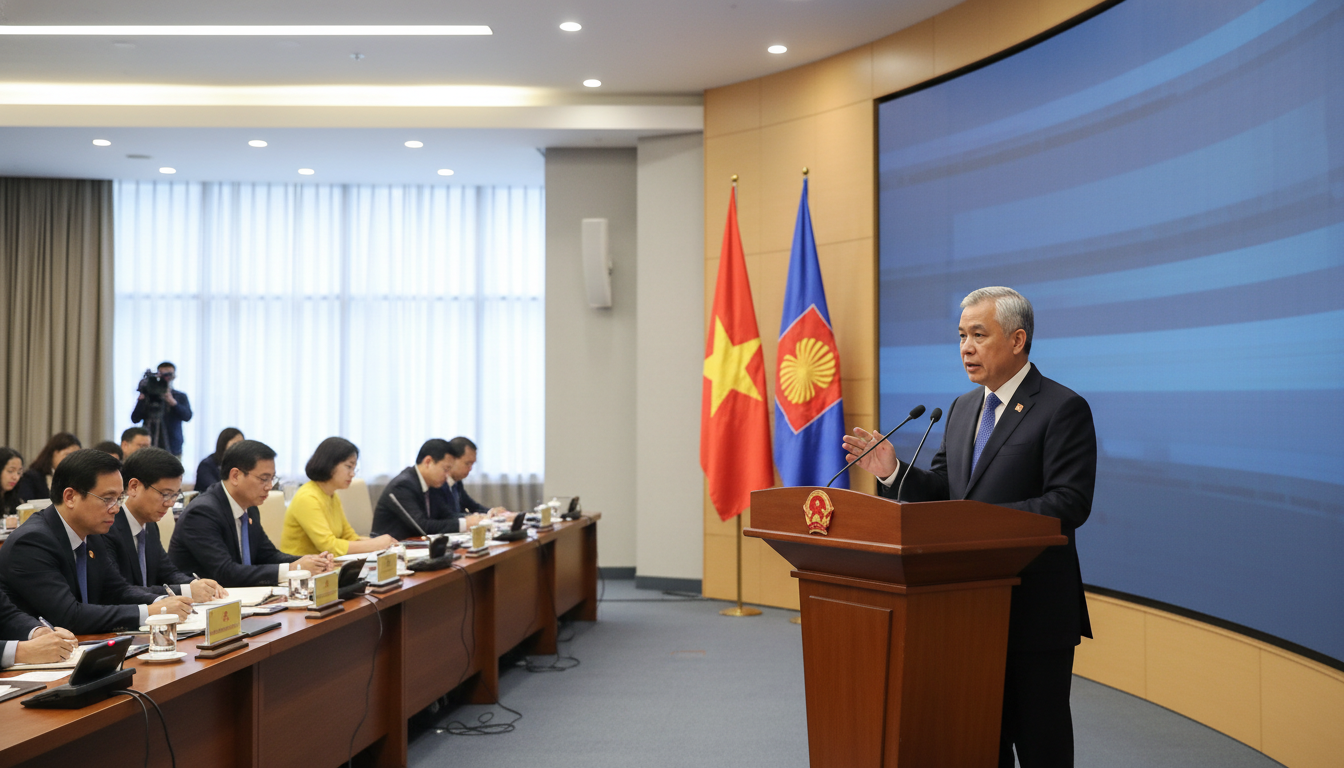
To Lam at Shangri-La Dialogue Signals Vietnam’s Strategy for Rising Geopolitical Tensions
Vietnamese President To Lam at the Shangri-La Dialogue outlined Hanoi’s approach to rising geopolitical tensions on May 29, 2026, urging dialogue, ASEAN unity and adherence to international law.
Vietnamese President and Communist Party chief To Lam used a keynote address at the Shangri-La Dialogue in Singapore on May 29, 2026, to set out Hanoi’s position amid intensifying regional rivalry. His speech positioned Vietnam as seeking stability through diplomatic engagement while protecting its national interests. The appearance underscored Vietnam’s growing role in regional security conversations as governments and defence officials gathered at Asia’s premier security summit.
To Lam’s Key Security Message
To Lam framed Vietnam’s response to great-power competition around three priorities: national sovereignty, peaceful development, and multilateral engagement. He told delegates that Vietnam would defend its territorial integrity while pursuing economic growth and international cooperation. The emphasis was on measured responses rather than confrontation in order to avoid escalation.
The president highlighted the need for predictable rules and clearer mechanisms for conflict avoidance in the region. He urged partners to respect international law and existing conventions as the basis for managing disputes. This appeal reflected Hanoi’s longstanding preference for legal and diplomatic channels in resolving sensitive matters.
Vietnam’s Approach to Great-Power Competition
In Singapore, To Lam described Vietnam’s posture as one of strategic balance, seeking cooperative ties with multiple partners without aligning exclusively on one side. He reiterated that Hanoi aims to deepen relationships with major powers while preserving autonomy in foreign policy decisions. The message was calibrated to reassure neighbours and outside powers alike of Vietnam’s intent to remain independent.
To Lam also signalled a willingness to engage in security dialogues and practical cooperation with defence partners. He framed these ties as necessary to build capacity for deterrence and crisis management rather than to pursue offensive alliances. The speech suggested Vietnam will continue to diversify its security relationships to manage uncertainty.
Maritime and Territorial Concerns
A substantial portion of To Lam’s address touched on maritime security, reflecting persistent tensions in regional waters. He restated Hanoi’s commitment to protecting its maritime rights and interests while urging peaceful dispute resolution through dialogue. The remarks underscored the centrality of sea lanes and resource access to Vietnam’s national security and economic wellbeing.
To Lam called for clearer rules and stronger compliance with international law in maritime conduct, stressing transparency and restraint at sea. He urged regional actors to prevent incidents that could spiral into broader conflict and to use established mechanisms for communication. The emphasis on legal frameworks was consistent with Vietnam’s long-term diplomatic posture regarding maritime disputes.
Responses from Regional and External Powers
Delegates at the Shangri-La Dialogue reacted to To Lam’s keynote with cautious endorsement of his call for stability and law-based order. Regional foreign and defence officials acknowledged Vietnam’s concerns while emphasising the need for dialogue and confidence-building measures. The event provided a platform for exchanges among officials from ASEAN, neighbouring states, and external powers with interests in Asia.
Several countries signalled interest in stepped-up cooperation on maritime domain awareness, search-and-rescue, and subregional security initiatives. These practical measures mirror Hanoi’s preference for capability-building that reduces the risk of miscalculation. Observers noted that such initiatives can provide immediate benefits regardless of broader geopolitical competition.
Defense Partnerships and Practical Steps
Following the speech, Vietnamese officials indicated plans to pursue targeted defence cooperation that enhances interoperability and coastal defence capabilities. To Lam’s public remarks suggested a dual track of diplomacy and pragmatic defence ties to manage risk. This approach is designed to strengthen deterrence without provoking escalation.
Analysts say Vietnam’s incremental reinforcement of defence links—through training, information-sharing and equipment procurement—aims to raise the threshold against coercion while keeping political options open. The strategy balances capability development with continued engagement in multilateral forums and economic integration. It also leaves room for further negotiations and confidence-building measures across the region.
The Shangri-La Dialogue provided a high-profile setting for Vietnam to articulate a calibrated security strategy that blends defence preparedness, legal norms and diplomatic outreach. To Lam’s address reinforced Hanoi’s intent to navigate a complex strategic environment by seeking both stronger partnerships and predictable rules, with an emphasis on preventing conflict while protecting national interests.

