
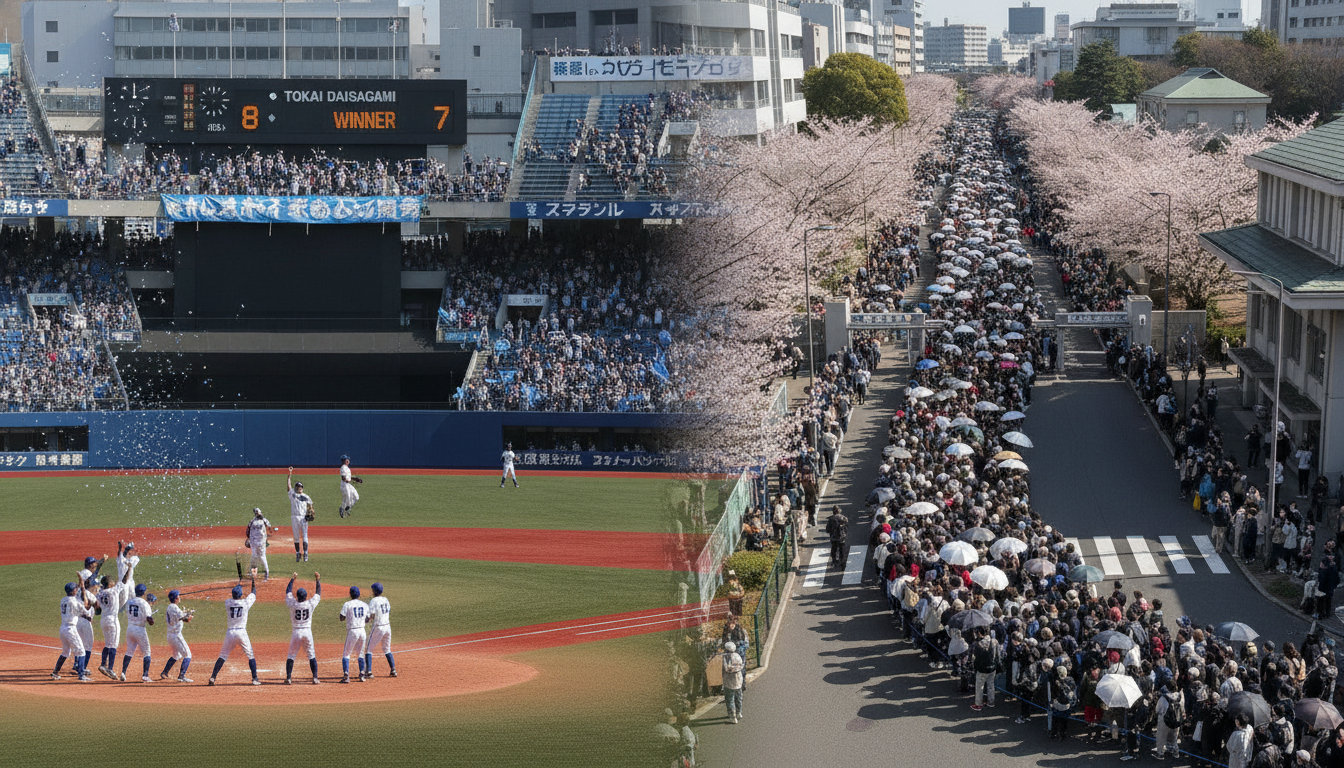
Yokohama vs Tokai University Sagami: Yokohama builds 5–0 lead in Kanagawa high school baseball fourth-round clash
Yokohama vs Tokai University Sagami in Kanagawa high school baseball: Yokohama led 5–0 through five innings on July 16, 2026, amid huge crowds and ticket chaos.
Yokohama took control early in the fourth-round matchup against Tokai University Sagami on July 16, 2026, building a 5–0 advantage through five innings at the Kanagawa prefectural stadium. The high-profile meeting of two teams with national championship pedigrees featured a strong opening for Yokohama and a bold pitching choice by Tokai University Sagami that left both dugouts and fans watching intently. The matchup—long one of the county’s marquee rivalries—also produced logistical headaches as throngs of spectators converged on the ballpark before first pitch.
Early offensive push gives Yokohama the edge
Yokohama struck first when a two-run single in the opening inning broke the game open and put immediate pressure on Tokai University Sagami’s defense. The early blow followed a defensive lapse that allowed the tying runner to reach base, but Yokohama’s middle lineup capitalized and converted the opportunity into runs. The visitors then augmented that lead with single runs in the second and third innings, stretching the margin to 4–0 before the middle innings.
The sequence established a rhythm that Yokohama’s hitters sustained through situational at-bats and timely contact. Aggressive but controlled plate approaches forced Tokai University Sagami to work from behind and altered the strategic balance, particularly in how pitchers were managed in the middle innings. The early deficit left Tokai University Sagami needing a response from the bullpen and a rally from its lower order.
Pitching decisions shaped by youth and experience
Tokai University Sagami opened with freshman left-hander Sota Yoshinaga, a first-time starter in this tournament who drew notice for his composure despite early trouble. Yoshinaga surrendered the first-inning two-run single after an initial defensive miscue put him under duress, and he faced traffic in subsequent frames as the coaching staff weighed options. The club’s decision to start a freshman underlined a developmental approach but also left little margin for error in a high-pressure regional contest.
Yokohama countered with sophomore left-hander Tetsuzaburo Kobayashi, who retired the side in order in his first inning and helped silence the Tokai University Sagami offense during the early stretch. Kobayashi’s efficient first inning allowed Yokohama to press its advantage at the plate, and his steady presence on the mound forced Tokai University Sagami to re-evaluate matchups as the game moved into the fifth inning. Both staffs showed a willingness to deploy young arms in important roles, a reflection of the depth and trust in pitching development across Kanagawa’s elite programs.
Fifth-inning insurance and tactical adjustments
Yokohama added an insurance run in the fifth inning after capitalizing on a second pitcher from Tokai University Sagami, using a mix of line-drive contact and a well-timed sequence of hits. The team’s offense manufactured runs via a combination of long and short hits, turning small-ball opportunities into an extra cushion. That fifth-inning run extended the lead to 5–0 and shifted the calculus for both benches, increasing the pressure on Tokai University Sagami’s offense to generate multiple-run rallies.
Following the fifth, both managers made visible tactical adjustments, including lineup shuffles and bullpen readiness checks, as they anticipated a late-game fight. For Tokai University Sagami, the task was to create momentum through small, sustained rallies rather than waiting for one big swing. For Yokohama, protecting the lead meant keeping run-producing hitters active while preserving pitching resources for the tournament’s later stages.
Rivalry draws massive turnout and strains event operations
The longtime rivalry between Yokohama and Tokai University Sagami drew a stadium crowd that overwhelmed usual entry patterns, prompting early deployment of officials and volunteers. Kanagawa High School Baseball Federation staff were on site before dawn, and by 7 a.m. a queue for same-day tickets stretched roughly one kilometer from the gates. Event organizers issued public announcements warning that fans might not be able to purchase admission even if they queued after opening.
To ease access and reduce vehicle congestion, the prefectural federation urged use of public transportation and arranged temporary shuttle services linking JR Hodogaya Station and Sotetsu Hoshikawa en route to the ballpark. Organizers also opened additional ticket windows to try to speed sales and limit crowding at the main entrances. Despite those measures, officials acknowledged significant delays and said they would review procedures for future high-demand fixtures.
Historic rivalry underscored by repeated late-stage meetings
The meeting on July 16, 2026, continued a pattern of repeated encounters between Yokohama and Tokai University Sagami in Kanagawa’s summer tournament. The two programs have met multiple times in semifinals and finals over the past two decades, trading victories in closely watched championship games. Recent decisive results include Yokohama’s 11–3 win in the 2025 final and Tokai University Sagami’s 6–4 victory in the 2024 championship, illustrating how outcomes have swung between the clubs in successive seasons.
This season’s draw was shaped in part by Tokai University Sagami entering the tournament without a seed for the first time in 27 years, which increased the likelihood of an early heavyweight matchup. That structural quirk accelerated a confrontation that in other years might have been reserved for the finals, amplifying both competitive intensity and public interest. For fans and scouts alike, the game served as a bellwether for which program is best positioned to contend for the prefectural crown and a deep run at the national summer tournament.
Both teams carry national championship histories and the expectations that accompany them, making every tactical decision and inning outcome meaningful beyond a single game. As the Kanagawa tournament progresses, the result of this encounter will shape bracket dynamics and pitching plans, while also fueling a rivalry that regularly commands headlines and large attendances.
As of the fifth inning on July 16, 2026, Yokohama led 5–0 and the game continued under heightened fan interest and close observation from coaches, scouts and federation officials.

