
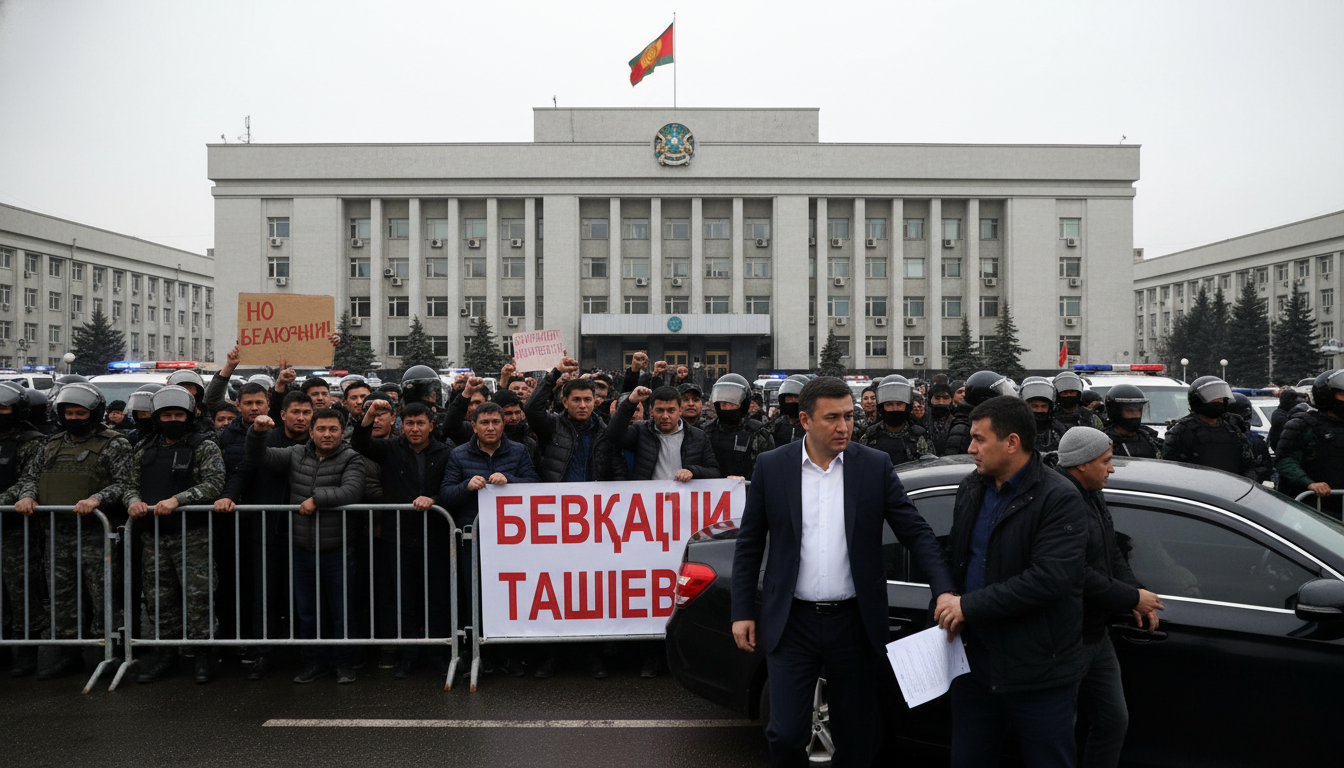
Tashiev Charged Over Alleged Coup Plot, Raising Stakes Ahead of Kyrgyzstan Vote
Kyrgyzstan charges Kamchybek Tashiev with plotting to oust President Sadyr Japarov, risking political turmoil and uncertainty ahead of January 2027 elections.
Kyrgyzstan’s prosecution of Kamchybek Tashiev, a former close ally and the country’s influential security chief, has thrust the Central Asian nation into a fraught political moment. Tashiev was formally charged with plotting to remove President Sadyr Japarov, a development that analysts say could destabilize the political order and complicate preparations for the parliamentary and presidential cycle slated for January 2027. The case highlights rifts among once-aligned powerbrokers and raises questions about the resilience of institutions cultivated under recent administrations.
Charge Details and Official Statements
Tashiev was publicly accused by state prosecutors of organizing a conspiracy aimed at forcing a change of leadership, according to official statements released by government offices. Authorities allege the plot involved elements within security services and political networks, though prosecutors have not disclosed the full evidentiary record in detail.
Government spokespeople framed the action as a necessary step to safeguard constitutional order, saying the charges were based on findings from an investigation led by law enforcement agencies. Opposition figures and some civil society groups have called for transparent legal proceedings and cautioned against politicizing the judiciary.
Impact on the January 2027 Election Calendar
The timing of the charges places Kyrgyzstan on edge less than eight months before the January 2027 elections, a critical milestone for governance and economic policy direction. Political parties and election authorities will face pressure to ensure a credible vote amid accusations that the judiciary is being used to sideline rivals.
Analysts warn that prosecutions of senior figures can have chilling effects on opposition campaigning and public trust. International monitors and foreign partners are likely to scrutinize the pre-election environment, particularly if arrest or detention measures are prolonged or broadened to include additional political actors.
Factionalism Within Ranks of Power
Tashiev’s fall from favor underscores growing factionalism between elites who once governed in concert. For years, Tashiev and President Japarov were seen as architects of a political compact that reshaped Kyrgyz politics following the turmoil of the early 2020s. That alliance coincided with an economic upswing that benefited loyal networks and consolidated control over key state institutions.
Sources close to the administration suggest disagreements over appointments, security policy, and patronage distribution intensified after rapid changes in government structures. Those disputes appear to have eroded trust among senior officials and created openings for rivals to press legal and political claims against one another.
Economic and Social Stakes
The dispute between two of the country’s most prominent figures carries economic as well as political consequences. Kyrgyzstan experienced notable growth under the joint stewardship of Japarov and Tashiev, with investment and remittance inflows supporting domestic demand. Disruption at the top level of government could unsettle investors and slow projects tied to infrastructure and mining, sectors that are central to the economy.
Business groups have voiced concern about policy continuity and the rule of law, noting that prolonged uncertainty could deter foreign capital at a time when regional competition for investment is increasing. Ordinary citizens, meanwhile, worry about potential spillovers into public services and social stability if protests or security operations intensify.
Security Institutions and Rule of Law
The charge against a former security chief places the competence and independence of Kyrgyz security organs under scrutiny. Observers say the case will test whether investigations and prosecutions are conducted impartially and whether security bodies remain subordinate to democratic oversight.
Human rights organizations have emphasized that any criminal process must meet fair trial standards and allow for full legal defense. The balance between legitimate law enforcement and politically motivated prosecutions will be a key yardstick for international partners assessing Kyrgyzstan’s governance trajectory.
Regional Reactions and Diplomatic Concerns
Neighboring states and major partners are watching developments closely, mindful that instability in Bishkek could have cross-border repercussions. Capitals across Central Asia, as well as Moscow and Beijing, traditionally attentive to shifts in Kyrgyz politics, will weigh how to respond publicly while protecting bilateral ties and economic interests.
Foreign diplomatic missions are expected to monitor legal proceedings and issue statements urging calm and adherence to legal norms. Any perception that domestic disputes are deteriorating into wider unrest could prompt calls for mediation or increased diplomatic engagement to preserve regional stability.
The coming months will determine whether the Tashiev case becomes an isolated judicial episode or the catalyst for a broader realignment in Kyrgyz politics. Observers say credible, transparent proceedings and careful management of security responses are essential to preventing escalation and ensuring the January 2027 vote proceeds in a manner that both domestic constituencies and international partners can accept.

