
Chinese industrial subsidies dominate select sectors, OECD database shows
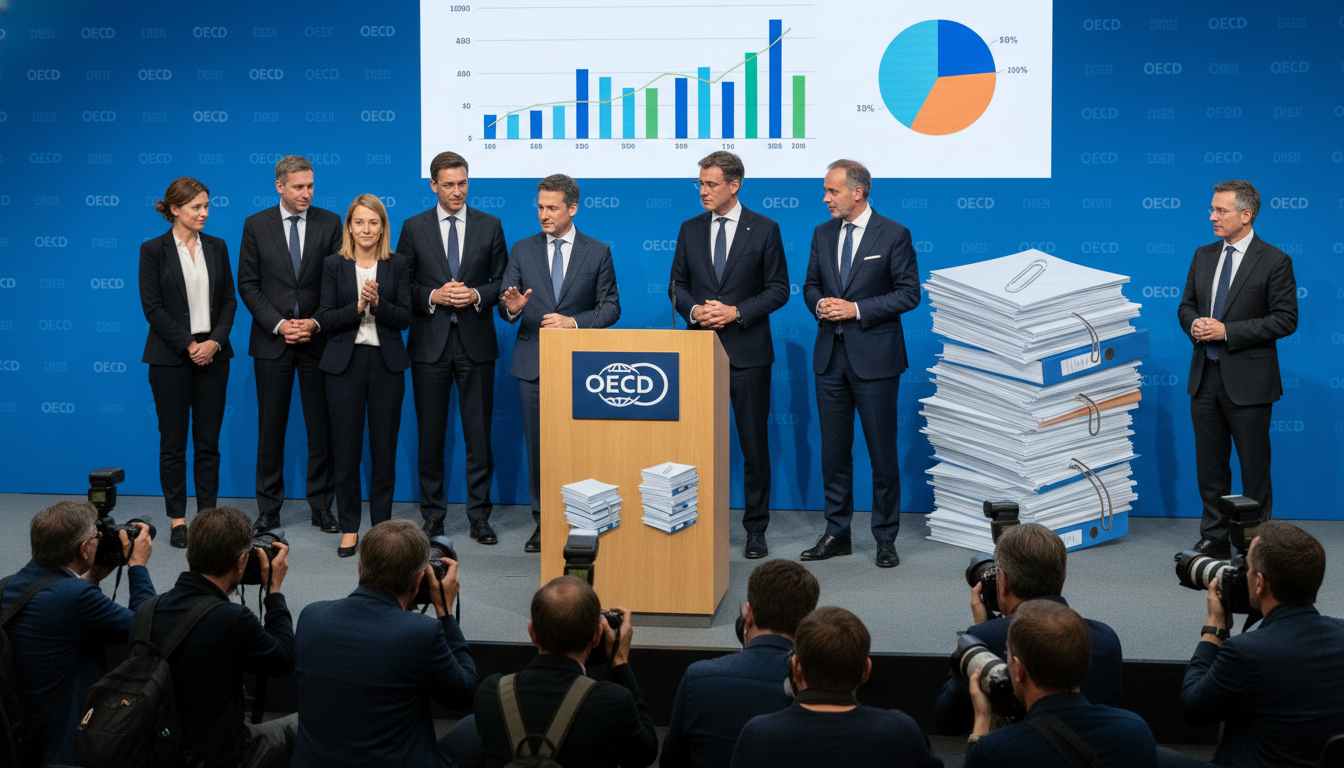
New OECD database reveals Chinese companies received up to eight times more government support than OECD peers over 2004–2024, reshaping global competition.
A new database released by the Organisation for Economic Co-operation and Development reveals the scale of Chinese industrial subsidies, showing firms in selected industries received as much as eight times the government support provided to comparable companies in OECD countries over the two decades to 2024. The OECD dataset highlights concentrated state backing across strategic sectors and provides the most systematic cross-country mapping to date of state support to firms. The disclosure has intensified debate in capitals from Tokyo to Washington about market fairness and the resilience of global supply chains.
OECD database quantifies support gap
The OECD’s compilation aggregates fiscal transfers, below‑market finance and other state measures targeted at companies across multiple jurisdictions. The dataset finds a marked divergence in the intensity of support for Chinese firms compared with counterparts in many OECD economies. That gap is most pronounced in a handful of capital‑intensive and trade‑exposed sectors, where government measures have been persistent and large in scale.
The OECD describes the database as an effort to improve transparency and enable policy makers to better assess how state support affects trade and competition. Analysts say the figures help trace flows that previously were difficult to compare because of differing national accounting and disclosure practices. The result is a clearer, if contested, picture of how public resources have been used to accelerate industrial expansion.
Semiconductors and solar panels top the list
Semiconductors and solar photovoltaic manufacturing emerge among the industries receiving the heaviest support. In semiconductors, generous equity injections, subsidised financing and preferential procurement have underpinned rapid capacity expansion and price competition. In solar panels, central and local incentives, coupled with low‑cost financing and land allocations, helped Chinese producers scale manufacturing and undercut rivals on price.
These sectoral patterns reflect long‑running industrial strategies aimed at achieving domestic self‑reliance and global market share. Trade flows and price signals indicate firms in subsidised sectors have been able to expand output rapidly, putting sustained pressure on producers outside China and prompting policy responses from importer markets.
Implications for global trade and supply chains
The OECD data has immediate implications for trade negotiations and industrial policy. Economies that compete with heavily subsidised Chinese firms face challenging choices between retaliatory trade measures, protective tariffs, or stepping up their own industrial support. Importing countries have already taken targeted actions in areas such as solar panels and advanced packaging to address perceived market distortions.
Beyond trade remedies, the data prompts scrutiny of strategic dependencies in critical supply chains. Governments are using the information to reassess vulnerabilities in sectors where rapid capacity build‑outs abroad can quickly reshape global sourcing, affect domestic producers, and influence geopolitical leverage.
Reactions from governments and business
Officials in several OECD capitals welcomed the database as a tool to inform policy, while also urging careful interpretation. Business groups caution that differences in firm structure and market context complicate direct comparisons and that not all state support is distortive. Some governments signalled plans to use the evidence to bolster domestic industrial programmes, citing national security and economic resilience concerns.
Industry players stressed that subsidies tell only part of the story, pointing to private investment, technological capacity and supply‑chain integration as major determinants of competitiveness. Nonetheless, several trade and industrial policy officials said the new transparency would make it harder for state measures to remain opaque and unchallenged in multilateral fora.
Methodological caveats and data limits
The OECD stresses limitations in the dataset, noting gaps in reporting and the heterogeneity of support measures across jurisdictions. Differences in what counts as a subsidy, the visibility of local versus national measures, and the valuation of below‑market finance complicate precise quantification. Analysts warn against over‑interpreting headline ratios without examining the composition and timing of support.
Experts recommend treating the database as a starting point for targeted investigation rather than a definitive ranking. They say further work is needed to harmonise definitions and to extend coverage to smaller firms and certain forms of indirect support that are currently under‑captured.
The OECD’s mapping of state support to industry adds a new layer of evidence to discussions about global industrial policy. While the data underlines the scale and concentration of Chinese support in key sectors, it also raises technical questions about comparability and cause‑and‑effect that policy makers will need to address.
This disclosure is likely to shape policy debates through 2026 as countries weigh responses that range from enhanced trade enforcement to deeper industrial partnerships and investment in domestic capabilities. The database provides governments and companies with clearer metrics to inform those choices while underscoring the complex trade‑offs involved in balancing competitiveness, security and market openness.

