
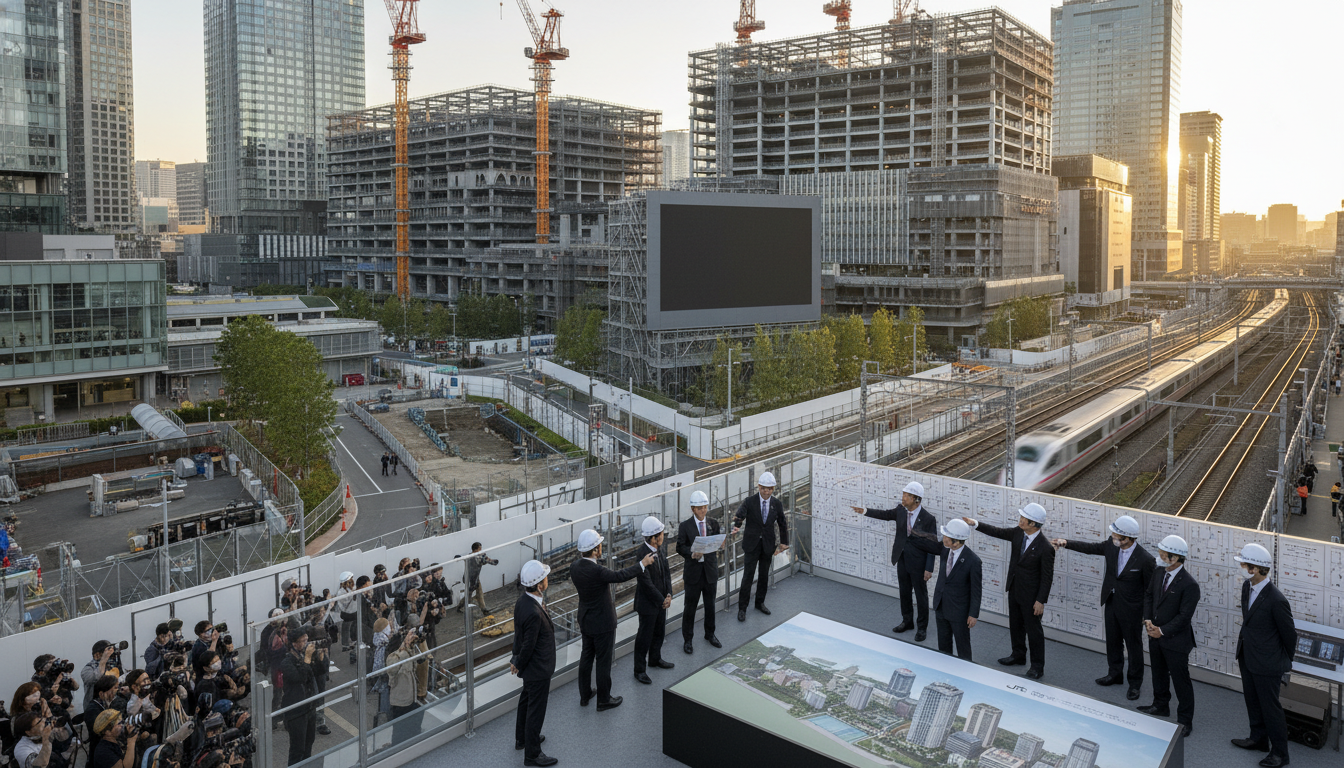
JR East redevelopment reshapes Greater Shinagawa with ¥700 billion urban push
JR East redevelopment transforms the Greater Shinagawa Area as the operator opens Takanawa Gateway City and Oimachi Tracks, pivoting from rail to large-scale urban development.
For decades East Japan Railway Co. (JR East) has defined movement across Tokyo; now the company is deliberately shaping where people work, shop and live through a major JR East redevelopment in the Greater Shinagawa Area. The operator opened two flagship projects in March 2026 — Takanawa Gateway City and Oimachi Tracks — as part of a wider plan covering five stations from Oimachi to Hamamatsucho. The developments, together backed by investments exceeding ¥700 billion, underline a strategic shift toward nonrail revenue streams amid long-term ridership pressures.
Major projects and scale of investment
Takanawa Gateway City and Oimachi Tracks became public in March 2026 and are among Tokyo’s largest recent redevelopment efforts tied directly to a railway company. Takanawa Gateway City occupies a roughly 95,000-square-meter former railyard and includes offices, hotels, convention space, residences and cultural facilities. Oimachi Tracks, sited two stops away on the Keihin Tohoku line, blends office space, retail and a hotel, targeting a more community-oriented clientele.
The two projects are components of a larger Greater Shinagawa redevelopment spanning five stations: Oimachi, Shinagawa, Takanawa Gateway, Tamachi and Hamamatsucho. JR East projects the area will generate substantial returns over the next decade, with more than ¥100 billion in expected revenue by the mid-2030s as transport upgrades and new commercial activity take hold.
Strategic reasons for the shift
JR East’s move reflects structural challenges in its core railway business, including sustained telework adoption and demographic decline that have restrained fare revenue growth. Nearly 70% of the company’s sales remain linked to railway operations, but the firm has struggled to take rail revenue above pre-pandemic levels. In fiscal 2024, unprofitable regional lines produced combined deficits that added pressure to the balance sheet.
To shore up financial sustainability, JR East enacted its first fare increase in nearly four decades in March 2026, raising prices by an average of 7.1%. Executives and industry analysts now see urban development as a way to diversify income and capture spending by shaping destinations rather than only moving passengers between them.
From rail operator to integrated developer
JR East capitalizes on a unique competitive advantage: extensive company-owned land originally tied to its railway network. Rather than acting solely as a landlord, the company is integrating real estate, retail, hospitality and cultural programming to craft distinct urban districts. This approach allows JR East to influence the types of visitors and residents attracted to its developments and to design amenities that increase property values and commercial returns.
Industry observers note the operator’s history and assets shorten timelines for large-scale projects compared with developers who must negotiate land purchases. JR East has said its railway network, landholdings and customer touch points form the backbone of a development strategy intended to create long-term revenue foundations for the group.
Contrast in target markets within Greater Shinagawa
Takanawa Gateway City appears positioned to attract high-value users, including long-term international visitors and corporate tenants, with many shops and services at the premium end of the market. The project includes cultural venues and high-floor public gardens intended to draw a broader international and corporate audience into the district.
By contrast, Oimachi Tracks seems designed to mesh with its residential surroundings and provide everyday conveniences at more accessible price points. Its mix of reasonably priced retail, eateries and neighborhood services reflects Oimachi’s reputation as a residential district with retro charm. The two projects illustrate a deliberate strategy to cultivate diverse demand segments within a contiguous urban zone.
Transport links and long-term connectivity plans
JR East is positioning the Greater Shinagawa Area to become a stronger international gateway to Tokyo as upgrades to transit infrastructure proceed. The planned Chuo Shinkansen maglev will stop at Shinagawa Station, and JR East is advancing plans for a Haneda Airport Access Line intended to link Tokyo Station directly with Haneda by fiscal 2031. Those projects, if completed as planned, are expected to increase passenger flows and bolster the commercial appeal of Greater Shinagawa.
JR East has indicated the redevelopment will continue through the mid-2030s, with the company coordinating mixed-use planning and accompanying transport links to maximize economic impact. The operator also plans to consolidate real estate operations through a planned merger with a major trading-house real estate arm to scale project execution and asset management.
Risks, advantages and the road ahead
The strategy is not without risks. JR East has limited experience delivering urban development at this scope and must balance the needs of local communities with ambitions to attract outside visitors and tenants. Developers also face macroeconomic uncertainty, shifting consumer behavior and the long timelines required for transport infrastructure to mature.
Nonetheless, JR East’s substantial land holdings and integrated customer access give it a distinct edge in executing large-scale projects more rapidly than rivals. The company’s ability to combine transport services with curated retail, cultural and residential offerings will be pivotal in determining whether redevelopment becomes a durable new revenue pillar.
As Greater Shinagawa’s new districts open and planned transit links advance, JR East’s redevelopment will be closely watched as a test case for how a traditional railway operator can reconfigure its business model for a post-pandemic, aging society and sustain urban growth in Tokyo.

