
Nvidia Enters CPU Market, Pledges to Reinvent PC and Server Chips
Nvidia enters CPU market with a pledge to "reinvent" PC and server processors, setting up direct competition with Intel and AMD and signaling a major shift in chip industry dynamics.
Nvidia announced on June 2 from Taipei that it will enter the PC and server CPU market, a strategic move the company said is intended to reshape how central processors are designed and deployed. CEO Jensen Huang framed the initiative as part of a broader push to accelerate artificial intelligence across computing platforms. The declaration places the AI chipmaker squarely against long-established CPU vendors and raises questions about hardware design, software ecosystems, and supply chain adjustments.
Nvidia’s announcement in Taipei
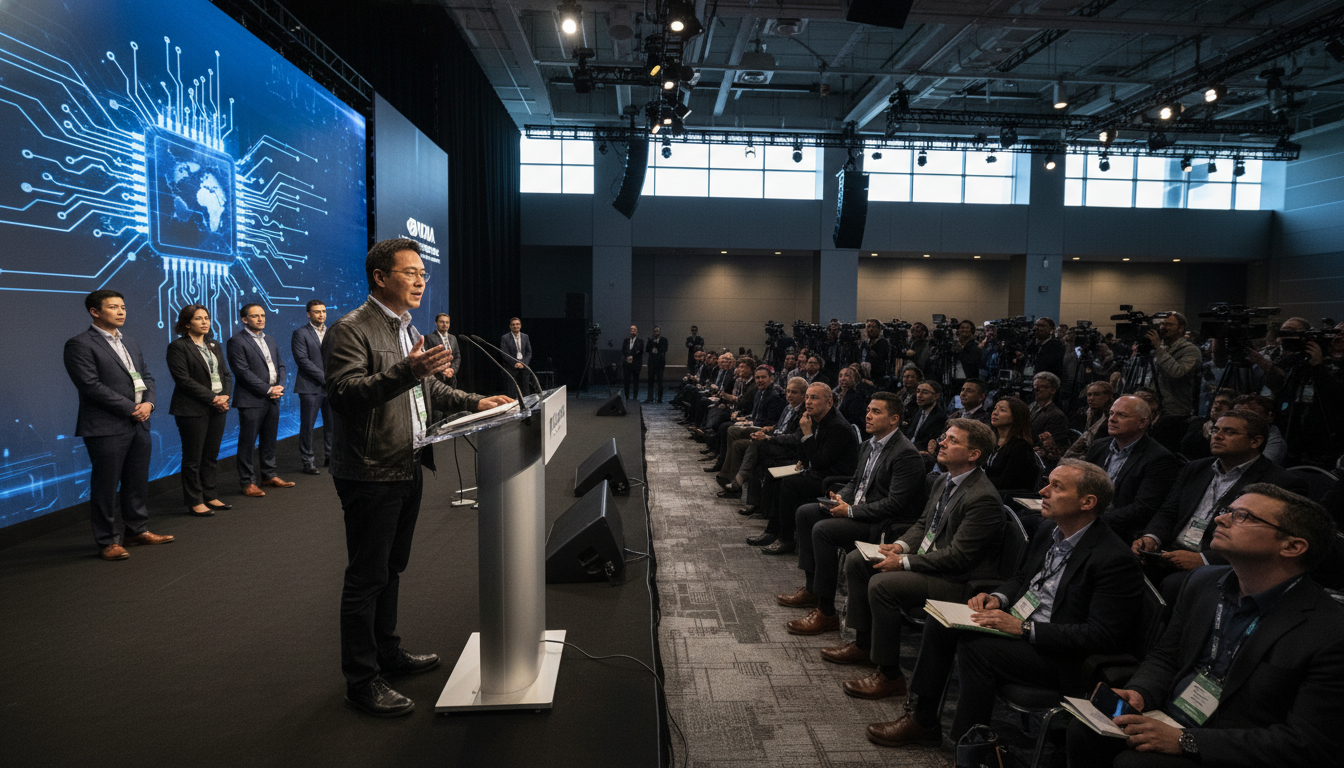
On June 2, Nvidia CEO Jensen Huang addressed reporters in Taipei, confirming the company’s plans to build CPUs for both personal computers and data center servers. Huang used the word "reinvent" to describe Nvidia’s ambitions, emphasizing integration of its AI-focused architecture with traditional processor roles. The statement marks a clear strategic expansion beyond Nvidia’s core GPU business into central processing units.
Huang’s remarks were made at a public news conference and reiterated Nvidia’s commitment to broaden its hardware footprint as demand for AI-capable systems grows. The announcement did not include detailed product specifications or immediate shipping timelines, leaving many technical and commercial details to be clarified in coming months.
Competitive landscape with Intel and AMD
Nvidia’s move places it in direct competition with Intel and AMD, companies that have historically dominated CPU design for PCs and servers. Both incumbents have been adapting their roadmaps to incorporate specialized AI accelerators and on-chip neural processing, a domain where Nvidia already holds significant market influence with its GPUs. Entering the CPU market signals potential head-to-head product competition across multiple segments, from consumer laptops to hyperscale data centers.
Analysts and industry participants are likely to scrutinize how Nvidia positions its CPUs relative to x86-based offerings and how it will navigate existing software ecosystems. Compatibility with legacy applications and enterprise workloads will be a critical factor for adoption, particularly in server environments where stability and standards are paramount.
Implications for the PC and data center markets
If Nvidia succeeds in delivering competitive PC and server CPUs, the shift could accelerate convergence between general-purpose processing and AI-optimized computation. Manufacturers of personal computers and servers may face new design choices, balancing established processor suppliers against a newcomer promising tighter AI integration. For enterprises, the potential for systems engineered end-to-end for AI workloads may offer performance and efficiency benefits, but migration costs and software validation will influence procurement decisions.
In the data center, operators will weigh the trade-offs of adopting a new CPU architecture against the operational certainty of existing platforms. Server deployments often involve multi-year refresh cycles, meaning any material market share gains for a new entrant could play out over an extended period.
Ecosystem and software considerations
A successful CPU rollout will require Nvidia to foster deep software support, including compilers, operating system compatibility, and developer tools. Enterprise customers expect robust support for virtualization, security features, and management stacks, which are typically matured over years. Nvidia will need to clarify how its CPUs will integrate with popular operating systems and cloud orchestration tools to lower barriers to adoption.
Third-party software vendors and cloud providers will also play a decisive role. Broad industry acceptance will depend on certifications, ecosystem partnerships, and performance benchmarks across diverse workloads. Nvidia’s existing relationships in AI tooling and cloud ecosystems could provide leverage, but adapting broader enterprise software to a new CPU architecture remains a major undertaking.
Supply chain and manufacturing questions
The announcement raises immediate questions about manufacturing partners and supply chain capacity needed to produce PC and server CPUs at scale. Chip production involves close coordination with foundries, packaging specialists, and component suppliers, all while navigating global demand for semiconductors. How Nvidia plans to source wafers, secure production slots, and manage distribution channels will determine how rapidly it can bring products to market.
Original equipment manufacturers and board partners will also need to adjust designs if Nvidia’s CPUs adopt differing socket or platform requirements. Such changes can affect motherboard ecosystems, cooling solutions, and system validation cycles, leading to a period of transition for OEMs and channel partners.
Nvidia enters CPU market at a time when geopolitical and regulatory factors are influencing semiconductor strategies worldwide. Governments and large technology firms continue to reassess supply chains and domestic capabilities, which may affect procurement and partnership decisions for any new CPU entrant.
Nvidia’s declaration to build PC and server CPUs represents a notable escalation in the company’s strategy to capitalize on demand for AI-ready systems. The move intensifies competition with established CPU makers and introduces fresh variables for PC makers, data center operators, and software vendors. As Nvidia outlines technical specifics, timelines, and ecosystem commitments, the industry will watch whether the company can translate its GPU-era momentum into a sustainable position in the CPU market.

