
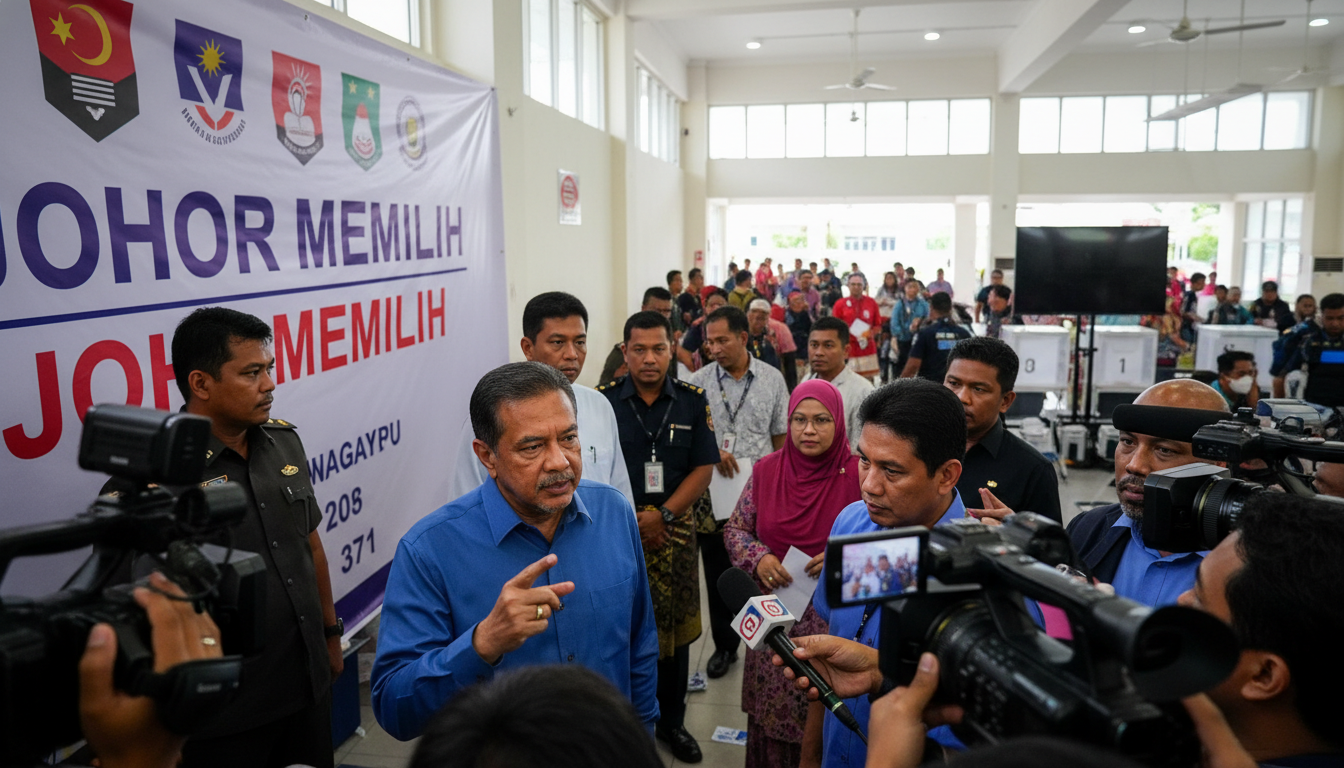
Johor state election set to test Prime Minister Anwar Ibrahim and may presage an early national poll
Johor state election will be a critical early gauge of support for Prime Minister Anwar Ibrahim, with the dissolution of the southern state’s legislature signalling an intense regional contest and raising the prospect of an accelerated national vote by early 2028.
Johor legislature dissolved, state poll set in motion
The Johor state assembly’s dissolution has formally opened the path to a state election that many analysts describe as the first major political contest of Malaysia’s next electoral cycle. Political observers say the vote will measure both local support for the state government and wider momentum for the ruling national unity government led by Prime Minister Anwar Ibrahim. The outcome is expected to reverberate in Kuala Lumpur as parties recalibrate strategies ahead of the general election due by early 2028.
Political test for Prime Minister Anwar Ibrahim
For Prime Minister Anwar, the Johor state election is an early barometer of public confidence in his coalition’s performance on governing priorities. Analysts note that a strong showing by the prime minister’s allies would reinforce his position and bargaining power within the diverse coalition that governs federally. Conversely, a disappointing result could embolden opposition forces and sharpen factional debates over policy and leadership across the national political landscape.
Onn Hafiz Ghazi’s leadership under scrutiny
Onn Hafiz Ghazi, the state’s chief minister, will face close public scrutiny as he leads the local campaign and stakes his administration’s record on development and governance. Johor is a strategically important state, both economically and politically, and the chief minister’s performance will be judged on issues ranging from infrastructure delivery to responsiveness on local concerns. Observers say the election gives voters an opportunity to endorse or rebuke the state leadership ahead of a consequential national cycle.
Coalitions and challengers line up
Major national and state-level formations are expected to contest vigorously, with incumbents seeking to defend seats and opposition blocs aiming to make inroads in urban and semi-urban constituencies. The contest will test alliances that have been reconfigured since the last general election, and candidates will run on a mixture of national narratives and local campaigning. Party strategists will be watching turnout patterns and vote swings that could signal shifting political loyalties in Malaysia’s multiethnic electorate.
Voter concerns focus on economy and everyday costs
Campaign messaging in Johor is anticipated to center on economic issues, including job creation, cost of living pressures, and local investment — themes that have dominated voter concerns nationwide. Analysts say residents will also consider public services, housing affordability and cross-border economic ties with neighbouring Singapore when casting their ballots. Polling experts caution that while national narratives matter, pocketbook issues and constituency-level performance often drive outcomes in state contests.
Potential trigger for an early national election
Political commentators have flagged the Johor poll as a possible catalyst for an early national election should the results shift the balance of perceived momentum between competing blocs. A decisive win for the federal government’s allies could strengthen plans to delay a general election until the statutory deadline, while setbacks might prompt discussions among opposition leaders about accelerating a national contest. Party leaders in Kuala Lumpur will be closely monitoring results to inform timing and tactics for the broader campaign cycle.
Election timetable and administrative steps
Following dissolution, the next formal steps include the election commission setting a date and finalising logistical arrangements such as constituency rolls, polling station allocations and candidate nominations. Election authorities typically provide a timeline for nomination days, early voting and the polling day itself, and parties will mobilise volunteers and resources accordingly. Officials have emphasised the need for orderly preparation to ensure a credible and transparent contest that reflects voter will.
The Johor state election therefore represents more than a regional political event; it will serve as a litmus test for governing coalitions, local leadership and voter sentiment across key policy areas. Results from the southern state will offer parties concrete data on their standing with the electorate and shape strategic decisions as Malaysia approaches the next general election cycle.

