
TSMC forecasts more than 30% revenue growth in 2026 as AI demand surges
TSMC revenue growth 2026 driven by accelerating AI infrastructure investment, the company said at its June 4 annual meeting in Hsinchu, forecasting strong demand across advanced and specialty chips.
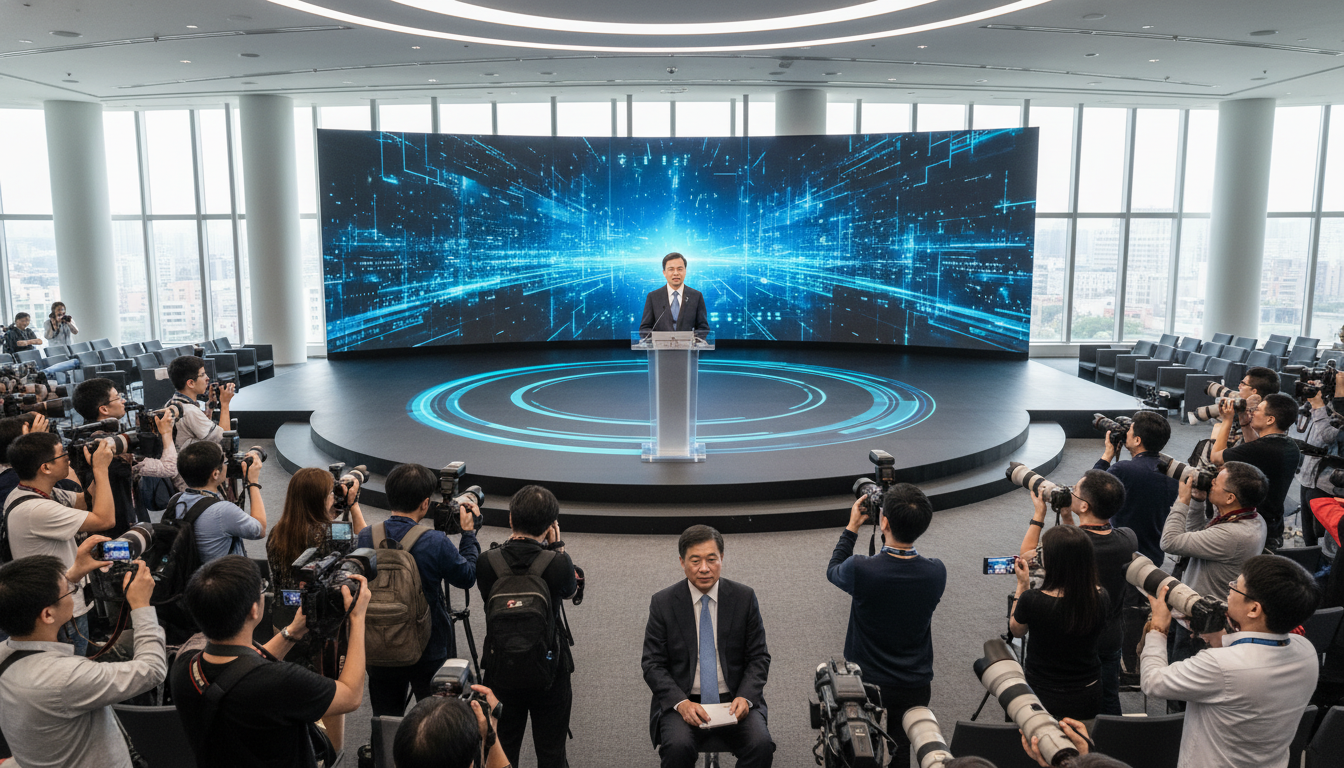
Taiwan Semiconductor Manufacturing Co. said on June 4 that it expects revenue to expand by more than 30 percent in 2026, citing robust demand tied to global investment in artificial intelligence infrastructure. The company’s projection, delivered at its annual general meeting in Hsinchu, underscores how AI-related compute needs are reshaping orders for foundry services and advanced packaging. Chairman and CEO C.C. Wei attended the meeting as TSMC outlined a demand environment that the company says will support significant growth in the coming year.
Projection announced at annual general meeting
The revenue outlook was unveiled at TSMC’s annual general meeting in Hsinchu, where executives framed the target as a response to broad-based customer demand.
Company officials attributed the anticipated growth to customer spending on data-center and AI systems, which require a range of semiconductor technologies from cutting-edge process nodes to advanced packaging and power management chips.
TSMC’s guidance reflects stronger-than-expected orders across both high-performance logic and specialty segments, the company said at the meeting.
AI infrastructure cited as primary driver
Executives emphasized that investment in AI infrastructure is the primary driver of the revenue forecast.
Hyperscale cloud providers, AI chip designers and system integrators are accelerating purchases of chips and packaging needed for large-scale training and inference workloads.
That shift is increasing demand not only for the most advanced nodes but also for mature nodes and system-level components that feed into AI racks and accelerators.
Capacity and investment implications
To meet rising orders, TSMC signaled that capacity expansion and capital spending will remain priorities.
The foundry’s production roadmap will need to accommodate diverse product mixes, spanning leading-edge wafers and specialty processes used in power, analog and automotive applications.
Supply chain logistics and equipment delivery schedules are likely to play a central role in how quickly TSMC can translate strong demand into realized revenue.
Market and customer response
Industry participants and customers have responded to the AI-driven demand environment by realigning procurement strategies.
Design firms are prioritizing chip tape-outs and packaging runs that support AI workloads, while system builders are increasing orders for components that complete server and accelerator platforms.
This customer behavior has provided TSMC with clearer visibility into its 2026 backlog, supporting the company’s optimistic revenue projection.
Operational and geopolitical risks
TSMC’s growth outlook comes amid an industry-wide focus on geopolitical risk and supply resilience.
Any disruption in equipment supply, export controls, or cross-strait tensions could affect production timelines and capital allocation decisions.
Company officials noted these risks while emphasizing contingency planning to preserve continuity of operations across manufacturing sites.
Implications for the global chip industry
If realized, the forecasted revenue surge at TSMC would reinforce the foundry’s central role in meeting the semiconductor needs of an AI-first computing cycle.
Strong growth at the world’s largest contract chipmaker is likely to ripple across the supply chain, influencing equipment orders, materials procurement and investment decisions at allied suppliers.
It may also accelerate competition among foundries and prompt customers to diversify sourcing strategies to reduce bottlenecks.
TSMC’s announcement on June 4 signals a pivotal moment as AI-driven demand reshapes capital flows and production priorities across the semiconductor ecosystem. The company’s expectation of more than 30 percent revenue growth in 2026 ties closely to continued investment in AI infrastructure, and how TSMC manages capacity, supply-chain constraints and geopolitical uncertainties will determine whether that forecast is achieved.

