
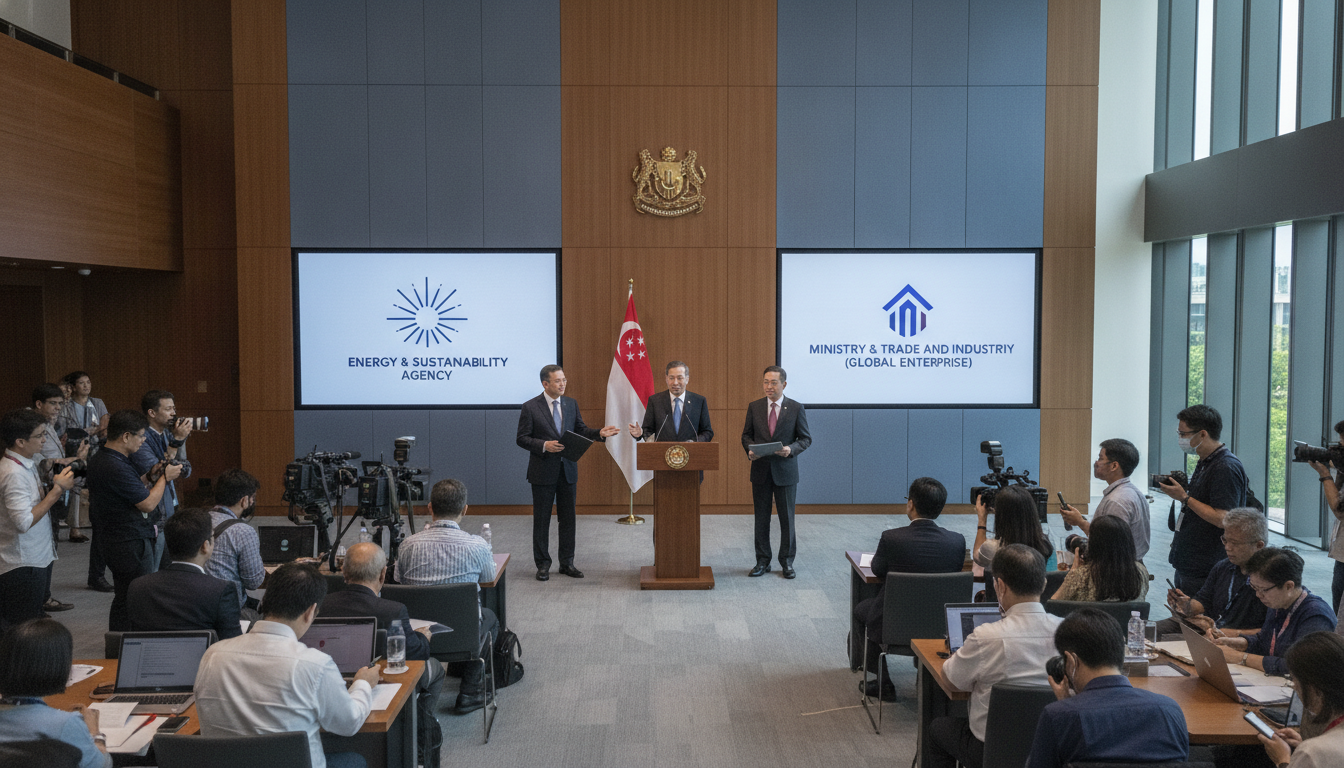
Singapore cabinet reshuffle places energy at centre amid U.S.-Iran oil shock
Singapore cabinet reshuffle announced July 22, 2026, puts energy at the centre with a rebranded trade ministry and two ministers to steer crisis response.
Singapore — Prime Minister Lawrence Wong announced a cabinet reshuffle on Wednesday, July 22, 2026, that elevates energy policy to the forefront of government priorities. The Singapore cabinet reshuffle assigns two ministers to jointly lead a rebranded trade ministry, a move described by the government as necessary to manage an oil shock linked to the U.S.-Iran war.
Cabinet changes and new ministry structure
The reshuffle creates a rebranded ministry that combines trade and energy responsibilities under dual ministerial leadership. The government framed the change as a structural response designed to strengthen coordination between trade policy and energy security. Officials said the new arrangement will allow faster decision-making on fuel imports, strategic reserves and trade disruptions.
The joint leadership model reflects an effort to concentrate expertise and political weight behind energy issues while retaining trade promotion functions. Senior ministers will share portfolios and rotate responsibilities for domestic fuel strategy and external trade negotiations. The government signalled this as a temporary but decisive reorientation while global energy markets remain volatile.
Why the focus on energy now
Singapore’s decision follows months of price volatility and supply concerns tied to the U.S.-Iran conflict, which officials say have heightened risks to refined fuel availability. The reshuffle underscores the view in Wellington Street that safeguarding fuel supplies is critical for households, businesses and the city-state’s role as a regional logistics hub. Energy officials noted that short-term shocks can quickly feed into inflation and disrupt transport and industrial activity.
Analysts welcomed the explicit prioritisation, saying it aligns ministerial responsibility with the immediate policy challenge. They cautioned, however, that structural resilience requires more than administrative realignment, pointing to the need for stockpile management, diversified import routes and private-sector contingency planning.
Immediate policy priorities set by the government
The government identified three near-term priorities: stabilising fuel supplies, managing price impacts on households and industry, and stepping up diplomatic engagement with suppliers. According to the announcement, the rebranded ministry will coordinate with finance and industry agencies to target subsidies, temporary tax measures and logistics support if needed. It will also oversee contingency protocols for refineries and bunkering services that underpin Singapore’s maritime trade.
Officials emphasised transparency and public communication to limit market panic. They said regular briefings and data releases on reserves, import flows and price trends will be provided to businesses and consumers. These measures are intended to reassure markets while the ministry implements operational responses.
Economic implications for trade and industry
Singapore’s open economy makes it particularly sensitive to energy price swings, which can raise production costs and squeeze margins across manufacturing, transport and services. The cabinet reshuffle signals to investors and trading partners that the city-state intends to protect supply chains and maintain its competitiveness as a trading hub. Policy tools cited by officials include temporary tariff adjustments, logistic incentives and targeted support for energy-intensive sectors.
Markets are likely to watch closely how swiftly the new ministry can implement measures without creating distortionary incentives. Economists say that well-targeted, time-bound interventions can blunt the immediate impact of a shock while preserving long-term market signals for efficiency and investment in alternatives.
Regional and diplomatic dimensions
Singapore’s move also has a diplomatic dimension, reflecting the need to coordinate with regional partners and source markets amid disrupted supply lines. The reshuffle is expected to increase ministerial outreach to key energy suppliers and neighbouring economies to secure alternative logistics routes and negotiate temporary supply arrangements. Singapore’s role as a refuelling and transhipment hub gives it leverage but also exposes it to ripple effects from wider geopolitical tensions.
Observers said the dual-minister model could facilitate high-level talks and faster bilateral problem-solving, while also helping Singapore harmonise trade and energy interests across multilateral platforms. The government has signalled readiness to engage both traditional suppliers and new partners to diversify sources.
Parliamentary scrutiny and public expectations
The reshuffle will bring fresh scrutiny in Parliament, where lawmakers are expected to question the ministry on contingency plans, reserve levels and potential costs to taxpayers. Civil society groups and industry associations are calling for clarity on timelines, eligibility for any assistance schemes and measures to protect vulnerable households from rising fuel bills. The government has committed to reporting performance metrics and to reviewing the ministry’s mandate as conditions evolve.
Ministers in charge will need to balance immediate crisis response with transparent governance to maintain public confidence. The success of the reorganisation will be judged on concrete outcomes: steady fuel availability, moderated price impacts and smooth trade flows.
The cabinet reshuffle marks a strategic pivot for a city-state heavily integrated into global energy and trade networks. By concentrating responsibility for energy and trade under shared ministerial oversight, Singapore aims to strengthen its capacity to withstand and respond to the shocks flowing from the U.S.-Iran war and other external disruptions.

