
Gaokao 2026 Begins June 7 as Authorities Target Smart Glasses and AI-Assisted Cheating
Gaokao starts June 7, 2026: China tightens AI monitoring, deploys signal controls and trains proctors to detect smart glasses and AI-assisted cheating.
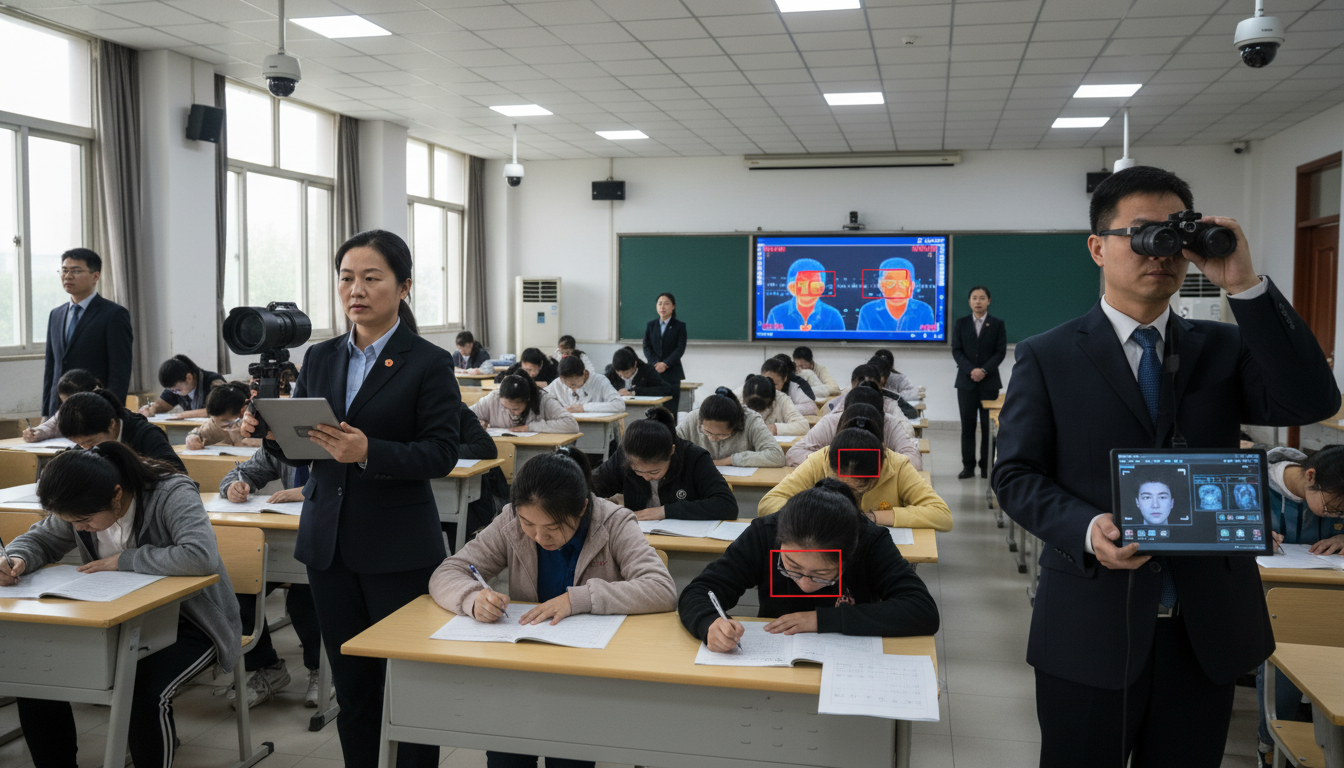
China’s annual gaokao, the National College Entrance Examination, opens on June 7, 2026, as exam authorities nationwide step up measures to prevent AI-enabled cheating. Proctors and security teams are on heightened alert for emerging devices such as smart glasses and other covert tools that could route answers to remote assistants. Officials say they will combine traditional invigilation with new technology-driven countermeasures to protect exam integrity. The contest’s high stakes and rapid spread of generative AI have reshaped how schools and supervisors prepare for this year’s tests.
Proctors increase vigilance for smart glasses and hidden devices
Proctors have been briefed to look for unusual eyewear, ear pieces and other small devices that can conceal cameras or audio links. Examination centers are reinforcing entry checks and reminding candidates of strict bans on electronic aids. Observers report that visual sweeps and seating rotations are being used more frequently to deter attempts to communicate with outside helpers. Training materials sent to supervisors emphasize spotting movements and behaviors that could indicate use of concealed technology.
Authorities deploy AI tools and signal controls at venues
Education authorities say they are using AI-assisted monitoring systems to scan exam halls for anomalies and suspicious activity. Some test sites are implementing signal controls, including restrictions on mobile data and wireless transmissions, to block external connections during exams. Surveillance cameras and automated analytics are being used to flag irregular patterns for human review. Officials frame these measures as a necessary adaptation to new risks posed by compact, internet-linked devices and real-time AI assistance.
Rules tightened and penalties reiterated to deter cheaters
Exam regulations this year reiterate that any use of unauthorized devices will lead to severe consequences, from annulment of scores to administrative or criminal penalties in serious cases. Schools and local education bureaus have circulated reminder notices to students and families ahead of test day. The prospect of lasting academic and legal repercussions is being emphasized as a deterrent amid growing reports of technology-assisted cheating in recent years. Authorities are also coordinating with local police where needed to enforce rules and investigate suspected breaches.
Students and families confront added scrutiny and anxiety
For many applicants, the heightened security measures add to the tension already associated with the gaokao’s significance for university placement. Students say extra checks and stricter controls can be stressful but acceptable if they ensure fairness. Parents and tutors are advising littler use of electronics around exam period and encouraging traditional revision techniques. School counselors report an increase in demand for advice on test-day routines and managing anxiety under tighter supervision.
Tech industry and regulators face pressure to curb misuse
The rapid availability of consumer AI tools and wearable computing has prompted renewed calls for industry responsibility and regulatory action. Regulators are urging companies to disable or limit features that could be repurposed for cheating during sensitive periods. At the same time, developers of monitoring systems are promoting detection and authentication technologies to help exam authorities distinguish legitimate devices from covert aids. Public debate continues over how to balance innovation with protections for high-stakes assessments.
Regional logistics and practical preparations for test day
Across provinces, local exam administrations have finalized seating plans, security checks and contingency protocols for technical issues or health incidents. Many venues are scheduling staggered arrivals, additional staff and backup power to ensure smooth proceedings. Rural and urban centers alike face the challenge of uniformly applying controls while accommodating thousands of candidates. Authorities stress that measures should not unduly disrupt normal exam conditions or disadvantage students with legitimate needs.
The opening of gaokao 2026 underlines how quickly educational assessment must evolve in the face of advancing technology. With millions of candidates and high public attention, exam authorities are deploying a mix of human oversight and technical safeguards to preserve fairness. As tests proceed, officials, schools and technology firms will be watched closely for how effectively they can prevent misuse without undermining the integrity and accessibility of the examination process.

