
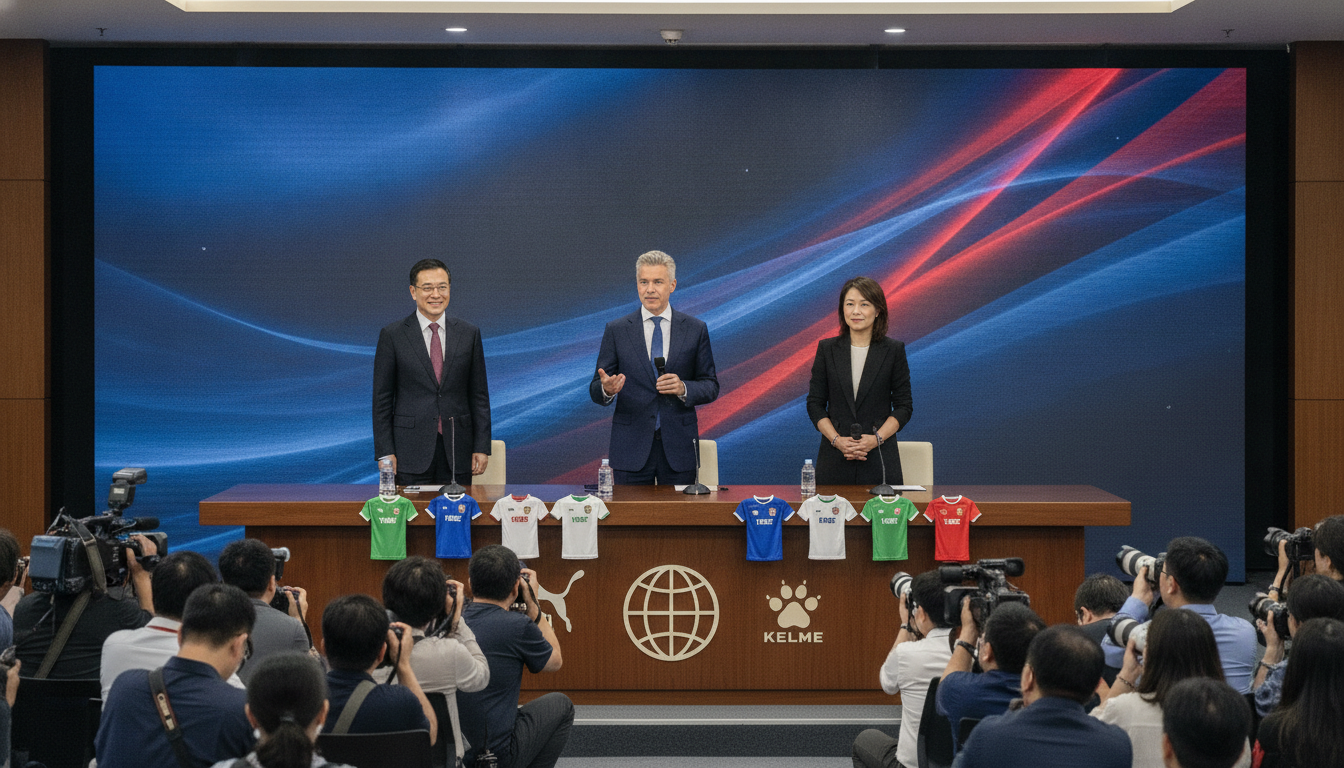
World Cup uniforms: Chinese-backed Puma and Kelme kit 27% of teams at 2026 tournament
Chinese-backed Puma and Kelme outfit 27% of World Cup teams, highlighting China’s growing influence in international football apparel and kit sponsorship.
China’s growing footprint in World Cup uniforms is on display at the 2026 tournament, with Puma and Kelme supplying shirts to roughly 27% of participating national teams. Puma is fielding its largest World Cup roster since 2006, and Kelme appears on multiple national kits, combining to outfit more than a quarter of the 48 teams in North America. (sgieurope.com)
Puma expands its World Cup presence
Puma has confirmed an expanded portfolio for the 2026 World Cup, supplying kits to a double-digit number of national teams and marking its biggest tournament footprint in two decades. The German-origin brand’s roster for the event includes 11 national sides, reflecting an aggressive push to reclaim market share against industry giants. (sgieurope.com)
The increase in Puma’s World Cup allocations follows strategic investment and ownership shifts that have altered the company’s capital structure in recent months. A significant stake acquired by a Chinese sports group was announced in January 2026, a move investors say could deepen ties between Puma’s European design and Chinese manufacturing and distribution networks. (bloomberg.com)
Puma’s larger kit slate gives the brand heightened visibility on football’s biggest stage, where national team shirts serve as high-value marketing vehicles and retail catalysts. That visibility is expected to translate into wider retail opportunities in Asia and beyond as fans seek tournament merchandise. (sgieurope.com)
Kelme’s targeted national-team strategy
Kelme, historically a smaller player compared with the global “big three,” has leveraged focused partnerships to appear on the shirts of several World Cup entrants. The brand supplies kits for specific national sides and has been highlighted for its role dressing teams such as Bosnia and Jordan at this tournament. (footyheadlines.com)
Behind Kelme’s expansion are ownership and supply-chain moves connecting the Spanish-origin label with Chinese manufacturing and investment partners. Recent reporting indicates Kelme’s corporate and operational links to Chinese firms have helped the brand scale production and win technical sponsorships. (elpais.com)
Kelme’s approach contrasts with mass-market strategies: it concentrates on selective national deals and club partnerships to build credibility and visibility in competitive European and Asian markets. This targeted method has produced outsized exposure at the World Cup relative to the brand’s overall size. (kelme.com)
Ownership shifts reshape kit market dynamics
The growing presence of Chinese capital in major and mid-tier sportswear labels is changing the economics of national-team sponsorships. Recent transactions, including a notable stake acquisition in Puma by a Chinese group, have positioned Chinese investors as influential players in global sports apparel. (bloomberg.com)
Those ownership changes can accelerate access to manufacturing, distribution, and sponsorship budgets, enabling brands to compete for national-team contracts that were once the preserve of legacy European and American manufacturers. Analysts say the injections of capital also create leverage to secure multi-team deals and expand brand footprint quickly. (pumagroup.com)
For national associations, shifting supplier ownership adds complexity to negotiation and brand-alignment decisions. Federations must balance kit quality, design preferences, and commercial terms while considering the global distribution networks owners bring to the table. (footyheadlines.com)
Sponsorship economics and retail implications
National team kits have become more than uniforms; they are a primary revenue stream tied to retail sales, licensing and global merchandising campaigns. Brands that secure World Cup partnerships benefit from tournament-driven spikes in shirt sales and long-term fan loyalty. (sgieurope.com)
Chinese-backed investment in sportswear firms may accelerate product rollouts in Asia, where demand for national-team merchandise has surged in recent cycles. Observers expect the 2026 World Cup to generate significant retail volumes as fans across the Americas, Asia and Europe chase the latest replica shirts. (sgieurope.com)
Smaller brands such as Kelme may compete by producing culturally resonant designs and offering competitive commercial terms, tapping niche markets and loyal supporter bases to offset scale disadvantages. That strategy has proven effective in gaining higher-profile placements than would be expected from brand size alone. (footyheadlines.com)
Supply chain and manufacturing realities
Behind the visual prominence of World Cup uniforms lies a global manufacturing network concentrated in specialized textile hubs. Brands that combine European design with Asian manufacturing can accelerate kit production and control costs while meeting tight tournament timelines. (sgieurope.com)
Kelme’s long-standing manufacturing relationships in China and Puma’s expanded access to Asian production capacity after recent investment moves have helped both brands meet demand ahead of the World Cup. Those ties also allow faster iterations of retail inventory and region-specific product lines. (sgieurope.com)
However, reliance on concentrated production centers raises geopolitical and logistical risks, prompting some federations and brands to diversify suppliers and hold contingency inventory. The balance of cost, speed and resilience is now a central consideration in kit sourcing. (pumagroup.com)
Shifts in brand perception and long-term outlook
The 2026 World Cup is likely to reshape perceptions of which manufacturers are considered global powerhouses in football apparel. Puma’s expanded roster and Kelme’s strategic placements suggest that ownership and supply-chain advantages can translate quickly into tournament visibility. (sgieurope.com)
If Chinese-backed investment continues to flow into Western and niche sportswear labels, the market structure for national-team sponsorships could become more fluid, with new players challenging traditional leaders. That competition may spur more creative kit designs and aggressive commercial offers to federations. (bloomberg.com)
The immediate metric — roughly 27% of teams wearing Puma or Kelme at the 2026 World Cup — underlines how ownership and partnerships affect the jerseys fans see on the global stage. The tournament will offer a clear test of whether those commercial bets convert into sustained retail success and longer-term brand equity. (sgieurope.com)
As the World Cup unfolds, attention will shift from ownership headlines to on-pitch performance and fan response to new kit releases. For now, China’s growing role in football apparel is visible in the shirts players wear, and in the balance sheets of the companies that make them.

