
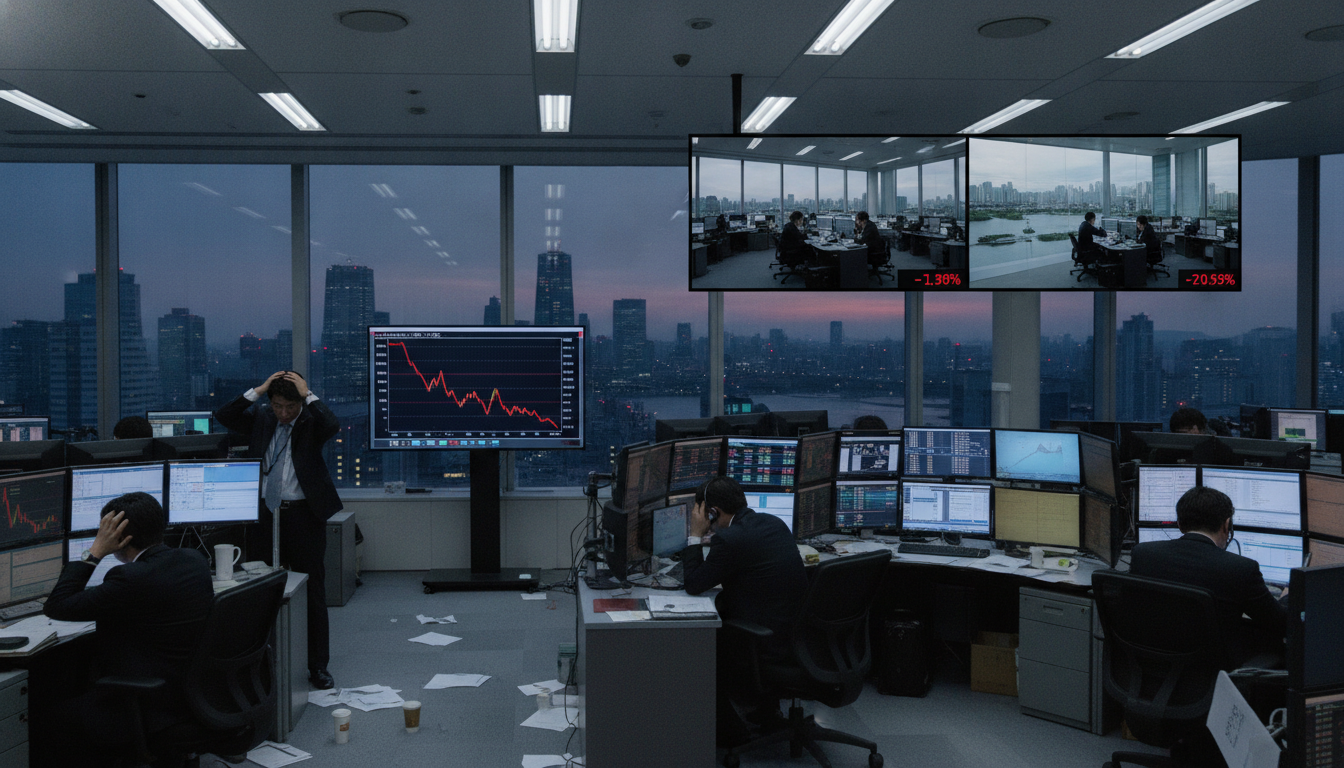
Asian markets tumble as tech sell-off drags Tokyo, Seoul and Taipei lower
Asian markets slid on July 28 after a Wall Street tech sell-off, pulling Tokyo, Seoul and Taipei down amid worries about investment costs and Chinese chipmakers
TOKYO — Asian markets fell sharply on July 28 as a global technology-led sell-off on Wall Street spilled into the region, dragging major Japanese and South Korean indexes lower.
Investors cited concerns about the high cost of large-scale tech investment and accelerating competition from Chinese chipmakers as drivers of the downturn.
Tokyo and Seoul open sharply lower
Both Tokyo and Seoul opened with notable declines as traders reacted to overnight losses in U.S. technology shares.
Market participants said sentiment in equity markets turned cautious as gains earlier in the year were pared back by fresh worries over profit margins and capital expenditure plans.
Technology stocks led declines across Japan and Taiwan
Major tech names in Japan and Taiwan fell across the board, amplifying the sell-off in broader indices.
Analysts noted that semiconductor and electronic component firms were among the hardest hit as investors reassessed growth forecasts in light of intensifying competition.
Investor concerns over rising Chinese chip competition
Market commentary pointed to the rise of Chinese chipmakers as a changing factor in regional supply dynamics and pricing power.
Portfolio managers said the prospect of stronger Chinese capacity and state-backed investment has heightened uncertainty about margins for established suppliers.
Cost of large-scale investment pressures valuations
Beyond competition, investors flagged the sheer scale of capital required to maintain leading-edge chip production as a key worry.
High fixed costs for new fabrication plants and research — combined with longer payoff periods — are prompting more conservative valuations for hardware-focused technology companies.
Spillover from Wall Street and global sentiment
The regional slump followed a pronounced sell-off in U.S. technology stocks overnight, illustrating persistent linkages between U.S. and Asian markets.
Traders said rising yields and concerns about corporate spending plans elsewhere amplified the impact of sector-specific worries in Asia.
Implications for exporters and corporate earnings
Some market watchers cautioned that sustained pressure on tech names could ripple into broader export-linked sectors in Japan and Korea.
Manufacturers and suppliers that rely on semiconductor demand may face downward revisions to revenue and investment plans if sentiment does not stabilize.
Policy makers and central banks were also noted as variables to watch, with investors assessing potential macro responses to market volatility.
Currency movements and interest-rate expectations could further shape how corporate earnings are perceived in coming weeks.
Analysts advised caution but stopped short of predicting a sustained rout, pointing out that market swings often reflect short-term re-pricing rather than permanent shifts.
Several fund managers said they would monitor company guidance and capital-spending announcements for clearer signals about future profitability.
Looking ahead, traders will closely watch corporate updates, semiconductor industry reports and any fresh developments in U.S.-China technology policy.
Earnings announcements from regional technology firms and commentary from major central banks may also steer market direction in the near term.
Volatility prompted some investors to reduce exposure to cyclical tech holdings and seek shelter in defensive sectors, according to trading desks.
Others said selective buying opportunities could emerge if prices retreated to levels that better reflect medium-term fundamentals.
Market participants stressed that the situation remains fluid and that near-term market moves will depend on a mix of corporate news, policy developments and investor risk appetite.
For now, Asian markets are navigating a renewed bout of uncertainty as global technology valuations are re-evaluated.

