
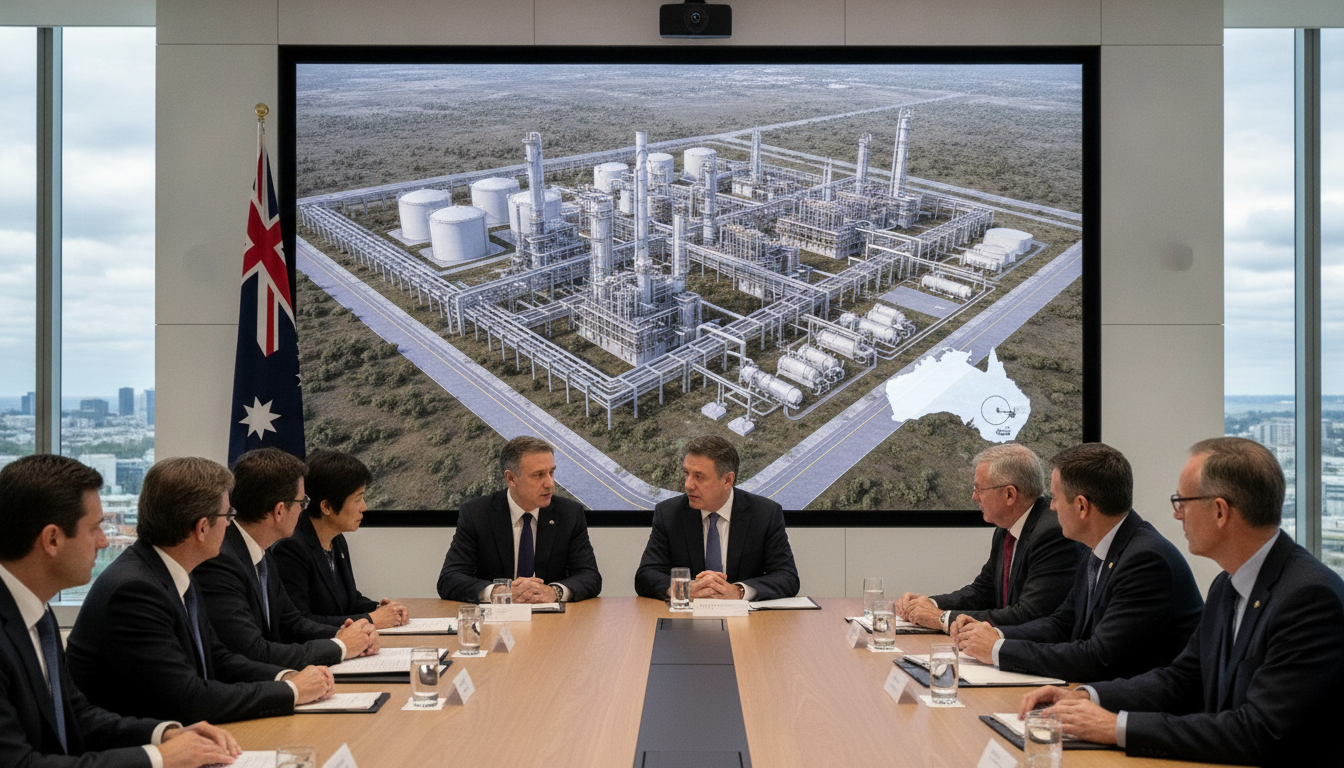
Australia to study building a new fuel refinery in Karratha amid diesel price shock
Australia will probe building a new fuel refinery in Karratha to shore up diesel supplies as the US–Iran war drives market volatility and strains mining operations.
Australia announced a jointly funded A$4 million pre‑feasibility study into a proposed large‑scale fuel refinery in Karratha, Western Australia, a move aimed at shoring up domestic diesel supplies after recent international disruptions pushed prices sharply higher. (pm.gov.au)
Government launches pre‑feasibility study
A federal‑state partnership has committed funds to test whether a Perdaman‑led refinery could be built in Karratha, marking the first formal step toward a major new Australian refinery since the 1960s. The A$4 million study will assess markets, logistics and how a new plant might contribute to national fuel security. (pm.gov.au)
The announcement follows high‑level meetings in Western Australia and national security briefings that flagged vulnerabilities in the country’s diesel supply chain. Officials described the study as a pragmatic response to recent price spikes and logistical fragility across Asia‑Pacific fuel markets. (sbs.com.au)
Karratha selected for strategic and logistical reasons
Karratha’s location in the Pilbara puts a potential refinery close to major mining customers and export ports, reducing inland transport requirements for heavy fuel products. Investors and planners note the region’s industrial infrastructure, skilled workforce and proximity to gas supplies make it a commercially realistic candidate. (au.marketscreener.com)
State and federal ministers said any project would need to meet environmental and Indigenous consultation standards and pass rigorous commercial viability tests before proceeding to final investment decisions. The pre‑feasibility phase will examine pipeline connections, storage capacity and export potential. (pm.gov.au)
Diesel price volatility driven by Middle East conflict
Renewed hostilities between the United States and Iran have tightened global refined product markets, sending diesel and gasoil benchmarks sharply higher and prompting concerns about short‑term availability across the Asia‑Pacific. Analysts point to disruptions around the Strait of Hormuz and attacks on regional facilities as drivers of acute price swings. (abc.net.au)
Australian industry groups say the country’s heavy reliance on imported refined products—after the closure of most domestic refineries over the past two decades—has increased exposure to such international shocks. Policymakers have explicitly linked the Karratha study to efforts to reduce that exposure. (abc.net.au)
Mining companies warn of rising operating costs
Mining operators have reported that fuel is a major variable cost and sudden spikes in diesel prices can materially affect project budgets and profitability. Company statements to investors and analysts cite diesel exposure as a factor complicating contract tendering and long‑term planning for major extraction and processing projects. (whitehavencoal.com.au)
Executives in the sector have urged governments to consider a range of responses, from strategic stockpiles and fuel subsidies to targeted support for critical regional projects, as companies rework forecasts and supply contracts to cope with ongoing uncertainty. (abc.net.au)
Whitehaven and other producers flag budgetary strain
Public filings and quarterly updates from major coal and mining groups show increased sensitivity to diesel and logistics costs, with management teams warning that uncertainty over future energy prices makes accurate budgeting difficult. These firms say they are reviewing hedging strategies and capital plans to preserve cash flow under volatile conditions. (whitehavencoal.com.au)
Market analysts say such warnings may weigh on investment decisions, potentially delaying non‑essential projects until price visibility improves or until government interventions clarify the trajectory of domestic fuel policy. (australianminingreview.com.au)
Policy implications and fuel security measures under review
The pre‑feasibility study is one element of a broader policy push to strengthen Australia’s fuel resilience, which includes discussions about minimum stockholding obligations, fuel storage expansion and temporary production subsidies to keep existing refineries operating during market stress. Officials have signalled the government will consider the study’s findings alongside other measures in upcoming budget deliberations. (abc.net.au)
Experts caution that building a large modern refinery is capital‑intensive and time‑consuming, and that any new Australian facility would take years to reach capacity. The study will therefore test near‑term mitigation options as well as long‑term industrial and sovereign resilience scenarios. (sbs.com.au)
The government says the Karratha study will report on commercial feasibility, environmental approvals, workforce needs and timelines, and that further federal funding or guarantees would be considered only if the project meets strict economic and strategic criteria. (pm.gov.au)
If the study recommends proceeding, proponents and officials say the next phase would involve detailed engineering, full environmental impact assessment and binding investment decisions by private developers and public partners. The outcome will shape Australia’s approach to fuel security for years to come.

