
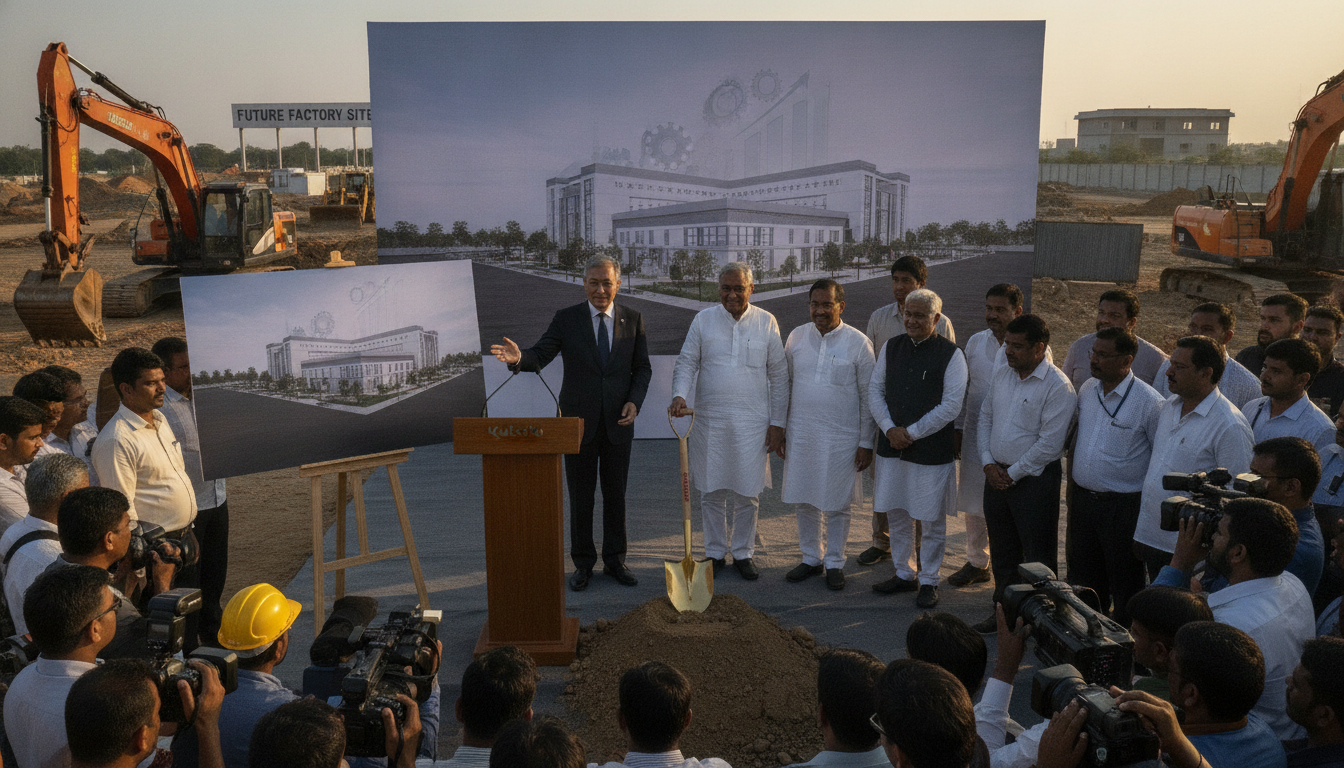
Kubota India factory planned as company aims to double output by 2030
Kubota will build a fifth production plant in northern India to produce tractors and construction machinery, aiming to double its output in India by 2030 and expand exports to Africa and other markets.
Kubota confirms fifth plant in India
Kubota announced plans to establish a new factory in northern India, marking its fifth manufacturing site in the country. The company said the facility will produce both tractors and construction machinery to meet rising domestic demand and support overseas shipments.
The new plant is part of a broader expansion strategy that the company described as essential to sustaining growth in South Asia. Kubota signaled that the move reflects long-term confidence in India’s market and logistics advantages for exports.
Production targets and 2030 timeline
Kubota has set a target to double its output in India by 2030, using the new factory to increase volume and diversify product lines. The company expects higher capacity will allow it to serve both value-oriented domestic buyers and international markets with competitive models.
Executives indicated the added capacity will focus on base-model tractors and select construction machines that have attracted steady demand in India. The timeline to reach the 2030 goal will depend on phased ramp-ups and local supply chain development.
Export strategy toward Africa and other markets
A key element of the plan is to expand exports from India to Africa and other overseas destinations, leveraging lower production costs and proximity to shipping routes. Kubota identified markets in sub-Saharan Africa as targets for agricultural equipment that requires simple, robust designs.
Company officials said increased exports would complement domestic sales and reduce exposure to single-market cycles. Using India as an export hub aligns with regional trade flows and could enable quicker delivery to emerging-market customers.
Local investment, jobs and supplier links
The new facility is expected to generate employment in the region through direct factory jobs and expanded sourcing from local suppliers. Kubota said it will work with Indian vendors to build out a parts network, which would support the factory’s logistics and help reduce lead times.
Local hiring and training initiatives are likely to be part of the rollout as the company scales operations. Investment in workforce skills and quality control will be necessary to meet both domestic expectations and export standards.
Product focus and pricing strategy
Kubota intends to emphasize affordable, rugged models tailored to the needs of smallholder farmers and contractors in emerging markets. The company’s strategy prioritizes reliability and low operating costs over the premium features found in higher-end models.
By standardizing certain components and maintaining streamlined production, Kubota aims to keep prices competitive while preserving margins. This product and pricing approach is designed to win share where affordability and after-sales support are decisive for buyers.
Competition and market context in India
India’s tractor and construction equipment markets are highly competitive, with established domestic players and several international manufacturers present. Kubota’s move to increase capacity responds to intensifying competition and the need to secure scale advantages.
Market observers note that demand drivers include rural mechanization, infrastructure projects, and a trend toward replacement purchases in some segments. Kubota will need to navigate local rivalries while leveraging its global engineering and brand recognition.
Regulatory, logistics and environmental considerations
The success of the new plant will depend in part on regulatory approvals, land and labor arrangements, and access to reliable logistics corridors for exports. Kubota will have to coordinate with regional authorities to secure permits and ensure compliance with local manufacturing rules.
Environmental standards and emissions regulations in India and target export markets could shape production methods and machine specifications. The company has signaled that sustainability and efficiency will be factored into its manufacturing plans.
Kubota’s decision to advance production in India reflects a calculated effort to use the country as both a sales market and an export platform, with the new factory positioned to support the company’s goal of doubling output by 2030.

