
Taiwan tensions drive Taipei to deepen Philippine and regional partnerships amid rising maritime pressure
Taiwan tensions prompt Taipei to bolster ties with the Philippines and neighbors, says foreign minister Lin Chia-lung, warning democracies must not "turn blind eye" to Beijing.
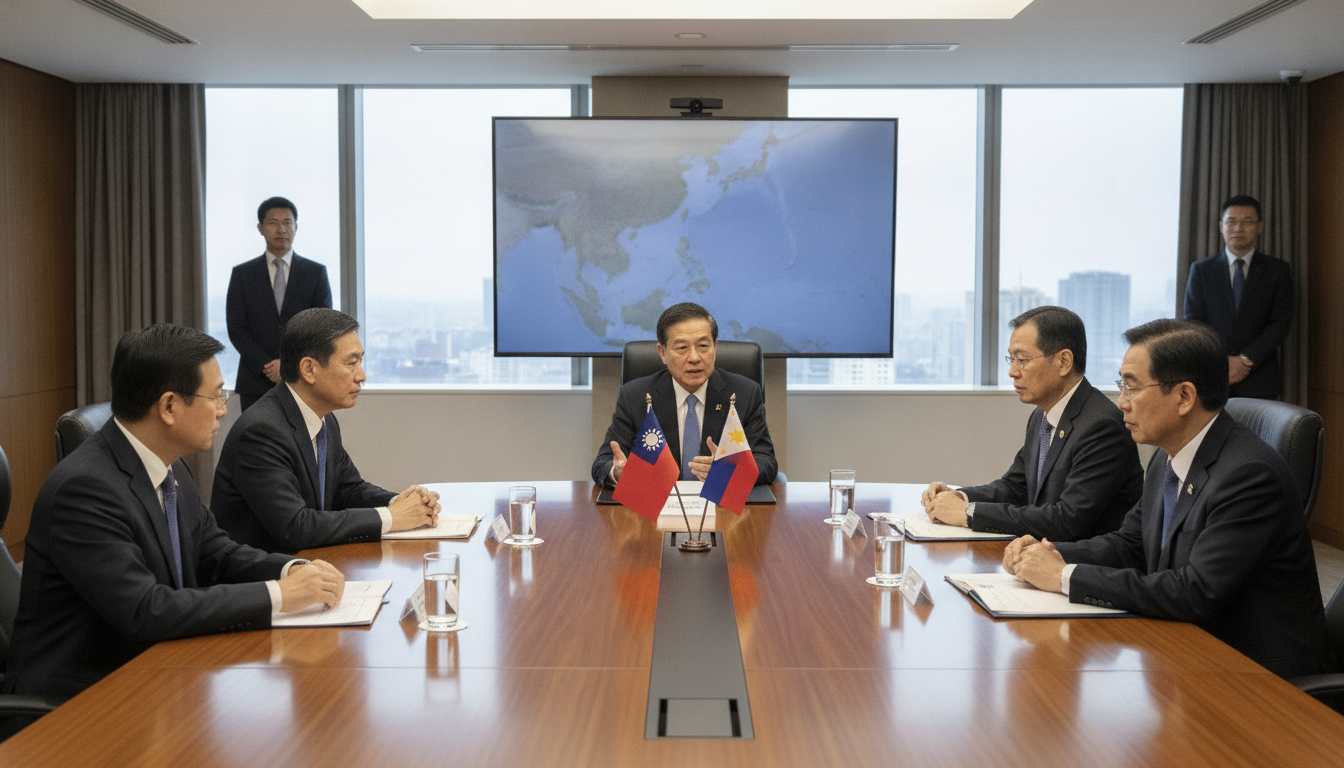
Taipei intensified diplomatic outreach on June 17, 2026, as Taiwan’s foreign minister warned democracies not to "turn a blind eye" to what Taipei describes as increased Chinese maritime pressure. The comments, delivered to the Taiwan Foreign Correspondents’ Club by Lin Chia-lung, framed the moves as part of a broader effort to prevent a coerced shift in regional norms and to reassure neighbors over shared security and maritime concerns. Taiwan officials say strengthened ties with the Philippines and other littoral states are central to preserving freedom of navigation and established practices in the Taiwan Strait and adjacent seas.
Taipei strengthens ties with the Philippines
Taiwan has stepped up government-to-government contact and practical cooperation with the Philippines, officials said, emphasizing fisheries, search-and-rescue coordination and information sharing. Lin Chia-lung presented the outreach as pragmatic steps to reduce the risk of incidents at sea and to provide predictable channels of communication between maritime authorities. Taipei also seeks to broaden economic and people-to-people links with Manila to build resilience against pressure designed to isolate Taiwan. Officials portrayed the measures as defensive and aimed at preserving stability rather than provoking confrontation.
Foreign minister frames pressure as attempt to normalize coercion
Lin explicitly characterized recent moves by Beijing as an attempt to create a "new normal" in which frequent, assertive maritime operations become routine. He urged democracies in the region and beyond to recognize the pattern and respond through coordinated diplomacy and capacity-building. The foreign minister’s remarks reflect a strategic narrative in Taipei that frames the issue as one of rules and norms, not simply territorial dispute. By emphasizing democratic solidarity, Taipei is seeking external validation for its right to safe maritime access and self-defense.
Recent incidents and Beijing’s maritime posture
Taiwan and other regional capitals have reported an uptick in patrols, gray-zone activities and close approaches at sea in recent months, officials say. These encounters, while often short of open conflict, raise the risk of miscalculation and operational mishaps, according to Taipei. Taiwan officials argue that sustained, incremental pressure can alter behavior at sea without the dramatic headlines of a single large incident. That gradual normalization is precisely what Lin warned must be resisted through stronger regional cooperation and transparency.
Regional responses and diplomatic outreach
In response to these maritime dynamics, Taipei is widening engagement with island states and Southeast Asian partners that have overlapping concerns about freedom of navigation. The strategy involves stepped-up diplomatic visits, enhanced consular ties, and joint exercises in non-combat areas such as disaster response and maritime safety. Taipei is also seeking to leverage existing trilateral and multilateral formats to ensure its security concerns are heard in capitals that might otherwise be cautious about publicly criticizing Beijing. Diplomats say such measures aim to build a network of practical cooperation that can reduce tensions and create clearer expectations for behavior at sea.
Security and economic stakes for the region
Maritime friction around Taiwan has direct implications for trade, fisheries and energy routes that underpin regional prosperity. The Taiwan Strait and nearby waters are vital corridors for commercial shipping and resource access, making disruptions costly for many countries. Businesses and insurers monitor the evolving security environment closely, and governments in the region have flagged the economic consequences of any sustained disruptions. Taipei’s move to assuage regional partners is therefore as much about protecting economic flows as it is about political signaling.
International balance and the role of democracies
Lin’s appeal for democracies not to "turn a blind eye" underscores Taipei’s focus on broader international backing rather than reliance on a single external guarantor. Taiwanese officials argue that dispersed diplomatic support and capacity building across regional partners create more durable deterrence than unilateral pledges. At the same time, Taipei acknowledges the limits of its formal diplomatic space and is pursuing flexible arrangements that can produce practical results without insisting on full diplomatic recognition. This approach aims to widen the constituency for maintaining current maritime norms.
The foreign minister’s remarks on June 17 also reflect a domestic audience: reassuring Taiwanese citizens and businesses that the government is responding actively to threats to maritime stability. Taipei’s strategy combines outreach to neighbors with public messaging designed to show vigilance and preparedness while avoiding escalatory rhetoric.
Taiwan’s push for closer ties with the Philippines and other neighbors represents a measured effort to translate diplomatic concern into concrete cooperation at sea, where routine practices and safety protocols can reduce risk and preserve regional norms. As maritime activity continues to draw international attention, Taipei appears intent on building pragmatic partnerships that protect navigation, commerce and the livelihoods tied to these waters.

