
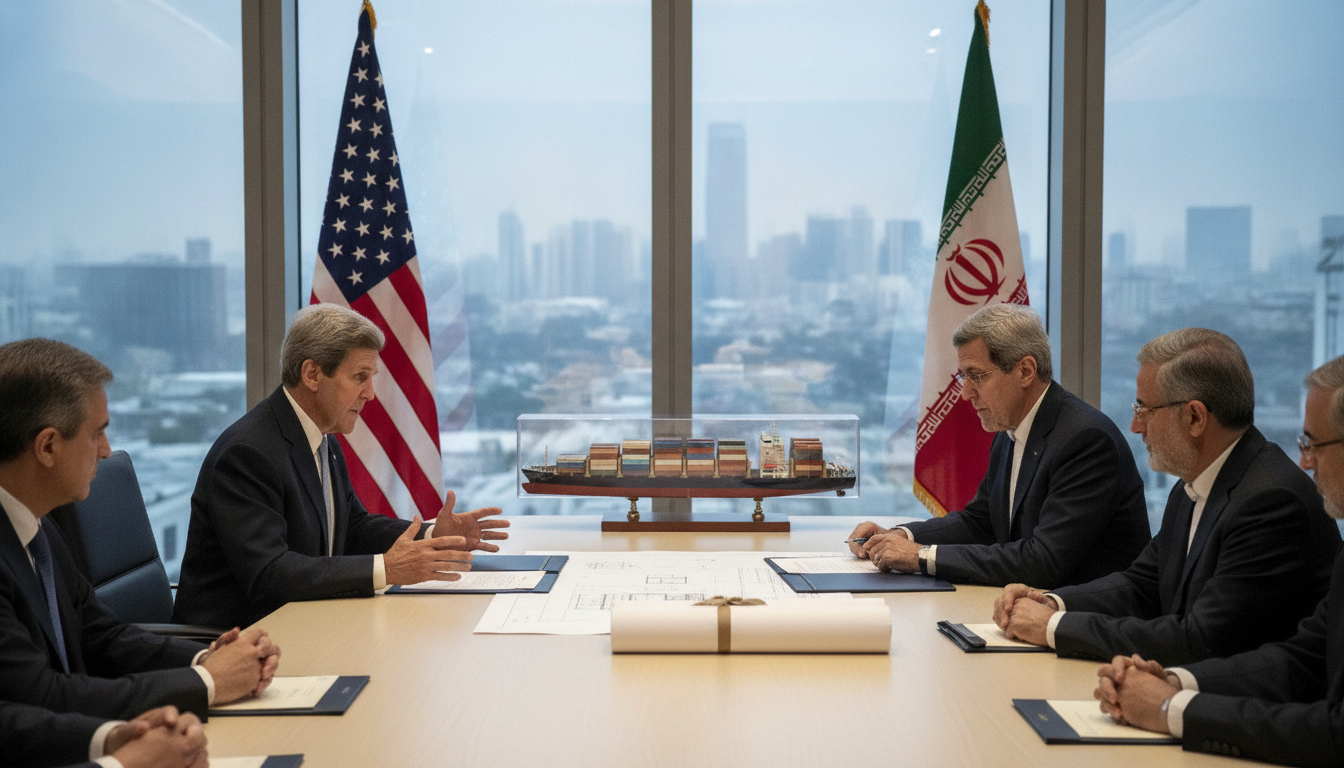
US-Iran memorandum draft calls for 30-day restoration of Strait of Hormuz and $300bn reconstruction pledge
Draft US-Iran memorandum calls for an immediate ceasefire, lifting of US blockade, Strait of Hormuz reopened in 30 days and $300bn pledged for rebuilding.
The draft US-Iran memorandum revealed by international news agencies on June 16, 2026 outlines a 14-point framework intended to end hostilities between Washington and Tehran. The document would see the United States lift a maritime blockade upon signing and require Iran to restore commercial navigation through the Strait of Hormuz to pre-conflict levels within 30 days. The memorandum sets a timetable for negotiations toward a final agreement and includes large-scale funding and sanctions relief as central components.
Key provisions of the 14-point draft
The draft memorandum lists 14 discrete commitments, beginning with a declaration of an immediate and permanent end to combat between the two states across all fronts, including Lebanon. It obliges both parties to enter negotiations within 60 days to convert the memorandum into a final, legally binding agreement. Observers note the combination of short-term operational steps and longer negotiation timelines is designed to create space for verification and political consolidation.
Restoration of navigation in the Strait of Hormuz
A central operational clause requires Iran to return shipping in the Strait of Hormuz to pre-conflict levels within 30 days of the memorandum’s signing. In parallel, the United States would lift an imposed maritime blockade immediately after signing and commit to fully restoring commercial passage within up to 30 days. The sequencing — blockade lifting at signature and navigational recovery within a month — is intended to generate rapid de-escalation of commercial disruption in a strategically vital waterway.
Security withdrawals and regional military posture
The draft further commits the United States to withdraw military forces from surrounding areas within 30 days after a final agreement is reached. While the text promises phased reductions, it leaves detailed implementation and verification mechanisms to the later negotiations. Regional partners are expected to be engaged in monitoring and security arrangements, but the draft leaves open how multinational oversight would be structured and what guarantees would be provided to Gulf states.
Reconstruction financing and sanctions relief
One of the most consequential elements is a pledge by the United States, with regional partners, to secure at least $300 billion for Iran’s reconstruction and economic development. The memorandum envisions this funding as part of a package tied to the termination of all sanctions against Iran as a component of the final agreement. Reuters reported that, in addition to Gulf states and the United States, Japanese companies have committed to participate in funding commitments, according to people familiar with the discussions.
Compensation claims and private fund proposal
The draft reflects unresolved disputes over compensation for wartime damage. Iran initially demanded $400 billion from the United States in compensation, a figure the draft says Washington rejected. As a compromise, the memorandum describes plans for establishing a private fund or mechanism to channel investments and compensation-like support, though details on governance, contributors and legal standing are left to the final talks. Analysts warn that establishing a credible, transparent funding vehicle will be politically and technically complex.
Timeline to signature and verification questions
The memorandum’s drafters scheduled a signing ceremony for June 19, 2026, making immediate implementation questions central to diplomatic attention. The big test, as the draft itself acknowledges, will be whether both sides follow through after an initial ceremony and whether verification measures are sufficient to prevent renewed escalation. The text calls for initial steps to be taken promptly but defers many binding verification, dispute-settlement and enforcement details to the 60-day negotiation window toward a final accord.
The draft also addresses technical and political issues beyond immediate combat cessation, indicating that Iran’s nuclear development concerns would be “appropriately addressed,” though the text available in reports does not fully specify the mechanisms. That omission signals another significant negotiating challenge, given the centrality of nuclear questions to regional security and to many international stakeholders.
The memorandum as presented by news outlets frames a path toward rapid de-escalation coupled with a negotiated, phased resolution of deeper disputes. Its success will hinge on verification arrangements, the clarity of timelines for troop withdrawals and navigation restoration, and the ability of the international community to marshal the promised financing while securing durable guarantees against renewed hostilities.
If the June 19 signing proceeds, immediate attention will shift to implementation steps and to the 60-day window for converting the memorandum into a comprehensive final agreement. The coming days will test whether political will and operational coordination can translate the draft’s broad promises into concrete, verifiable actions.

